
What Is the Most Profitable Business in Africa? 15 Ideas With Real Demand in 2026

What is the most profitable business in Africa right now? This in-depth guide breaks down 15 high-demand sectors — from fintech and agritech to the creator economy and film production — with real margin benchmarks, entry costs, and concrete African examples. Skip the generic advice and get the specifics that actually help you decide.
What is the most profitable business in Africa right now? It is a question that founders, side-hustlers, and diaspora investors are typing into search bars daily — and the honest answer is that there is no single winner. There are, however, fifteen sectors where demand is structurally outpacing supply, margins are real, and African entrepreneurs are already building generational wealth. This list is not a recycled roundup of generic ideas. Every entry is grounded in verifiable market dynamics, named examples, and the specific trade-offs you need to know before you commit capital or time.

How This List Was Built — and Why Most "Africa Business" Lists Get It Wrong
Most listicles on this topic copy each other: agriculture, real estate, telecoms. Those sectors are profitable — but they are also capital-intensive, regulated, and dominated by incumbents. A first-time founder with $5,000 cannot compete with Dangote in cement. This list deliberately mixes high-capital and low-capital plays so that it is useful whether you are a solo creator, a small team, or a funded startup. Each entry includes a realistic entry cost, a margin benchmark, and at least one concrete African example.
The data draws on the IFC's Africa private sector reports, the African Union's Agenda 2063 priority sectors, and on-the-ground reporting from African business media. Where possible, figures reflect 2024–2026 conditions rather than pre-pandemic baselines.
The 15 Most Profitable Businesses in Africa Right Now
1. Fintech and Mobile Money Services

Africa has roughly 1.4 billion people and the world's lowest bank-account penetration rate. That gap is a market. M-Pesa in Kenya, MoMo in Ghana, and OPay in Nigeria have proved that mobile-first financial services can scale fast and generate enormous transaction-fee revenue. A well-positioned fintech startup can achieve net margins of 20–35% once it clears regulatory licensing. The hard part is exactly that: licensing. Budget 12–18 months and $50,000–$200,000 just for compliance before you write a single line of product code. Shortcuts here kill companies.
- Entry cost: $50,000–$500,000 (licensing + tech)
- Margin range: 20–35% at scale
- Key risk: Central bank regulation changes overnight
2. Agritech and Precision Farming
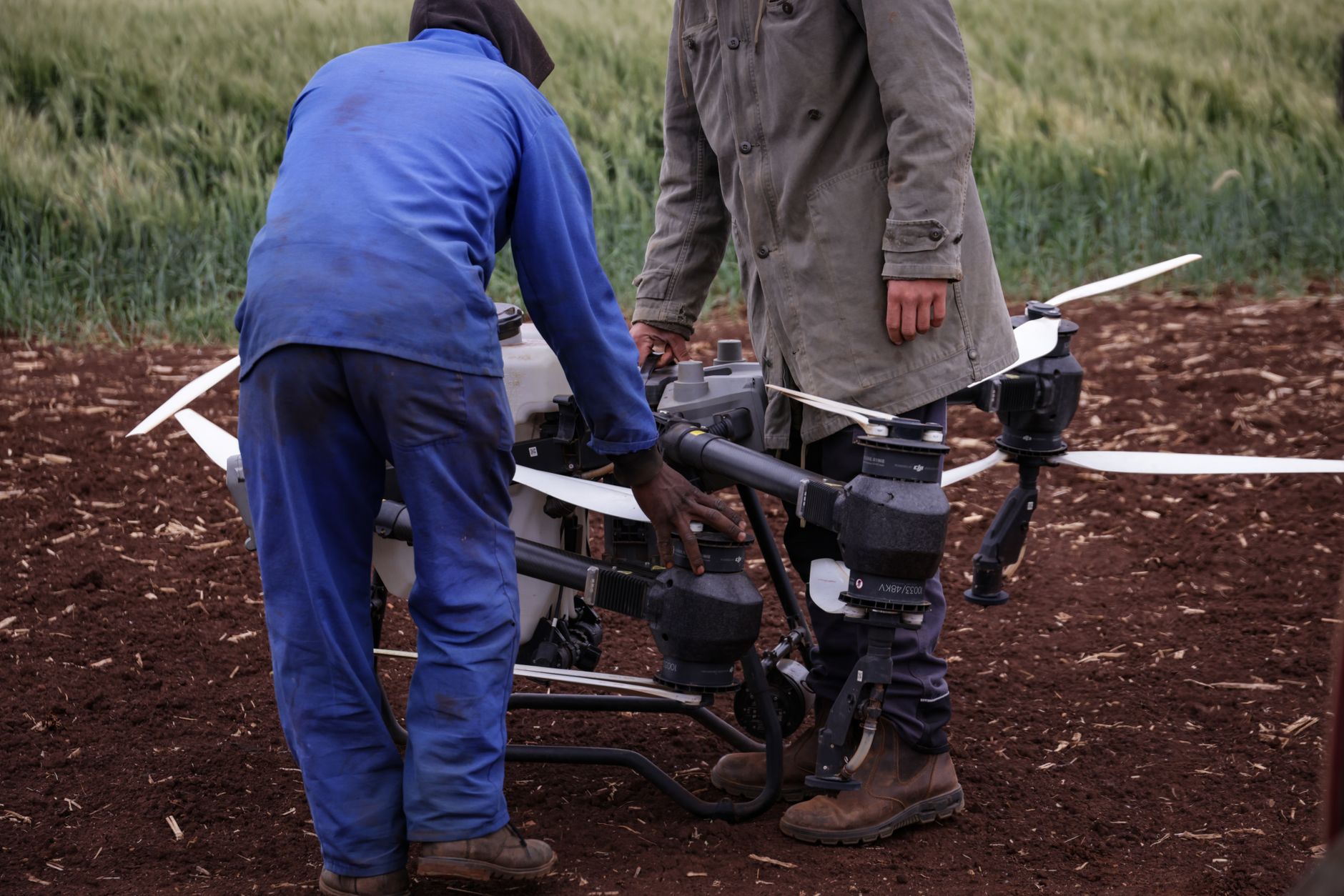
Agriculture employs over 60% of sub-Saharan Africa's workforce yet contributes only about 23% of GDP — a classic productivity gap that technology can close. Startups like Twiga Foods (Kenya) and Zenvus (Nigeria) have shown that connecting smallholder farmers to real-time soil data, weather analytics, and direct-to-buyer platforms can cut post-harvest losses by up to 40%. The margin on agritech SaaS tools sits between 60–80% gross margin, comparable to any software business globally. Physical cold-chain logistics attached to the model drops that margin but adds defensibility.
- Entry cost: $10,000–$80,000 for a lean MVP
- Margin range: 60–80% (SaaS layer); 15–25% (logistics layer)
- Key risk: Farmer digital literacy; smartphone penetration varies by region
3. E-Commerce and Last-Mile Delivery
Jumia's struggles taught the market a crucial lesson: e-commerce in Africa lives or dies on logistics. The winners are not the marketplaces — they are the infrastructure companies behind them. Startups like Kobo360 (Nigeria) and Lori Systems (Kenya) that solve the last-mile puzzle command premium rates from brands desperate to reach customers outside Lagos, Nairobi, or Cairo. A focused regional delivery company serving two to three cities can reach profitability with a fleet of just 10–15 vehicles if the route density is right.
- Entry cost: $20,000–$150,000
- Margin range: 12–22% net (route-optimized)
- Key risk: Fuel price volatility; road infrastructure quality
4. Digital Content Creation and the Creator Economy
African creators are building multi-million-dollar media businesses from smartphones and ring lights. The creator economy on the continent is growing at an estimated 25–30% annually, driven by brand deals, YouTube AdSense, Afrobeats licensing, and direct fan monetization via platforms like Patreon and Fanbase. The barrier to entry is genuinely low — under $1,000 for basic equipment — but the barrier to scale is high: consistency, niche authority, and cross-platform distribution are what separate a hobby from a business. Explore how African creators are building these brands on Topping Africa's breakdown of the top 10 creators dominating TikTok, Instagram, and YouTube in 2026.
- Entry cost: $500–$3,000
- Margin range: 40–85% (brand deals and digital products)
- Key risk: Platform algorithm dependency; brand deal drought in slow ad markets
5. Renewable Energy and Solar Solutions
Over 600 million Africans still lack reliable grid electricity. Solar home systems and mini-grids are not charity projects — they are high-margin businesses with proven pay-as-you-go (PAYG) models. Companies like M-KOPA and d.light have collectively served tens of millions of customers across East and West Africa. A solar distribution business in a rural corridor can achieve 30–45% gross margins. The catch: customer financing is essential, which means you are also running a micro-lending operation. Default risk management is non-negotiable.
- Entry cost: $30,000–$500,000
- Margin range: 30–45% gross
- Key risk: Currency devaluation erodes import-priced panel costs
6. Health Tech and Telemedicine
Africa has one doctor for every 5,000 people in many countries — compared to roughly one per 300 in Europe. Telemedicine platforms like HealthLane (Nigeria) and Helium Health are filling this gap and charging both patients and hospitals for the privilege. SaaS-based electronic health record (EHR) systems for clinics are particularly sticky: once a hospital migrates its data, switching costs are enormous. Gross margins on health SaaS run 65–75%. Regulatory approval from national health ministries adds 6–18 months to your go-to-market timeline — plan for it.
- Entry cost: $40,000–$300,000
- Margin range: 65–75% (SaaS); 20–35% (telemedicine consultations)
- Key risk: Data privacy regulation is tightening fast across the continent
7. EdTech and Skills Training
Africa has the world's youngest population. By 2030, the continent will have more young people entering the workforce than the rest of the world combined. Platforms like Andela (which pivoted to a talent marketplace), uLesson, and Moringa School have demonstrated that Africans will pay — and pay well — for skills that lead directly to employment. The sweet spot is vocational and digital skills: coding, data analysis, UI/UX design, and digital marketing. A lean cohort-based bootcamp can generate $200,000–$500,000 in annual revenue with a team of five, if placement rates stay above 70%.
- Entry cost: $5,000–$50,000
- Margin range: 35–60%
- Key risk: Placement rates are your reputation — one bad cohort can destroy trust
8. Real Estate and Affordable Housing Development
Africa's urban population is set to double by 2050. Lagos, Nairobi, Accra, and Kigali are all experiencing severe housing shortages at the affordable end of the market. Developers who target the $30,000–$80,000 home price bracket — rather than luxury estates — are finding waiting lists that stretch years. The margin on affordable housing development runs 18–28% per project. The real challenge is land title clarity: always commission an independent title search before any acquisition. Skipping this step has bankrupted more developers than any market downturn.
- Entry cost: $100,000–$2,000,000+
- Margin range: 18–28% per project
- Key risk: Land disputes; bureaucratic delays in permitting
9. Fashion, Beauty, and African Luxury Brands
Global appetite for African-designed fashion and beauty products has never been higher. Brands like Maxhosa Africa, Orange Culture, and Adèle Dejak are selling to buyers in Paris, New York, and London at premium price points. The business model that works is direct-to-consumer via e-commerce, bypassing the brutal margins of wholesale. A well-positioned African luxury brand can achieve 60–70% gross margins on apparel. The investment is in storytelling and photography — not in inventory. Start with made-to-order to eliminate dead stock risk entirely.
- Entry cost: $2,000–$20,000
- Margin range: 55–70% (DTC e-commerce)
- Key risk: International shipping costs and customs duties eat margin fast
10. AI Tools and Software Development for African Markets

African-built AI tools are solving problems that Silicon Valley simply does not understand well enough to address: local language processing, informal market pricing, and rural supply chain logistics. Startups featured on Topping Africa's list of AI startups solving local problems are already attracting international venture capital. Software development for African businesses — custom ERP systems, WhatsApp automation bots, local-language chatbots — commands $50–$150 per hour from clients who cannot find local talent. A four-person dev shop billing 500 hours a month at $80/hour generates $480,000 annually.
- Entry cost: $1,000–$15,000
- Margin range: 50–75%
- Key risk: Talent retention; senior engineers get poached by global remote employers
11. Food Processing and Packaged Goods
Raw commodity export has always been Africa's economic trap. The value is in processing. A cassava farmer earns $0.10 per kg; a packaged cassava flour brand sells the same weight for $1.20 in a Lagos supermarket. Companies like Erisco Foods and Honeywell Flour Mills have built billion-naira businesses on this arbitrage. Small-scale food processors targeting urban middle-class consumers — organic peanut butter, freeze-dried fruit snacks, hibiscus tea — can reach profitability within 18 months if distribution is solved. Distribution is always the bottleneck. Partner with an existing distributor before you scale production.
- Entry cost: $5,000–$100,000
- Margin range: 25–45%
- Key risk: NAFDAC/regulatory approval timelines; cold-chain gaps
12. Tourism, Eco-Tourism, and Cultural Experiences
Post-pandemic, Africa's tourism rebound has been remarkable. Rwanda's gorilla trekking permits sell out months in advance at $1,500 per person. South Africa's wine-route experiences are booked solid. The opportunity for entrepreneurs is in curated, niche experiences — not mass tourism. A boutique cultural tour operator running 10 guests per week at $300 per person generates $156,000 annually with minimal overhead. The UN World Tourism Organization's Africa data consistently shows that experience-led tourism commands 3–5x the spend of standard hotel-and-flight packages.
- Entry cost: $3,000–$30,000
- Margin range: 35–55%
- Key risk: Political instability in a region can wipe out bookings overnight
13. Logistics and Supply Chain Management
Africa's intra-continental trade has surged since the African Continental Free Trade Area (AfCFTA) framework began implementation. Cross-border freight between Nigeria, Ghana, Côte d'Ivoire, and Senegal is growing fast — but the logistics infrastructure is still fragmented and expensive. A freight brokerage or 3PL (third-party logistics) company that specialises in AfCFTA corridors can charge a 10–15% brokerage margin on each shipment. At $1 million in managed freight volume, that is $100,000–$150,000 in revenue. Scale is the game here — this business rewards volume.
- Entry cost: $10,000–$60,000
- Margin range: 10–18% (brokerage); 20–30% (owned fleet)
- Key risk: AfCFTA implementation is uneven; some borders remain practically closed
14. Media Production and Film
Nollywood is now the world's second-largest film industry by volume. But the real money is not in theatrical releases — it is in streaming deals with Netflix, Prime Video, and local platforms like ShowMax. A well-produced Nollywood series can command a $500,000–$2,000,000 licensing deal. The South African film incentive — a 25–35% rebate on qualifying production spend — makes Cape Town and Johannesburg particularly attractive for co-productions. Read the full breakdown on what the South Africa film incentive means for Nollywood and streamers. Production companies that control their IP — rather than work for hire — capture the most value.
- Entry cost: $20,000–$500,000 per production
- Margin range: 30–60% (on streaming deals)
- Key risk: Streaming platforms are tightening content budgets globally in 2025–2026
15. Creator Discovery and Influencer Marketing Agencies
Brands are spending more on African influencers than ever — but they cannot find them efficiently. An influencer marketing agency that specialises in African creators, with a proprietary database and vetting process, can charge brands $5,000–$50,000 per campaign. The gross margin on agency fees runs 40–60%. The competitive moat is your creator relationships and your ability to prove ROI with clean analytics. Platforms like those covered in Topping Africa's guide to creator discovery platforms are reshaping how brands and creators connect across the continent. Discover the creators already building this economy at toppingafrica.com/creators.
- Entry cost: $2,000–$15,000
- Margin range: 40–60%
- Key risk: Creator exclusivity is hard to enforce; brands may go direct after introductions
Common Mistakes African Entrepreneurs Make When Choosing a Business
The biggest error is chasing the most profitable sector without assessing personal fit, local market depth, and access to distribution. Fintech is theoretically lucrative — but if you do not have a legal team and $200,000 in compliance budget, you will not survive the licensing phase. Agritech is high-margin — but if you are based in a city and have no farming network, your customer acquisition cost will eat your margin alive.
A second common mistake is underpricing to win customers. African consumers are price-sensitive, yes — but they are also quality-sensitive. Brands that compete on price alone rarely build loyalty. Compete on reliability, trust, and outcome instead. That is what the most durable African businesses have done, from MTN to Equity Bank to Flutterwave.
Finally, do not ignore the diaspora opportunity. African entrepreneurs in the UK, US, Canada, and Europe have access to capital, networks, and market insights that can give a continental business a serious edge. The African diaspora's role in shaping modern African business is one of the most underreported growth stories on the continent.
Where to Go From Here
The 15 ideas above are entry points, not blueprints. Each one requires market validation specific to your city, country, and customer segment. The entrepreneurs winning in Africa right now are not the ones who found the "best" idea — they are the ones who executed relentlessly in a sector they understood deeply.
If you are building a business as a creator or entrepreneur, explore the full range of African innovators shaping these sectors at toppingafrica.com/explore. And if you want to see how African creators are turning content into commerce, check out what is trending on Topping Africa right now — the patterns you find there will tell you more about real consumer demand than any market report.
Africa's business opportunity is not a future promise. It is happening now, built by founders and creators who refused to wait for perfect conditions. The question is not whether there is a profitable business to build here. The question is which one you will start.
Staff
Contributing writer at Topping Africa.
0 Comments
No comments yet. Be the first to share your thoughts!