
African Business Summit 2026: Investment Opportunities, Sectors to Watch, and How Creators Can Participate
The African Business Summit 2026 is set to unlock billions in investment across tech, fintech, manufacturing, and the creative economy. This guide breaks down the key sectors, how deals actually form, and exactly how African creators and founders can participate — not just watch from the sidelines.
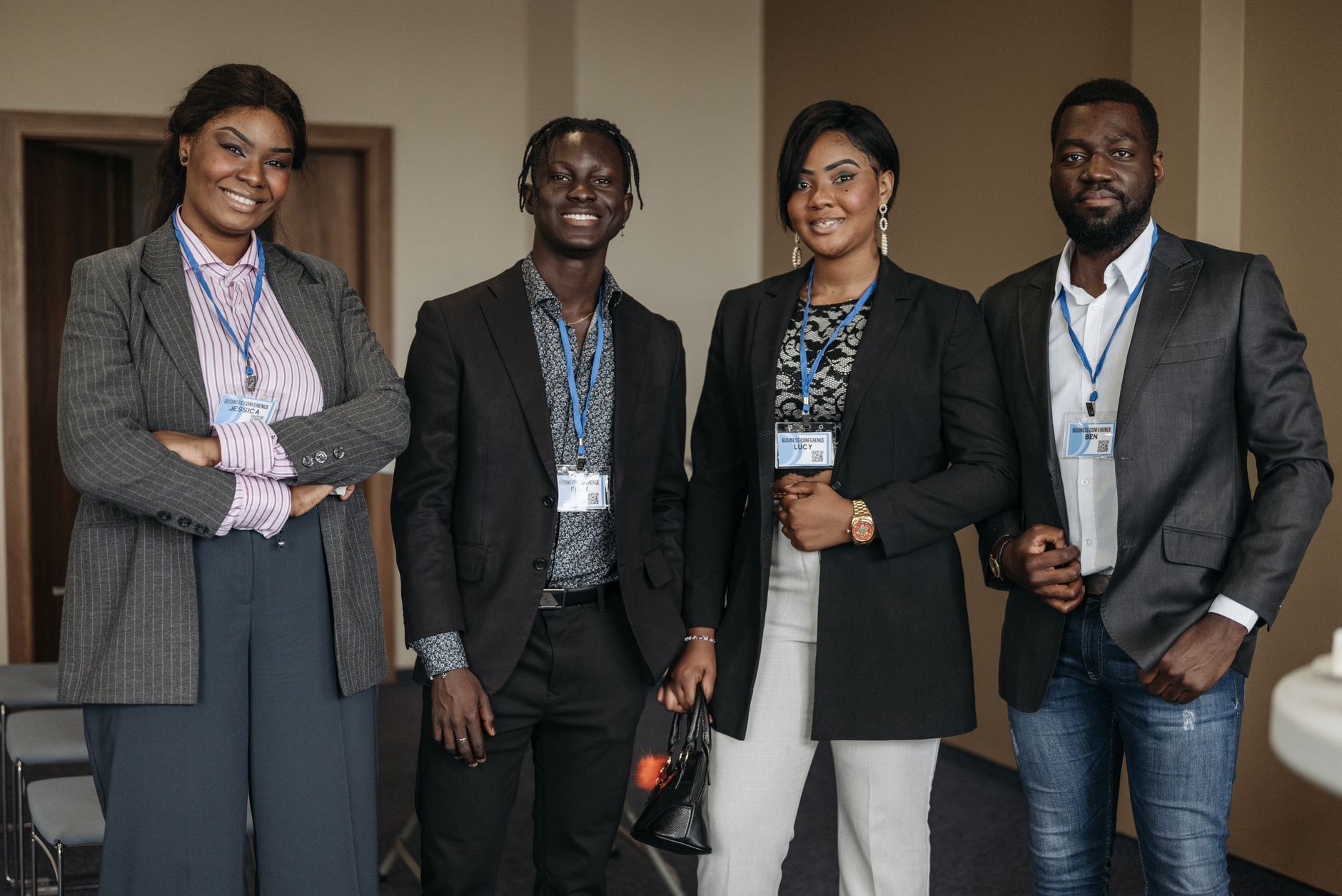
The African Business Summit 2026 is shaping up to be one of the most consequential gatherings in the history of U.S.-Africa economic relations. Scheduled for December 2026, the summit brings together heads of state, institutional investors, Fortune 500 executives, and — increasingly — the founders, creators, and media platforms who are rewriting Africa's economic story from the inside out. If you are a creator, entrepreneur, or innovator on the continent or in the diaspora, this event is not just news to follow. It is a room you can enter.

This guide breaks down what the summit actually means for the sectors driving Africa's growth, which investment themes are attracting the most capital, and — crucially — how creators and founders can position themselves to benefit. The opportunity is real, but it rewards those who prepare early and understand the mechanics of how deals and partnerships actually form at events like this.
What Is the U.S.-Africa Business Summit and Why 2026 Matters
The U.S.-Africa Business Summit is organised by the Corporate Council on Africa (CCA), the leading U.S. business association focused on the continent. It convenes every two years and alternates between U.S. and African host cities. The 2026 edition arrives at a defining moment: the African Continental Free Trade Area (AfCFTA) is moving from ratification into active implementation, intra-African trade volumes are climbing, and U.S. policy interest in Africa has intensified following the expiry of AGOA's current framework.
In practical terms, the summit is where letters of intent become signed agreements. The 2022 edition in Marrakech generated over $55 billion in announced deals across energy, agriculture, and digital infrastructure. The 2024 edition in Dallas pushed that figure higher, with notable commitments in fintech and clean energy. 2026 is expected to surpass both, driven by renewed Prosper Africa mandates and a pipeline of shovel-ready projects across East and West Africa.
For African creators and founders, the summit's significance is not just symbolic. It signals where institutional money is flowing — and that intelligence is directly useful when pitching investors, choosing markets to enter, or deciding which partnerships to pursue.
The Four Sectors Attracting the Most Capital in 2026
Not all sectors at the summit receive equal attention. Based on CCA's published agenda priorities and deal flow from the 2024 edition, four areas are commanding the most serious investor interest heading into December 2026.
1. Digital Infrastructure and African Tech
Subsea cable projects, data centre construction, and last-mile connectivity are the unglamorous backbone of everything else. IFC committed $2.2 billion to digital infrastructure across sub-Saharan Africa between 2022 and 2024, and that pipeline is accelerating. The reason is straightforward: every e-commerce transaction, every fintech payment, every streamed video requires reliable connectivity. Investors who fund the pipes benefit from every digital business built on top of them.
For African tech founders and creators, this matters because improved infrastructure directly reduces the cost of reaching audiences. Streaming quality improves, payment rails become more reliable, and cloud computing costs fall as local data centres multiply. Explore what African tech startups are already building on this foundation — many are solving problems with global potential, as covered in our roundup of 10 African tech startups solving local problems with global potential.
2. Manufacturing and the Africa+1 Strategy
Global supply chain diversification has made Africa a serious alternative to Southeast Asia for light manufacturing. Ethiopia's industrial parks, Morocco's automotive clusters, and South Africa's pharmaceutical manufacturing base are all attracting relocating production lines. The "Africa+1" strategy — where multinationals add an African facility to their existing Asia footprint — is no longer a concept paper. It is happening.
For creators and media professionals, this trend creates a concrete opportunity: B2B content, training materials, and employer branding are in acute demand from manufacturers entering new African markets. A creator who understands both the local culture and the needs of a foreign investor is extraordinarily valuable — and rare.
3. Fintech and Cross-Border Payments
Africa's fintech sector processed an estimated $150 billion in mobile money transactions in 2024. The summit will feature significant deal-making around cross-border payment corridors, particularly between West Africa and the U.S. diaspora. Remittances into sub-Saharan Africa topped $54 billion in 2023, and the race to reduce the average 8% transfer fee is intensifying.
Creators in the diaspora feel this directly — high fees eat into the money they send home and the revenue they receive from African audiences. The founders working on this problem deserve attention. Read about the African fintech founders making cross-border payments easier to understand who is building the solutions.
4. The Creative Economy as a Recognized Asset Class
This is the shift that matters most for Topping Africa's audience. African creative industries — music, film, fashion, gaming, and digital media — are no longer treated as soft power footnotes at investment summits. They are being underwritten as economic assets. The African Development Bank estimates the continent's creative economy could generate $500 billion annually by 2030 if adequately financed.

The 2026 summit will include dedicated sessions on creative economy financing, IP monetisation, and streaming revenue flows. Creators who attend — or who are represented by platforms that attend — can access deal rooms that were previously invisible to them. We have already covered how African creative businesses can access $2 billion in new financing. The summit is another gateway into that capital pipeline.
Common Mistakes Creators and Founders Make at Investment Summits
Most first-time attendees at events like the African Business Summit leave with business cards and not much else. The reason is almost always the same: they show up without a clear ask, without proof of traction, and without a follow-up system. Here is what actually works.
- Arrive with a one-page brief, not a pitch deck. Investors at summits are moving fast. A tight one-pager — problem, solution, traction, ask — gets read. A 20-slide deck does not.
- Target side events, not just plenary sessions. The real conversations happen at breakfast meetings, sponsored dinners, and workshop breakouts. Identify which sponsors are most relevant to your sector and attend their hosted events specifically.
- Know your numbers before you walk in. Monthly active users, revenue run rate, audience demographics, engagement rates — whatever is most relevant to your business. Vague answers to basic questions end conversations immediately.
- Follow up within 24 hours. Summit connections go cold fast. A personalised email referencing your specific conversation, sent the same evening or the next morning, converts at a dramatically higher rate than one sent a week later.
- Don't pitch every person you meet. Relationship capital is finite. Identify five to ten people you genuinely want to connect with before you arrive, and invest your energy there rather than scattering it across hundreds of superficial exchanges.
These are not abstract tips. They reflect the actual mechanics of how deals and partnerships form at high-density events. The creators and founders who treat summits as networking marathons rarely see returns. Those who treat them as targeted relationship-building exercises consistently do.
How Creators Can Participate in the African Business Summit 2026
Participation does not require a delegate badge — though if you can secure one, do. There are multiple tiers of engagement, each with genuine upside.
Direct Attendance and Accreditation
The CCA offers delegate passes, media accreditation, and in some cases sponsored participation for startups and SMEs through partner programmes. African founders should check the CCA website directly for application windows, which typically open six months before the event. Media accreditation is a legitimate route for creators who run newsletters, podcasts, YouTube channels, or social media platforms with demonstrable audience reach — the threshold is lower than most people assume.
Parallel Programming and Satellite Events
Every major summit generates a constellation of satellite events in the host city during the same week. These are often free or low-cost, and they attract the same calibre of participants. In 2024, satellite events in Dallas included AfroTech-style pitch nights, creative economy roundtables, and diaspora investor meetups. Watch for similar programming in 2026 and register early — these fill up faster than the main summit itself.
Building Your Profile Before December
The single most effective thing a creator or founder can do right now is build a discoverable profile that investors and partners can find independently. That means publishing consistent, substantive content about your work and your sector. It means being listed on platforms where decision-makers search for African creators and founders. Explore the Topping Africa creator directory to understand what a strong profile looks like — and get your own work promoted to an audience that includes investors, brands, and collaborators actively looking for African talent.
Investors who attend the summit do their homework beforehand. If your name surfaces in their pre-summit research — through a well-written article, a strong social presence, or a directory listing — you are already in the conversation before the event begins.
Leveraging the Summit's Themes for Content
For creators who are not attending, the summit's agenda is still a content goldmine. The sectors being discussed — tech, infrastructure, fintech, creative economy — are exactly the topics that attract engaged, high-value audiences. Publishing informed commentary, interviewing founders in those sectors, or producing explainer content about AfCFTA or U.S.-Africa trade policy positions you as a credible voice in the conversation.

That credibility compounds. An investor who reads your breakdown of the summit's fintech sessions is far more likely to take your follow-up email seriously than one who receives a cold pitch with no context. Content is not just a distribution tool — it is a trust-building mechanism that works on a timeline longer than any single event.
Cities and Hubs to Watch as Investment Flows In
Investment announced at the summit does not distribute evenly across the continent. It concentrates in cities with existing infrastructure, regulatory clarity, and a critical mass of local talent. Understanding which hubs are absorbing capital helps creators and founders decide where to base themselves, which markets to serve, and which local networks to build.
Nairobi, Lagos, Accra, Kigali, and Johannesburg have historically dominated. But 2026 is seeing serious capital attention shift toward Dar es Salaam, Abidjan, and Casablanca — cities with improving ease-of-doing-business scores and active free zone programmes. For a deeper look at which cities are driving Africa's business growth, read our analysis of the 10 most developed cities in Africa.
The practical implication for creators: if you are building an audience or a business in one of these emerging hubs, you are early. Early is uncomfortable, but it is also where the most durable advantages are built.
Grants, Accelerators, and Competitions Tied to Summit Themes
The summit does not exist in isolation. It sits inside a broader ecosystem of funding programmes, accelerators, and competitions that are explicitly aligned with its investment themes. The U.S. International Development Finance Corporation (DFC), USAID's Prosper Africa initiative, and the African Development Bank all run programmes that are informed by — and sometimes announced at — the summit.
Creators and founders should treat the summit as a signal for where to apply, not just where to network. If the summit's agenda prioritises clean energy in East Africa, that is a strong indicator that grant programmes in that space will be oversubscribed and well-funded. For a current map of funding opportunities aligned with these themes, our guide to African entrepreneurship opportunities in 2026 is the right starting point.
One trade-off worth naming: many of these programmes require significant documentation, co-investment commitments, or local partnership structures. They are not quick wins. But for founders who invest in the application process, the returns — both financial and in terms of credibility — are substantial.
The Creator's Real Edge at a Business Summit
Here is the argument that most summit coverage misses: creators are not just attendees at business summits — they are infrastructure. The storytelling, the audience relationships, the cultural fluency that African creators carry are exactly what investors, brands, and multinationals need to operate effectively on the continent. They just do not always know how to find it or price it.
The African Business Summit 2026 is an opportunity to change that dynamic. Show up with a clear value proposition — not "I make content" but "I reach 200,000 Yoruba-speaking urban professionals aged 25-40 who are actively making financial decisions." That specificity is what converts a conversation into a contract.
Africa's creative economy is not a side story to the investment narrative. It is the narrative. The Corporate Council on Africa and its partners are beginning to understand this. Creators who position themselves accordingly — with strong profiles, documented traction, and a clear commercial offer — will find 2026 to be a genuinely transformative year.
Discover more African creators and innovators shaping this moment at Topping Africa — and make sure your own story is part of the conversation.
Staff
Contributing writer at Topping Africa.
0 Comments
No comments yet. Be the first to share your thoughts!