
Climate AI in Africa: Startups, Research Hubs, and Funding Opportunities to Watch in 2026
Climate AI is transforming how African businesses respond to drought, floods, and energy crises — and 2026 is shaping up as the year funding and talent finally align. This guide maps the startups, research hubs, and grant programmes every innovator, funder, and diaspora professional needs to know.
Africa is at the centre of a quiet revolution — and African business is driving it. Climate AI, the application of artificial intelligence to climate data, adaptation, and resilience, is no longer a distant promise. Across the continent, startups are shipping real products, research hubs are publishing peer-reviewed breakthroughs, and funders are writing cheques specifically for African-led climate innovation. If you are an entrepreneur, researcher, diaspora professional, or investor trying to map the opportunity, this guide is your starting point.
The stakes are concrete. Africa contributes less than 4% of global greenhouse gas emissions yet bears a disproportionate share of climate damage — droughts that wipe out harvests, floods that destroy infrastructure, and heat stress that cuts agricultural yields by up to 20% in some regions. That vulnerability is also a massive incentive to build. Problems this acute attract talent, capital, and creativity in equal measure.

What Climate AI Actually Means for African Business
Strip away the jargon and climate AI does three things: it processes large environmental datasets faster than humans can, it finds patterns that predict climate events, and it recommends actions to reduce harm or cost. For African businesses, those three capabilities translate into tangible products.
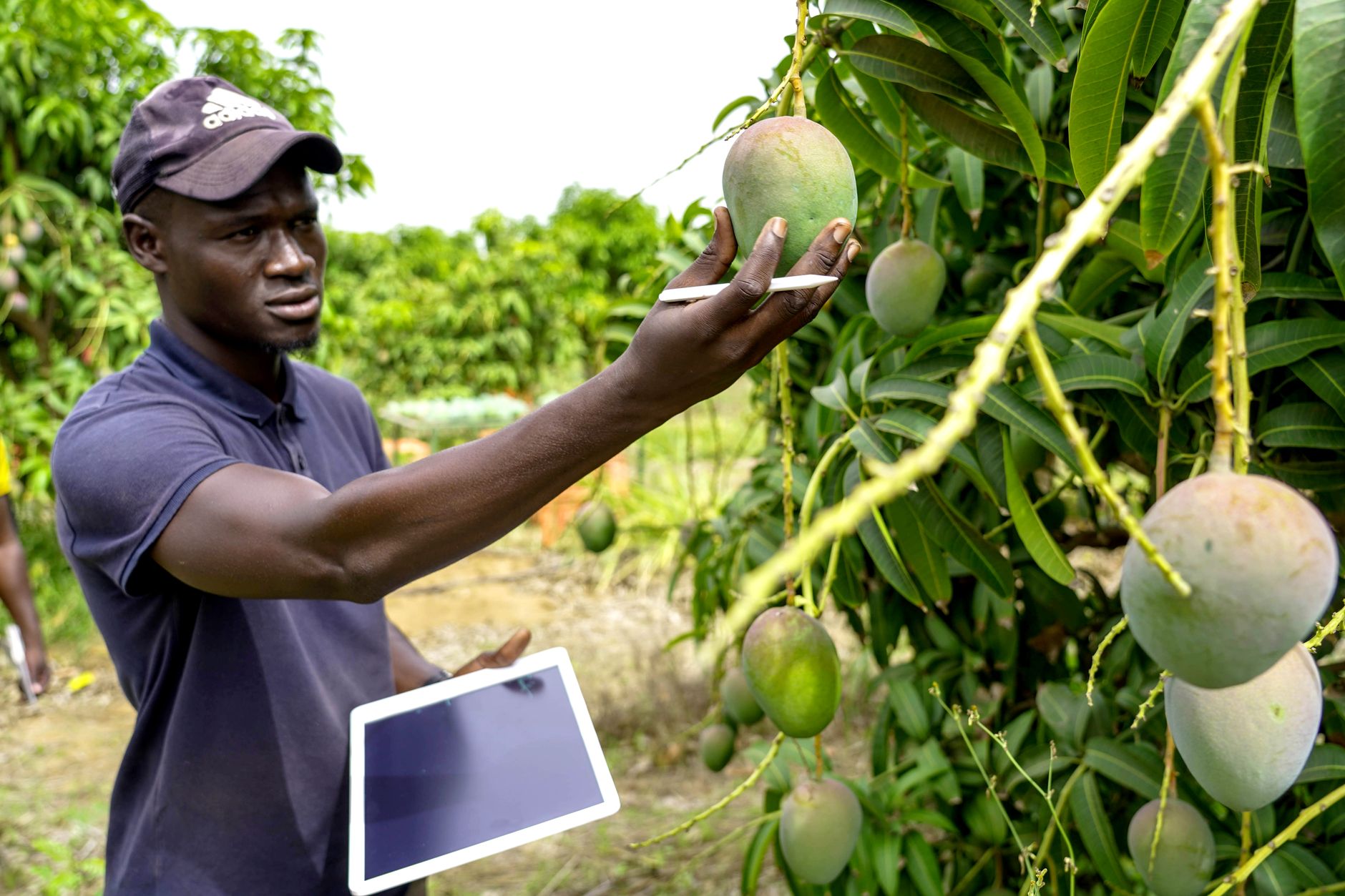
A smallholder farmer in Zambia can receive a WhatsApp alert — powered by a machine-learning model trained on satellite and weather-station data — telling her to delay planting by five days because a dry spell is coming. A Nairobi insurer can price parametric crop insurance accurately because an AI model can estimate rainfall at field level, not just district level. A Lagos grid operator can predict peak demand during a heatwave and pre-position diesel generators before the crisis hits.
These are not hypothetical. They are live products built by African teams right now. The common thread is that climate AI works best when it is trained on local data, built by people who understand local context, and distributed through channels communities already use — mobile phones, SMS, radio, and community cooperatives.
One common mistake founders make is importing a climate model built for European or North American conditions and assuming it will generalise to African geographies. It rarely does. Soil types, crop varieties, monsoon patterns, and land-use histories differ dramatically. The startups winning in this space invest heavily in local data collection before they write a single line of model code. Discover more about how African innovators are building on local strengths by exploring how African AI startups are turning the continent into the next global AI hub.
African Climate AI Startups Building Real Products in 2026
The startup landscape is maturing fast. Below are categories of companies — with named examples where public — that represent the frontier of African climate AI.
Agri-Climate Intelligence
Pula Advisors (Kenya/Nigeria) uses satellite imagery and machine learning to deliver parametric crop insurance to smallholder farmers. By 2024, Pula had covered over 15 million farmers across 22 countries. Its AI models assess crop health from space, removing the need for costly on-ground loss adjusters. The business model is elegant: governments and development banks pay the premium, farmers get the cover, and Pula earns a fee per policy.
Apollo Agriculture (Kenya) combines satellite data, machine-learning credit scoring, and agronomic advice into a single farmer-facing app. It offers input financing tied to climate-smart recommendations — if the model predicts drought risk, it adjusts the recommended seed variety automatically. That closed loop between climate intelligence and financial product is rare and powerful.
Water and Flood Risk Platforms
FloodMapp has African operations and provides real-time flood inundation mapping using AI and hydrological models. For city planners in Accra or Dar es Salaam, knowing which neighbourhoods will flood in the next six hours — not just which ones flooded last year — changes emergency response entirely.
Upande (Kenya) builds IoT and data platforms for water utilities, combining sensor data with predictive analytics to cut non-revenue water losses. Water scarcity and climate change are inseparable; a utility that can predict pipe stress during a drought event saves both water and money.
Energy Transition and Grid Optimisation
Several Nigerian and South African startups are applying AI to solar forecasting — predicting how much power a rooftop array will generate tomorrow so that households and businesses can plan battery usage. Arnergy (Nigeria) and Hohm Energy (South Africa) both use data-driven models to size solar-plus-storage systems accurately, reducing the expensive over-engineering that plagued earlier installations.
Research Hubs Producing the Science Behind the Products
Products need science. Africa's climate AI research ecosystem has grown substantially, though it remains underfunded relative to the scale of the challenge.
The African Institute for Mathematical Sciences (AIMS) operates across six countries — South Africa, Senegal, Ghana, Cameroon, Tanzania, and Rwanda — and has become a pipeline for machine-learning talent applied to climate problems. Its research fellows have published on topics ranging from drought prediction using LSTM networks to remote sensing for deforestation monitoring. AIMS actively partners with global institutions including the Fields Institute and Google DeepMind.
The Deep Learning Indaba is the continent's flagship AI research gathering. Each year it convenes hundreds of African researchers and has spawned national chapters — IndabaX events — in over 30 countries. Its climate track has grown year-on-year, reflecting how seriously African AI researchers take the intersection of machine learning and environmental science.
The International Livestock Research Institute (ILRI), headquartered in Nairobi, applies climate modelling to livestock systems across sub-Saharan Africa. Its work on heat stress thresholds for cattle breeds is directly actionable for pastoralist communities in the Horn of Africa.
Universities are also stepping up. The University of Cape Town's Climate System Analysis Group (CSAG) produces high-resolution regional climate projections that startups use as training data. Without that foundational science, commercial AI models would be guessing. The relationship between academic hubs and commercial startups is symbiotic — and the most successful founders know to build it deliberately.
Funding Opportunities for African Climate AI in 2026
This is where the landscape is moving fastest. A cluster of new grant programmes, challenge funds, and impact investment vehicles are specifically targeting African climate tech. Here is a structured breakdown.
Multilateral and Development Finance
- The African Development Bank's Mission 300 — a $90 billion initiative to connect 300 million Africans to electricity by 2030 — is actively funding AI-enabled grid solutions. Startups that can demonstrate AI-driven demand forecasting or fault detection are well-positioned for procurement contracts.
- The Global Innovation Fund (GIF) funds innovations that improve the lives of people living on less than $5 per day. Climate resilience tools for smallholders and urban poor communities are a priority vertical. GIF grants range from $50,000 pilot awards to multi-million-dollar scale grants.
- The Green Climate Fund (GCF) disburses billions annually through accredited entities. African-led climate AI companies can access GCF capital through national implementing entities like the Development Bank of Southern Africa or the West African Development Bank. The process is slow — expect 18-24 months from application to disbursement — but the cheque sizes are transformative.
Philanthropic and Challenge Funds
- Zindi's AI for Climate Challenge — Zindi is Africa's largest data science competition platform, and its climate-focused competitions regularly offer prize pools of $10,000–$30,000 alongside pathways to employment or partnership with the sponsoring organisation.
- The GSMA Innovation Fund for Climate Resilience supports mobile-enabled climate solutions across Africa and Asia. Awards typically run to £250,000 per cohort member, with a strong preference for solutions that reach underserved communities through existing mobile infrastructure.
- Catalyst Fund provides venture support — not just grants — to early-stage climate fintech companies in Africa. Its model combines a small equity-free grant with intensive business support, which many founders find more valuable than the cash alone.
Venture Capital and Impact Investment
- Novastar Ventures and Acumen both have active climate tech portfolios in Africa. They look for companies with a clear path to financial sustainability, not just grant dependency.
- The African Climate Foundation's Climate Finance Access Hub helps African governments and businesses navigate the complex landscape of climate finance — a genuinely useful resource if you are trying to access GCF or bilateral climate funds for the first time.
- Google.org's AI for Social Good programme has funded African climate AI projects and is expected to expand its Africa-specific allocations through 2026, following commitments made at COP28.
One important trade-off to understand: grant funding is non-dilutive but often comes with reporting burdens that can consume 20-30% of a small team's capacity. Venture funding is faster to deploy but requires a clear commercial model. The smartest founders stack funding types — a grant to prove the concept, then a seed round to scale it.

How Diaspora Professionals Can Plug In
African diaspora professionals — engineers in London, data scientists in Toronto, climate policy experts in Washington D.C. — have a specific and undervalued role to play. They carry technical skills honed in well-resourced environments and networks that connect African startups to global capital and partnerships.
Concrete ways to engage include:
- Technical advisory roles — Many African climate AI startups need part-time ML engineers or data architects. Platforms like Topping Africa's creator and innovator directory are emerging spaces to connect talent with opportunity across the continent.
- Angel investing — Ticket sizes of $5,000–$25,000 are meaningful at the pre-seed stage. Diaspora angel networks like African Business Angel Network (ABAN) facilitate deals and provide co-investment partners.
- Research collaboration — If you are based at a university, a joint research project with AIMS or a Kenyan university can unlock funding from bodies like the British Academy or the Gates Foundation that require institutional partnerships.
- Policy advocacy — Climate AI needs enabling regulation. Diaspora professionals with policy experience can support African governments in drafting AI governance frameworks that do not inadvertently block climate innovation.
The diaspora's contribution to African business has historically been measured in remittances. The next chapter is measured in equity stakes, research citations, and policy wins. Learn more about the broader creator and innovator economy on the continent at how African creators are turning culture into a global creative economy.
What to Watch: Trends Shaping African Climate AI Through 2026
Several shifts will define the next 18 months.
Federated learning for climate data is gaining traction. Because climate data is sensitive — governments are reluctant to share raw satellite feeds — federated models that train on distributed data without centralising it offer a practical workaround. Expect to see more African startups adopting this architecture.
Foundation models for African climate are being built. Just as large language models changed natural language processing, large climate models trained on African-specific datasets — African soil maps, local crop calendars, regional weather station archives — will change what is possible for downstream applications. Climate Change AI, a global research community, is actively facilitating this work with African partners.
Carbon markets and AI are converging. African nations hold enormous carbon sequestration potential in forests, wetlands, and soil. AI-powered monitoring, reporting, and verification (MRV) tools — which use satellite imagery and ML to certify carbon credits — are making African carbon assets more credible to international buyers. This is a multi-billion-dollar opportunity for African business if the integrity challenges can be solved.
Government procurement is opening up. Rwanda, Kenya, and South Africa have all signalled intent to procure AI tools for climate adaptation planning. A government contract is slower than a consumer sale but far more durable — and it creates the reference case that unlocks the next ten contracts.
For founders, researchers, and funders alike, the message is the same: the window to build foundational positions in African climate AI is open now, not later. The combination of acute need, growing talent, and increasing capital means the next five years will define who leads this space for decades. Explore African innovators and creators who are already shaping this future — and consider how your skills, capital, or networks can accelerate what they are building.
Staff
Contributing writer at Topping Africa.
0 Comments
No comments yet. Be the first to share your thoughts!