Africa's Big 4 Economies Explained: Why Nigeria, South Africa, Egypt, and Kenya Dominate Business Search Interest
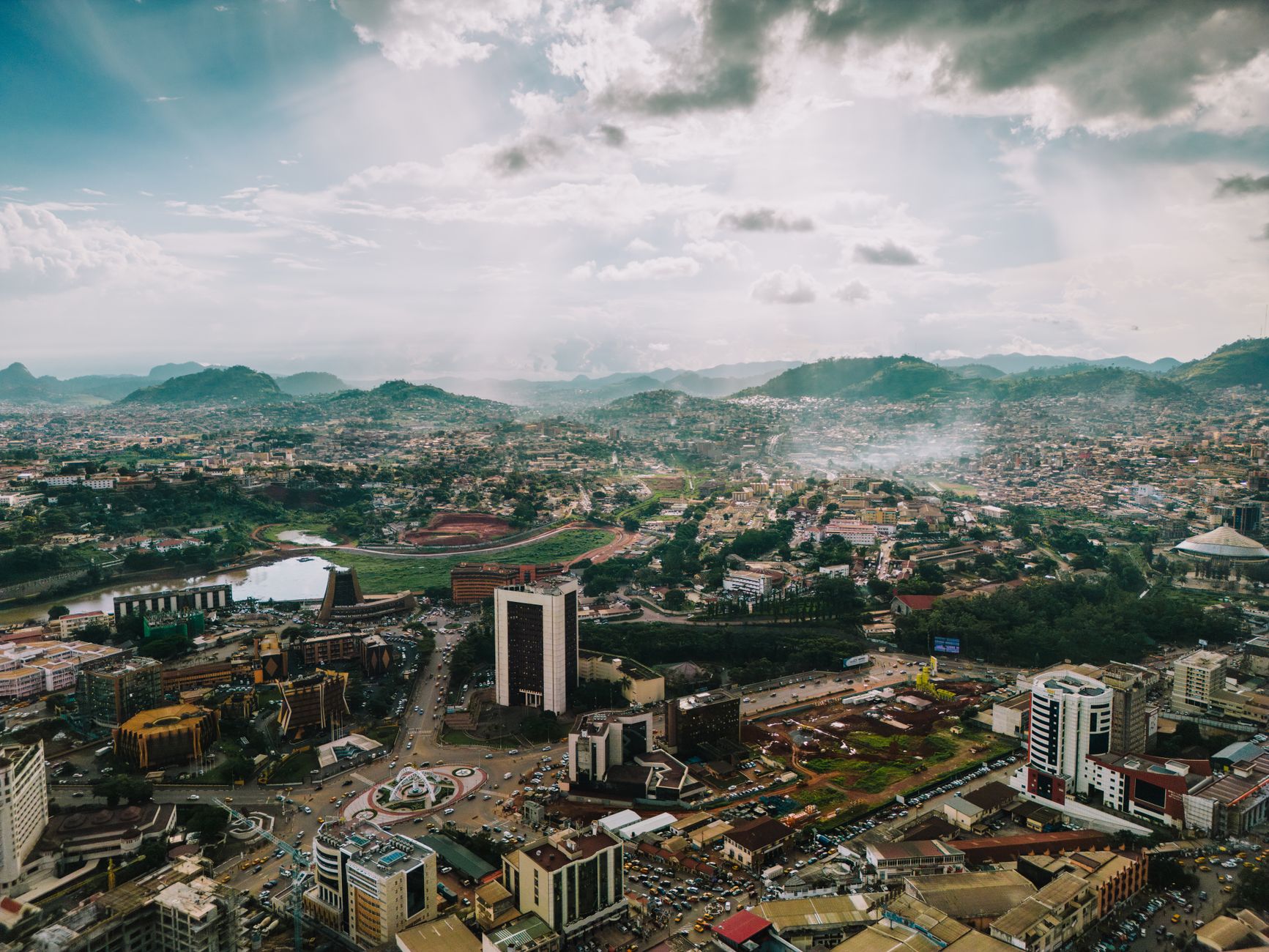
Nigeria, South Africa, Egypt, and Kenya dominate Africa's business and creator landscape — but most breakdowns miss what actually matters for founders and creators. This guide cuts through the macroeconomics to give you a practical, honest map of where opportunity concentrates, what the real trade-offs are, and how to use the Big 4 to build smarter across the continent.
What Are the Big 4 in Africa? A Question Every Creator and Investor Should Answer
Ask any global investor, startup founder, or content creator where to plant their flag on the African continent, and four names come up — every single time. What are the big 4 in Africa? Nigeria, South Africa, Egypt, and Kenya. These four economies collectively account for over 55% of Africa's total GDP, and they attract the lion's share of venture capital, creator attention, and business search interest on the continent. But this article isn't a macroeconomics lecture. It's a practical breakdown for creators, startups, and entrepreneurs who need to understand where opportunity concentrates — and why.
The standard answer you'll find elsewhere focuses on GDP rankings and trade statistics. That framing misses the point for most people reading this. What matters is why these four markets pull creators and investors like gravity, what the real trade-offs are inside each one, and how you can use this knowledge to make smarter decisions — whether you're building a brand, launching a product, or deciding where to grow your audience.
Nigeria: The Loudest Market on the Continent
Nigeria is Africa's largest economy by GDP — roughly $477 billion as of 2023, according to World Bank data. More importantly for creators and entrepreneurs, it has the continent's largest consumer base: over 220 million people, with a median age of just 18. That youth bulge isn't a statistic — it's an audience.
Lagos alone functions as a creative and commercial supercity. Nollywood generates over 2,500 films a year, making it the world's second-largest film industry by output. The music industry — Afrobeats, specifically — has gone genuinely global, with artists like Burna Boy and Davido pulling millions of streams weekly. This cultural export machine creates a halo effect: brands, platforms, and investors follow the attention.
For startups, Nigeria has historically dominated African VC funding. In 2021, Nigerian startups raised over $1.4 billion, more than any other African country that year. Fintech is the engine — companies like Flutterwave, Paystack (acquired by Stripe), and Moniepoint have redefined how money moves across the continent.
The trade-off? Nigeria is a hard market to operate in. Infrastructure gaps, currency volatility (the naira has lost significant value against the dollar since 2022), and regulatory complexity are real friction points. Creators and founders who succeed here tend to be deeply embedded in the local context — they don't parachute in.
- Best for: Consumer brands, entertainment, fintech, creator monetization
- Watch out for: Naira devaluation, inconsistent regulation, infrastructure costs
- Creator angle: Massive organic audience, high engagement rates, strong diaspora amplification
Curious how Nigerian creators are building global audiences? Discover the top African content creators dominating TikTok, Instagram, and YouTube in 2026.
South Africa: The Most Structured Market — and the Most Misunderstood
South Africa sits at roughly $377 billion GDP and is consistently ranked as Africa's most developed economy in terms of infrastructure, financial systems, and regulatory clarity. Johannesburg hosts the continent's most sophisticated stock exchange. Cape Town has emerged as a genuine tech hub, with a growing startup ecosystem that punches well above its population weight.
For creators specifically, South Africa offers something rare on the continent: a mature digital advertising market. Brands here spend real money on influencer and content marketing, and the creator economy infrastructure — agencies, MCNs, brand deal platforms — is more developed than anywhere else in sub-Saharan Africa. The South African digital creator boom is already well underway, and it's creating new categories of opportunity.

The challenge is inequality. South Africa has one of the world's highest Gini coefficients, which means the consumer market is deeply segmented. A product that works for middle-class Johannesburg buyers may be completely inaccessible to the majority of the population. Founders who ignore this segmentation — and many international ones do — build for a narrow slice and wonder why growth stalls.
Load-shedding (rolling power cuts) has also been a persistent operational headache for businesses and creators alike, though 2024 saw significant improvement. The political and economic uncertainty around land reform and state-owned enterprises adds another layer of complexity for long-term investors.
- Best for: B2B tech, financial services, creator economy infrastructure, film and media production
- Watch out for: Market segmentation, power reliability, slow bureaucratic processes
- Creator angle: Best-in-class brand partnerships, strong streaming platform presence, English-language content advantage
Read more about the opportunities and risks shaping South Africa's digital creator boom — and what creators actually need to thrive there.
Egypt: Africa's Northern Powerhouse That Most People Overlook
Egypt often gets categorized as a Middle Eastern economy, which causes many Africa-focused creators and investors to overlook it entirely. That's a mistake. Egypt is Africa's third-largest economy at around $396 billion GDP, with a population of over 105 million — the continent's second largest. Cairo is one of the Arab world's most active startup ecosystems, and Egypt's e-commerce sector has grown at double-digit rates for several consecutive years.
The country's strategic position — bridging Africa, the Middle East, and Europe through the Suez Canal — gives it a geographic advantage no other African economy can replicate. For creators, Egypt offers a massive Arabic-language content market that connects directly to a global Arabic-speaking audience of over 400 million people. A creator building in Arabic from Cairo isn't just reaching Egyptians — they're reaching Saudi Arabia, the UAE, and the wider MENA region simultaneously.
Egypt's government has made deliberate moves to support the digital economy. The Ministry of Communications and Information Technology has invested heavily in ICT infrastructure, and the country now has a growing cohort of tech unicorn candidates in fintech, edtech, and logistics.
The real limitation is political and economic volatility. The Egyptian pound has faced severe devaluation pressure, and foreign currency shortages have complicated business operations for companies that import or deal in USD. Regulatory environments for media and digital content can also be restrictive — a factor creators must navigate carefully.
- Best for: Arabic-language content, e-commerce, logistics tech, MENA market entry
- Watch out for: Currency controls, content regulation, economic instability
- Creator angle: Gateway to 400M+ Arabic speakers, underserved content verticals, strong YouTube culture
Kenya: Africa's Quiet Overachiever
Kenya punches far above its weight. With a GDP of around $118 billion — the smallest of the Big 4 — it has produced outsized innovation relative to its economic size. M-Pesa, the mobile money platform launched by Safaricom in 2007, essentially invented mobile payments for the developing world. That single product gave Kenya a 15-year head start on the financial infrastructure that the rest of Africa is still building.
Nairobi has earned the nickname "Silicon Savannah" for good reason. It hosts the African headquarters of Google, Microsoft, and numerous global NGOs and development finance institutions. This concentration of international capital and talent creates a unique environment: Kenyan startups often have access to global networks and mentorship that founders in larger markets have to work harder to find.
For creators, Kenya's digital penetration rates are impressive. Mobile internet usage is among the highest in sub-Saharan Africa, and Kenyan creators have built significant followings on YouTube, TikTok, and Instagram — often with production quality and storytelling sophistication that rivals global standards. The creator economy here is still early-stage relative to Nigeria and South Africa, which means lower competition and higher upside for those who move now.

Kenya's weakness is scale. The consumer market is smaller, purchasing power is more limited, and the startup ecosystem — while vibrant — has faced a funding correction since 2022 that hit hard. Several high-profile Kenyan startups (including Copia Global and Sendy) shut down or significantly restructured in 2023-2024, a reminder that even the continent's most sophisticated ecosystem isn't immune to global capital tightening.
- Best for: Fintech, agritech, climate tech, creator-led media, B2B SaaS
- Watch out for: Smaller consumer market, recent startup funding contraction, political instability cycles
- Creator angle: Early-mover advantage, strong English-language content, internationally connected audience
How These Four Markets Connect — and Why That Matters for Creators
Here's the insight most macro-focused analysis misses: the Big 4 don't operate in isolation. They function as interconnected nodes in a pan-African creator and business network. A Nollywood film shot in Lagos gets distributed in Nairobi, Cape Town, and Cairo. A fintech product built in Johannesburg raises capital from investors who also back Nairobi startups. An Egyptian YouTuber with 2 million subscribers reaches diaspora communities in London, Dubai, and Lagos simultaneously.
Understanding this network effect changes how you think about building in Africa. The most successful African creators and entrepreneurs don't pick one market — they anchor in one and radiate outward. Davido is Nigerian but his tours span South Africa, Kenya, and Egypt. Flutterwave started in Nigeria and now processes payments across 34 African countries.
For creators specifically, the practical implication is this: build your content identity in the market where your voice is most authentic, then use platform algorithms and diaspora networks to amplify across borders. The African diaspora is a critical distribution channel that most creators underutilize. Learn why the African diaspora matters for modern African creators and how to tap into it strategically.
The funding landscape follows a similar logic. Investors who back African startups increasingly expect founders to have a multi-market thesis — not just "we're building for Nigeria" but "we're anchoring in Nigeria and expanding to Ghana, Kenya, and Egypt within 36 months." Understanding the Big 4 gives you the language and the map to make that case credibly. For a deeper look at how this funding ecosystem works, explore how creators and startups are funding the next wave of African innovation.
Common Mistakes Founders and Creators Make When Entering These Markets
The biggest error is treating any of the Big 4 as a monolith. "Africa" is not a market. Neither is "Nigeria." Lagos and Kano are as different as New York and rural Mississippi — same country, wildly different consumer behavior, infrastructure, and purchasing power. Founders who build for "Nigeria" without specifying which demographic, which city, and which income bracket almost always underperform.
A second common mistake: assuming the most obvious market is the right one. Nigeria's size attracts enormous competition. For a creator or startup with limited resources, Kenya's smaller but highly connected ecosystem might generate faster traction, better unit economics, and more accessible investor relationships. Bigger is not always better when you're starting out.
Third — and this one is specific to creators — many international creators try to enter African markets with content that isn't culturally grounded. African audiences are sophisticated. They can tell the difference between a creator who genuinely understands their context and one who's performing "Africa" for external audiences. Authenticity isn't a nice-to-have; it's the price of entry.
Finally, don't underestimate the role of platform-specific behavior in each market. TikTok is dominant in Kenya and South Africa among Gen Z. YouTube remains king in Nigeria and Egypt. Instagram drives brand deals in South Africa. Explore how creator discovery platforms in Africa are changing the growth equation for creators who want to build cross-market presence without burning out.
The Opportunity Hidden in Plain Sight
Africa's Big 4 are not equally covered by global media, investors, or platforms — and that gap is where opportunity lives. Egypt's Arabic creator economy is dramatically underserved by English-language creator tools and brand partnerships. Kenya's climate tech and agritech sectors are attracting development finance but lack the storytelling infrastructure to reach mainstream investors. South Africa's film incentive programs are world-class but poorly understood by international producers. According to Disrupt Africa's funding reports, information asymmetry — not lack of opportunity — is the primary barrier for most founders and creators entering these markets.
The creators and entrepreneurs who will win in the next decade are those who close that information gap faster than everyone else. They study these markets not as abstract economic entities but as living ecosystems with specific audiences, specific pain points, and specific cultural codes. They build relationships before they need them. They show up consistently, not just when a trend spikes.
Whether you're a creator building your first 10,000 followers, a startup founder mapping your expansion strategy, or an investor looking for the next breakout market — the Big 4 are your starting point. Not your ending point. Get started by exploring the full range of African creators and innovators shaping these markets right now at Topping Africa's Explore page, or dive into the trending creators and stories that are defining the continent's next chapter.
Staff
Contributing writer at Topping Africa.
0 Comments
No comments yet. Be the first to share your thoughts!