
Africa's AI Future: How Google's Africa AI Lab Is Empowering the Next Wave of Creators
Google's Africa AI Lab in Accra is more than a research facility — it's a gateway for African creators and founders to build AI-powered platforms using tools like Gemini. With key program deadlines approaching August 31, 2026, this guide breaks down exactly how to qualify, what to build, and what mistakes to avoid.
The Africa AI Lab Is Not Just a Research Center — It's a Creator Launchpad
When Google opened its Africa AI Lab in Accra, Ghana, it did something most tech giants had never done on the continent: it bet on African talent as the source of AI innovation, not just its consumer. For African founders, researchers, and digital creators, this is not a press release moment. It is a structural shift in who gets to build the tools that shape the world's next decade. The lab sits at the intersection of cutting-edge machine learning research and Africa's fastest-growing creator economy — and understanding how to use it could define your next five years.
This article cuts through the noise. Most coverage of the Africa AI Lab stops at the announcement. We go further: what programs are actually available, who qualifies, what the real deadlines look like (including the August 31, 2026 window), and how creators and founders can use Gemini and related tools to build platforms that matter. There are trade-offs, common mistakes, and edge cases worth knowing before you apply or build.

What the Google Africa AI Lab Actually Does (and What It Does Not)
The Google Research Africa lab in Accra focuses on three core pillars: fundamental AI research, applied machine learning for African contexts, and talent development through fellowships and residencies. It is not an accelerator in the traditional sense. It does not write checks to startups. What it does is arguably more valuable for creators and builders at the early stage — it provides access to compute, mentorship from world-class researchers, and credibility that opens doors.
The lab's research agenda is deliberately Africa-centric. Projects have included low-resource language models for Swahili, Yoruba, and Hausa; flood forecasting systems calibrated for West African geography; and health diagnostics trained on African patient data. For creators building in digital media, productivity, or platform tools, this means the underlying AI models are increasingly trained on data that reflects African reality — not retrofitted from Silicon Valley defaults.
One common mistake founders make is assuming the lab is only for PhD-level researchers. That misreads the opportunity. The Google AI Residency and Google for Startups Africa programs that orbit the lab are explicitly designed for practitioners — engineers, product builders, and yes, creative technologists who want to integrate AI into their work.
Programs, Fellowships, and the August 2026 Deadline You Cannot Miss
Several programs tied to Google's Africa AI ecosystem have active or upcoming application windows. The most time-sensitive is the Google AI Residency Africa cohort, which has a rolling deadline with a hard cutoff around August 31, 2026 for the next intake. Missing this window means waiting another full cycle — typically 12 to 18 months.
Here is a breakdown of the key programs worth tracking:
- Google AI Residency (Africa cohort): A 12-month paid program for early-career researchers and engineers. Residents work directly on research projects at the Accra lab. Requires a bachelor's degree in a technical field and demonstrated coding ability — not a PhD.
- Google for Startups Accelerator Africa: A three-month equity-free program for seed-to-Series A startups. Includes $350,000 in Google Cloud credits, Gemini API access, and one-on-one mentorship. Applications typically open twice a year.
- Google.org AI for Social Good Grants: Non-dilutive funding for nonprofits and social enterprises using AI for impact. African organizations working in education, health, or creative industries are explicitly prioritized.
- Masakhane Research Community: Not a Google program, but deeply linked to the lab's ecosystem. This open-science community focuses on NLP for African languages and is a direct pipeline into Google Research collaborations.
The August 31, 2026 deadline is not a soft guideline. Google's Africa programs run on strict cohort cycles, and late applications are rarely considered. If you are a creator-founder building an AI-powered platform — a content discovery engine, a multilingual podcast tool, a digital commerce assistant — this is the window to move.
How African Creators Can Use Gemini to Build Real Products
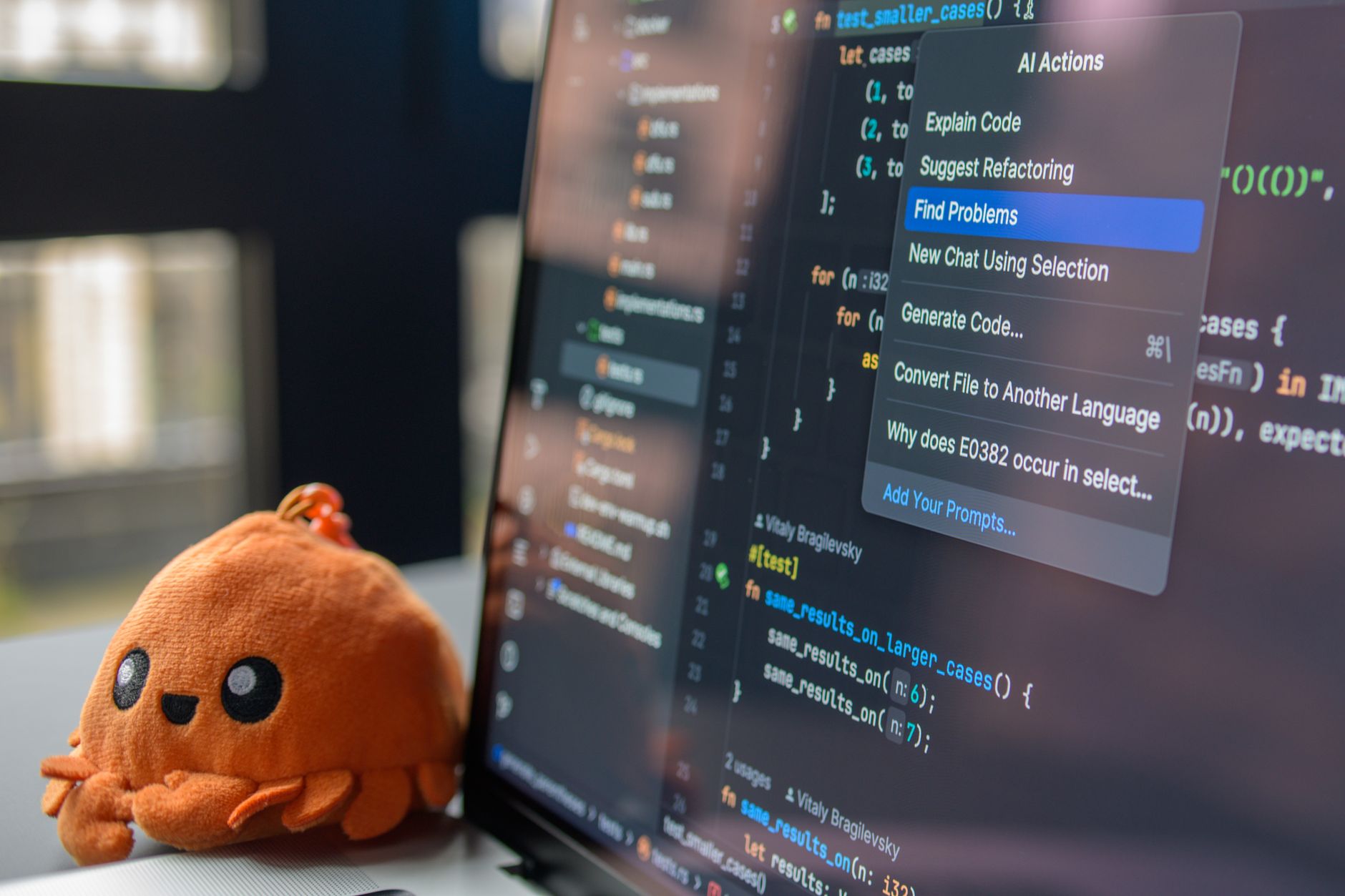
Gemini, Google's flagship AI model family, is the practical tool that connects the Africa AI Lab's research ambitions to what creators can build today. The Google AI Studio gives free access to Gemini 1.5 Pro and Flash, with generous token limits that make prototyping genuinely affordable. For an African creator or founder without deep pockets, this matters enormously.
Here are three concrete use cases worth building right now, with specific implementation notes:
- Multilingual Creator Discovery Platforms: Use Gemini's multimodal capabilities to analyze creator content across languages — Pidgin, Amharic, Zulu — and surface relevant creators to brands. The model handles code-switching well, which is critical for African social media where creators mix languages mid-sentence. Pair this with the Gemini Embeddings API to build semantic search that goes beyond hashtags.
- AI-Powered Digital Media Tools: Build newsletter or short-form video script generators trained on African cultural context. Gemini's long-context window (up to 1 million tokens in 1.5 Pro) means you can feed it an entire archive of a creator's past work and generate on-brand content suggestions. This is not ChatGPT-generic output — the context window lets you personalize at a level that smaller models cannot match.
- Productivity Tools for African Entrepreneurs: Invoice generators that handle local tax structures, contract summarizers aware of Nigerian or Kenyan commercial law, or customer support bots trained on a brand's specific product catalog. These are unglamorous but high-value tools that African SMEs will pay for monthly.
A critical trade-off to understand: Gemini Flash is fast and cheap but weaker at nuanced reasoning. Gemini 1.5 Pro is significantly more capable but costs more at scale. For most creator tools, start with Flash for user-facing features and use Pro for backend processing like content analysis or contract review. Do not build your entire product on Pro and then discover the unit economics do not work at 10,000 users.
The Gemini API: Practical First Steps for African Founders
Getting started with the Gemini API takes less than an afternoon. Go to Google AI Studio, create a project, and generate an API key. The free tier gives you 15 requests per minute and 1 million tokens per day on Gemini 1.5 Flash — enough to build and validate a product concept without spending a dollar.
The most common mistake at this stage is over-engineering the prompt. African founders often spend weeks crafting elaborate system prompts when a clear, direct instruction works better. Test with simple prompts first. Add complexity only when simple fails. This is not intuitive if you come from a software engineering background where precision is rewarded, but LLMs respond better to conversational clarity than technical precision.
Another edge case: if your product serves users in low-bandwidth environments — rural Nigeria, parts of Ethiopia, township South Africa — you need to think about latency. Gemini Flash's average response time is around 1-3 seconds for short prompts, but network conditions in these markets can triple that. Build offline-first features or use streaming responses so users see output begin immediately rather than waiting for a full response to load.
Why This Moment Is Different for African Tech Creators
The Africa AI Lab is not operating in isolation. It is part of a broader structural shift in how African innovation is perceived and resourced. The continent's creator economy is growing at roughly 25% annually, with Nigeria, Kenya, Ghana, and South Africa leading in digital content output. Meanwhile, AI tools are compressing the time it takes to go from idea to product — a solo creator-founder can now build what used to require a team of five.
This convergence is what makes the current moment genuinely different from previous waves of "Africa tech is rising" coverage. The tools are here. The research infrastructure is here. The talent is here. What has historically been missing is the connection between these elements — and that is precisely what the Africa AI Lab and its surrounding ecosystem are designed to provide.
For creators specifically, the opportunity is not just to use AI tools but to build the platforms that other African creators will use. The creator discovery space, for instance, is still wide open on the continent. The new wave of creator discovery platforms is being shaped right now, and founders who combine AI capabilities with deep cultural knowledge of African markets have a genuine edge over global players who are still learning what "Afrobeats" means.
Similarly, the AI startup ecosystem is maturing fast. African AI startups are already turning the continent into a global AI hub — and the Google Africa AI Lab is one of the key nodes in that network. Positioning yourself within that network now, before the next cohort cycle closes, is a strategic decision worth taking seriously.

Common Mistakes African Creators Make When Applying for AI Programs
Having a strong product idea is necessary but not sufficient for Google's Africa programs. The selection process rewards candidates who can demonstrate both technical depth and a clear understanding of the problem they are solving for African users. Generic applications that could have been written about any market anywhere fail consistently.
Here are the most frequent mistakes — and how to avoid them:
- Applying without a working prototype: Even a rough demo built in Google AI Studio signals that you can execute, not just ideate. Build something in a weekend before you submit.
- Describing the problem in global terms: "Content creators struggle to monetize" is too broad. "Yoruba-language creators on TikTok earn 60% less per 1,000 views than English-language creators because brand deals require English content" is specific, verifiable, and African.
- Ignoring the research component: For the AI Residency specifically, reviewers want to see that you have read recent papers — at least from the past 18 months — and can situate your work within the current state of the field. Citing a 2019 paper as cutting-edge is a red flag.
- Underestimating the compute question: If your product idea requires training a custom large model from scratch, reconsider. Fine-tuning or prompt-engineering existing models like Gemini is faster, cheaper, and more likely to succeed at the prototype stage.
Building for the Long Game: Culture, Language, and the African Creator Advantage
The deepest advantage African creators have in the AI era is not technical — it is cultural. AI models trained primarily on English-language Western internet data have systematic blind spots around African languages, social dynamics, humor, and storytelling. A creator or founder who understands these gaps is not just a user of AI tools; they are a corrective force in how those tools develop.
Contributing to projects like Masakhane, or building datasets in underrepresented African languages, creates a compound return. You improve the tools. You build credibility in the research community. You position your product on top of data infrastructure that competitors cannot easily replicate. This is the kind of moat that matters in a world where the base models are increasingly commoditized.
African creators are already doing this work across music, film, fashion, and digital media. The top African content creators of 2026 are not waiting for Western platforms to figure out their market — they are building audiences, languages, and formats that the platforms then adapt to. The same energy applied to AI tools is what will produce the next generation of creator infrastructure built by and for Africa.
Explore the full range of African creators shaping this moment at Topping Africa's creator directory — and discover what's trending across the continent's creator economy right now.
Your Next Move: Apply, Build, and Connect Before the Window Closes
The Africa AI Lab and its surrounding programs represent a rare convergence: world-class research infrastructure, accessible tools like Gemini, and a creator economy hungry for products built by people who understand it. The August 31, 2026 deadline for the next AI Residency cohort is close enough to require action now, not in six months.
Start with three concrete steps this week. First, build a prototype in Google AI Studio — even a simple one. Second, write a one-page problem statement that is specific to an African market, with real numbers. Third, connect with the Masakhane community or local AI meetups in Lagos, Nairobi, Accra, or Johannesburg to find collaborators and get feedback before you apply.
The creators and founders who move now will not just benefit from these programs — they will help shape what African AI looks like for the next decade. Discover more opportunities and connect with Africa's most innovative creators at Topping Africa. The continent's AI future is being built by people who refused to wait. Get started today.
Staff
Contributing writer at Topping Africa.
0 Comments
No comments yet. Be the first to share your thoughts!