
African Culture and Traditions: 12 Core Values That Shape Communities Across the Continent
African culture and traditions are not a single monolith — they are a constellation of shared values that operate across thousands of communities. This guide breaks down 12 core values, from Ubuntu to collective joy, showing how they shape identity, business, and creative expression across the continent and beyond.
Ask anyone to describe African culture and traditions and you will likely hear words like "rich" and "diverse" — accurate, but not very useful. Africa has over 3,000 distinct ethnic groups, more than 2,000 languages, and ecosystems ranging from Saharan desert to equatorial rainforest. Yet beneath that diversity runs a set of shared values so consistent that anthropologists, historians, and African philosophers have documented them across wildly different communities. These are not vague sentiments. They are operating principles that govern how families raise children, how communities settle disputes, how businesses are built, and how creators tell stories. Understanding them is the starting point for understanding Africa itself.
1. Ubuntu — "I Am Because We Are"
Ubuntu is probably the most cited African philosophical concept outside the continent, yet it is still routinely misunderstood as mere friendliness. It is, more precisely, a relational ontology: your identity is constituted through your relationships with others. A Zulu elder does not say "I think, therefore I am." The logic runs closer to "We are, therefore I am." This shapes everything from conflict resolution — where community elders mediate rather than courts adjudicate — to business models built on collective ownership rather than individual accumulation.
The practical consequences are significant. Ubuntu communities tend to share resources during hardship without formal contracts. They also expect individuals who succeed to invest back into the group. When African entrepreneurs skip this step, they often face social friction that derails otherwise sound ventures. Acknowledging Ubuntu is not just cultural sensitivity — it is operational intelligence for anyone building on the continent.
Scholars at JSTOR's African philosophy archives trace Ubuntu's documented roots to Bantu-speaking communities stretching from South Africa through Zimbabwe, Zambia, and Tanzania, though analogous concepts appear under different names across West and East Africa as well.
2. Respect for Elders and Ancestral Wisdom
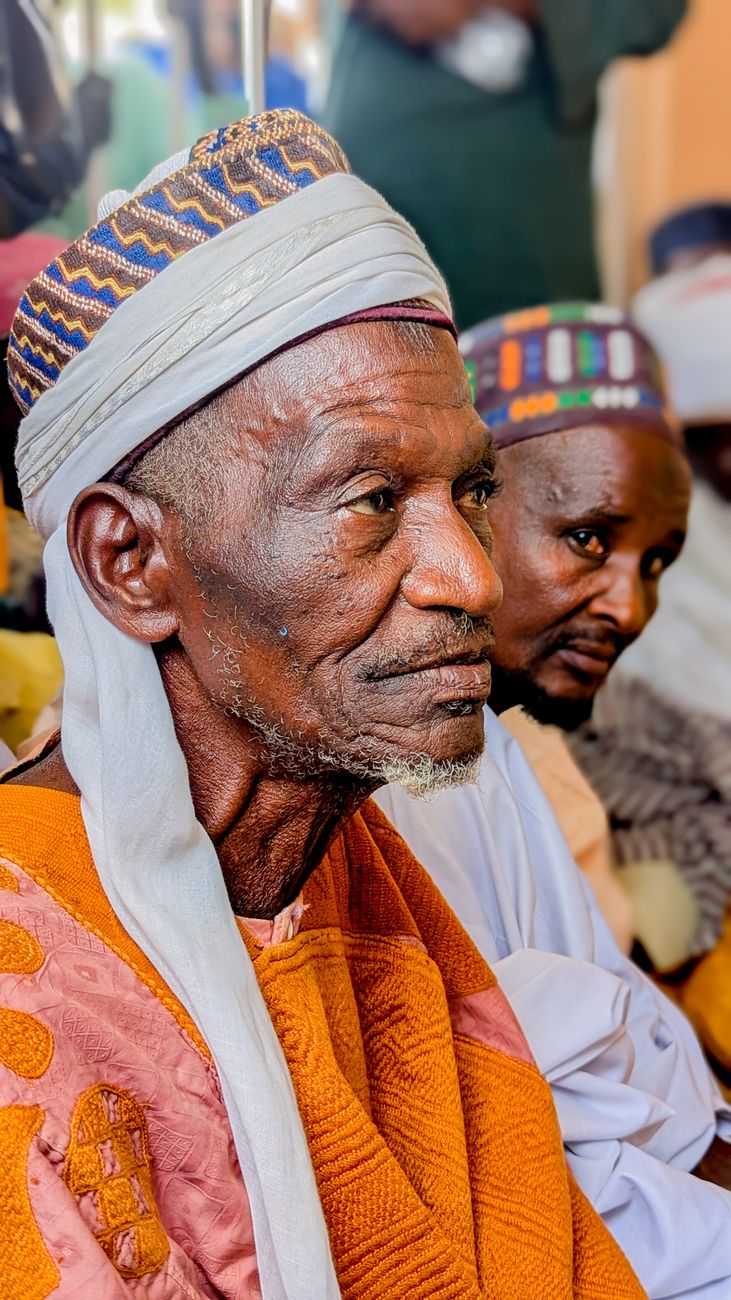
In most African cultures, age is not just a number — it is a credential. Elders carry accumulated knowledge about farming cycles, water sources, dispute resolution, and social contracts that no textbook replaces. Greeting an elder before speaking, offering them the first seat, and consulting them before major decisions are not performative rituals. They are knowledge-transfer mechanisms refined over centuries.
This value has a sharp edge that younger Africans navigate constantly. Respect for elders can sometimes suppress dissent and slow necessary change. The most effective African leaders — in politics, business, and culture — tend to find a path that honors elder authority while still advocating for new approaches. They frame innovation as an extension of ancestral wisdom, not a rejection of it.
African content creators face this tension daily. A creator challenging social norms must do so carefully to avoid being dismissed as disrespectful. Asma's rise as TikTok's queen of East African comedy is a masterclass in this balance — she pushes boundaries while keeping her humor rooted in cultural familiarity.
3. Communal Land and Resource Stewardship
Across the continent — from the communal grazing lands of the Maasai to the shared fishing waters of West African coastal communities — land has historically been held collectively, not individually. This is not a failure to develop property rights. It is a deliberate system designed to prevent hoarding and ensure that every community member has access to survival resources.
Colonial land grabs disrupted this system catastrophically, and the consequences are still visible in land disputes across Kenya, Zimbabwe, South Africa, and beyond. Modern African innovators are revisiting communal resource models for the digital age. Cooperative tech platforms, shared creative studios, and community-owned media houses are all expressions of this ancient value applied to new contexts.
4. Oral Tradition as Living Archive
Before writing, there was the griot. The griot tradition of West Africa — where designated oral historians memorize and perform genealogies, histories, and moral stories — is one of the most sophisticated information-storage systems ever developed. A skilled griot can recite 700 years of a family's lineage without a single written note. Similar roles exist under different names across the continent: the imbongi in Zulu culture, the azmari in Ethiopia.
This value explains why African storytelling is so powerful in modern media. The best African filmmakers, podcasters, and musicians are not just creating entertainment — they are continuing an oral tradition that treats storytelling as a civic responsibility. The recent global success of Nollywood and Afrobeats is partly a function of this deep cultural investment in narrative craft. Discover more about how African storytellers are shaping global culture by exploring the best African TV shows released this year.
5. Hospitality as Sacred Duty
The Hausa concept of karamci, the Amharic gursha (feeding a guest from your own hand), the Sotho practice of botho — across the continent, hospitality toward strangers is not optional generosity. It is a moral obligation. Communities that depended on trade routes and seasonal migration built hospitality into their ethical codes because a traveler turned away today might be you tomorrow.
For African entrepreneurs in tourism, hospitality, and e-commerce, this value is a genuine competitive advantage. It is not marketing. It is the natural expression of a deeply held belief that guests must be treated better than family. Brands that understand this build customer loyalty that Western frameworks struggle to replicate through loyalty programs alone.
6. Rites of Passage and Lifecycle Ceremonies
Births, initiations, marriages, and deaths are not private events in most African cultures — they are community milestones that require collective participation. The Xhosa ulwaluko initiation, the Krobo dipo ceremony in Ghana, the Maasai enkiama coming-of-age ritual — each marks a transition that the community witnesses and validates. Without the community's recognition, the transition is incomplete.
These ceremonies do critical social work. They transmit values, reinforce identity, and create bonds between age-groups that last a lifetime. They also generate enormous creative output: music, dance, textile art, body adornment, and performance. Much of what the world calls "African art" originated in these ceremonial contexts. When that art is removed from context — sold in galleries without attribution — it loses the meaning that made it powerful.
7. Music and Dance as Communal Language
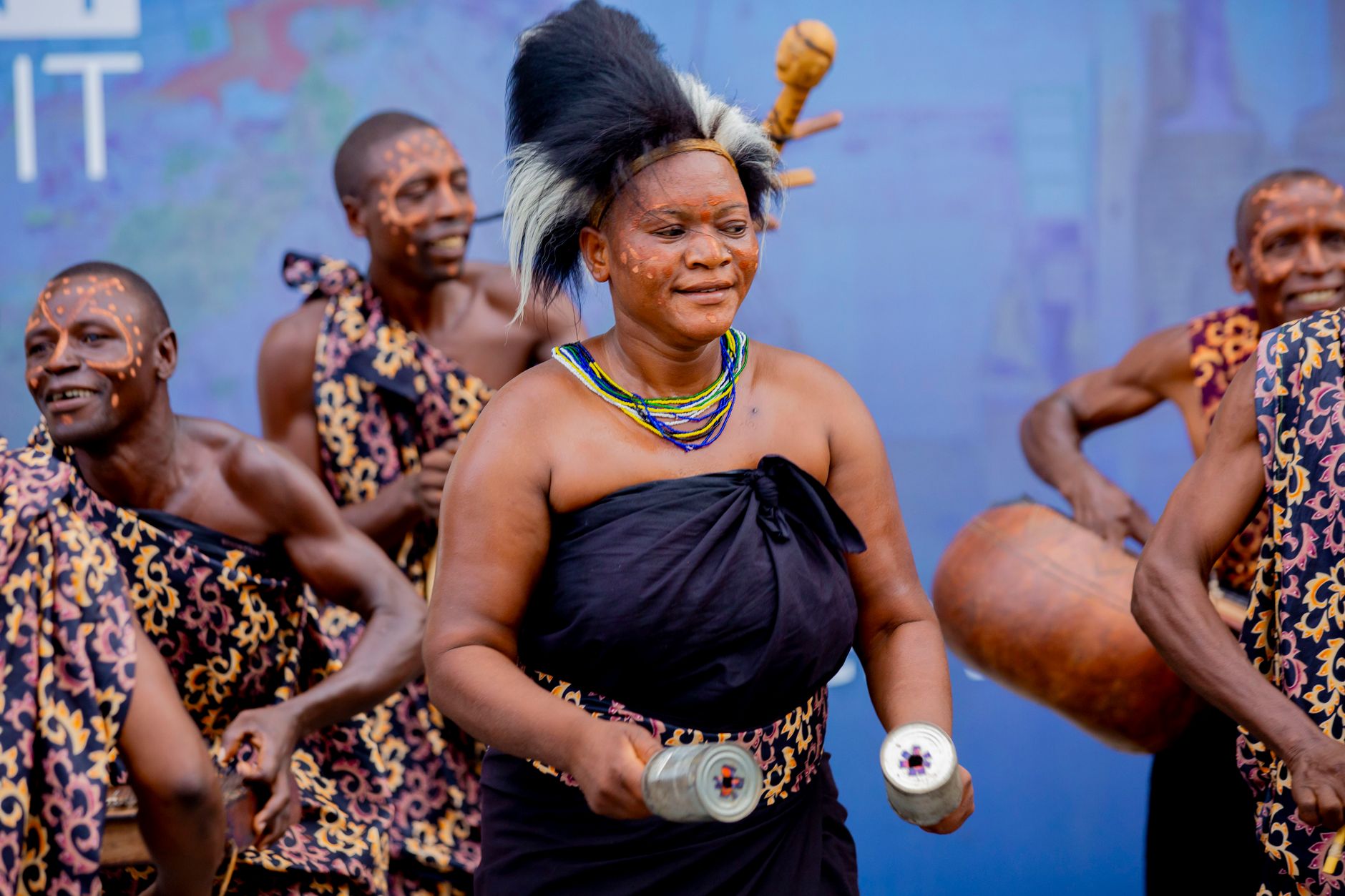
In many African languages, there is no word that separates "music" from "dance" from "ritual." They are a single concept because they have never been experienced separately. The polyrhythmic drum traditions of the Ewe people in Ghana, the call-and-response vocal structures of Zulu choirs, the ngoma drumming circles of East Africa — all of these are participatory, not performative. The audience is always also the performer.
This explains why African music exports so effectively. Afrobeats, Amapiano, Afrohouse — these genres are built on rhythmic structures that invite physical participation. They do not ask you to sit and listen. They ask you to move. That is not a stylistic choice; it is a cultural inheritance. African diaspora brands reimagining culture through fashion and art are drawing on this same participatory energy in visual and commercial form.
8. Spiritual Connection to Nature and the Land
African traditional religions — Yoruba, Akan, Zulu, Igbo, and hundreds of others — share a core premise: the natural world is not inert matter. Rivers, mountains, trees, and animals carry spiritual significance and are governed by forces that humans must respect and negotiate with. This is not superstition. It is an ecological philosophy that kept African communities in sustainable relationship with their environments for millennia.
The practical expression of this value ranges from the sacred forests (osun groves) protected by Yoruba communities to the seasonal fishing bans enforced by traditional leaders in coastal Ghana. Modern environmentalists are increasingly recognizing that indigenous African ecological knowledge offers solutions that Western conservation models have missed. The United Nations' work on indigenous peoples and climate change explicitly acknowledges this contribution.
9. The Value of Hard Work and Dignified Labor
The stereotype of African poverty as a product of laziness is one of colonialism's most persistent and damaging lies. The historical record shows the opposite. Pre-colonial African civilizations built the pyramids of Meroe, the stone city of Great Zimbabwe, the iron-smelting industries of the Great Lakes region, and the trans-Saharan trade networks that moved gold, salt, and manuscripts across thousands of kilometers. These required extraordinary organized labor.
In contemporary Africa, this value shows up in the hustle culture of Lagos, Nairobi, and Accra — cities where informal economies generate billions of dollars in value through sheer ingenuity and effort. African entrepreneurs are not waiting for infrastructure to be perfect. They build around it. That mindset is a direct descendant of communities that survived and thrived in some of the world's most demanding environments.
10. Age-Grade Systems and Peer Accountability
Many African societies organize community members into age-grades — cohorts of people born within a similar period who move through life stages together, sharing responsibilities and holding each other accountable. The Igbo ogbo system, the Oromo gada system (recognized by UNESCO as an Intangible Cultural Heritage), and the Maasai ilkiama age-sets all operate on this principle.
Age-grades create horizontal accountability structures that complement the vertical authority of elders. They also create powerful social networks. An Igbo businessman calling on his ogbo mates for support is activating a trust network that took decades to build and carries obligations that no contract can replicate. Modern African professional networks — alumni associations, rotating savings groups, and diaspora clubs — are digital-age versions of the same logic.
11. Proverbs as Compressed Wisdom
Every African language has hundreds of proverbs, and they are not decorative. They are deployed in real arguments, negotiations, and decisions. "When the music changes, so does the dance" (Nigerian). "A child who is not embraced by the village will burn it down to feel its warmth" (African). "Until the lion learns to write, every story will glorify the hunter" (often attributed to Igbo oral tradition). Each of these is a compressed policy position, not a fortune cookie.
African creators who embed proverbs in their work — whether in film, music, or social media — are not being quaint. They are speaking a language that carries authority with African audiences who recognize the weight behind those words. It is one reason why African storytelling resonates so deeply even when translated across languages and borders. The proverb is a shortcut to shared meaning built over generations.
12. Collective Celebration and the Culture of Joy
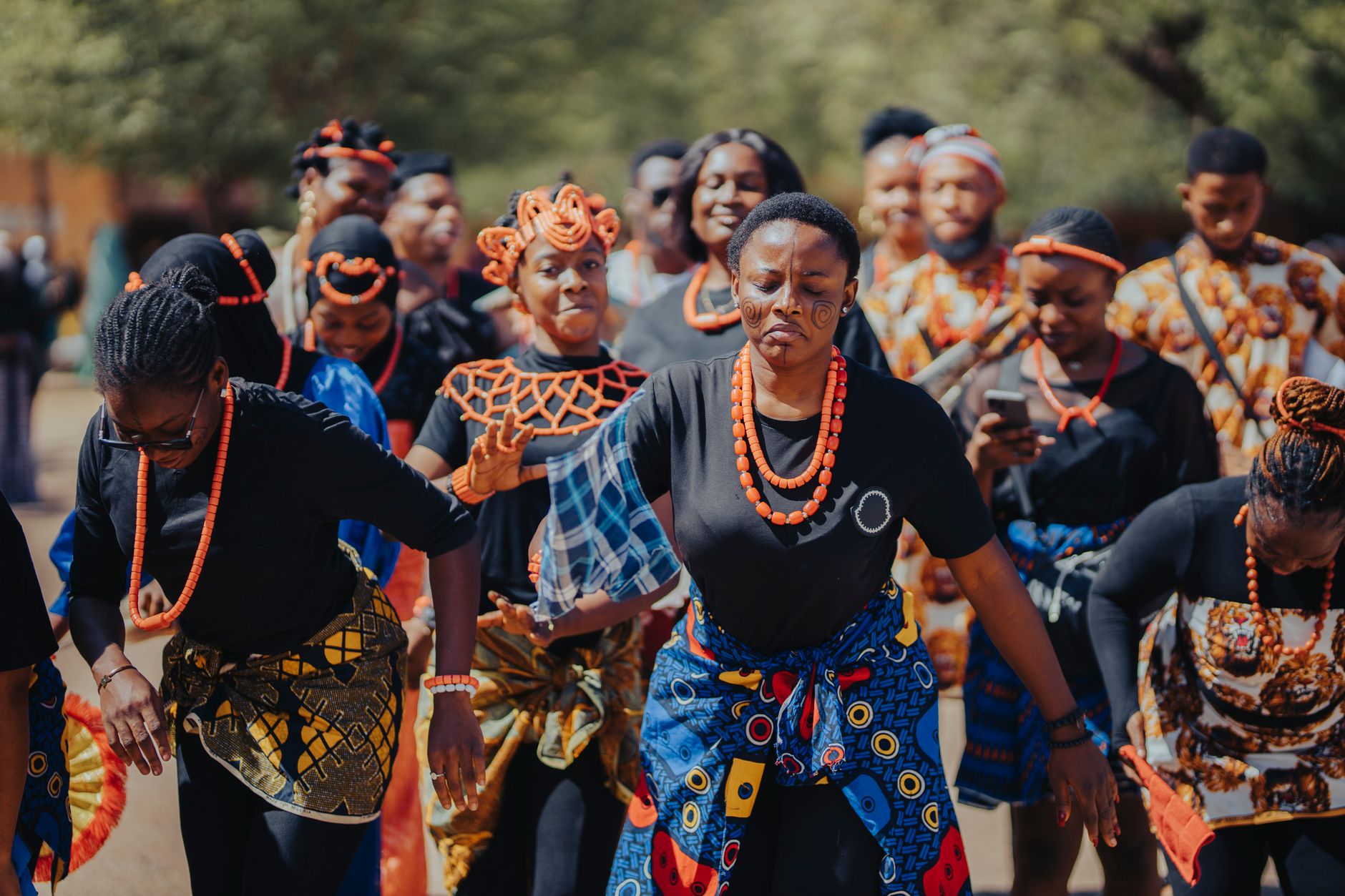
Suffering is not the defining story of Africa, despite how it is often framed in global media. Across the continent, communities invest heavily in celebration — festivals, masquerades, naming ceremonies, harvest dances, and communal feasts that can last for days. The Osun-Osogbo festival in Nigeria, the Timkat festival in Ethiopia, the Reed Dance in Eswatini — these are not tourist attractions. They are annual reaffirmations of collective identity and joy.
This culture of celebration is a deliberate choice, not an accident of geography. Communities that have faced drought, conflict, and displacement still make time and resources for collective joy because they understand that morale is infrastructure. A community that cannot celebrate together cannot sustain itself through hardship. African creators who bring this energy into their work — the exuberance of Afrobeats, the color of Ankara fashion, the warmth of African comedy — are not escaping reality. They are expressing a deeply held cultural truth.
Explore how African creators are channeling these values into global movements by visiting the top African content creators dominating TikTok, Instagram, and YouTube in 2026.
Why These Values Matter for African Creators Today
These twelve values are not museum pieces. They are active forces shaping how African creators build audiences, how African entrepreneurs structure businesses, and how African communities navigate the digital age. A creator who understands Ubuntu will build community before chasing virality. One who understands oral tradition will invest in storytelling craft, not just production quality. These values are strategic assets, not cultural baggage.
According to McKinsey's Lions on the Move research, Africa's consumer class is projected to reach 1.1 billion people by 2060. The creators, entrepreneurs, and innovators who will capture that market are those who understand the cultural values driving it — not those who import frameworks built for different contexts.
- Ubuntu — relational identity and collective responsibility
- Elder respect — intergenerational knowledge transfer
- Communal stewardship — shared resources and collective ownership
- Oral tradition — storytelling as civic and cultural duty
- Hospitality — sacred obligation to guests and strangers
- Rites of passage — community-validated lifecycle transitions
- Music and dance — participatory communal language
- Spiritual ecology — nature as a living, respected system
- Dignified labor — ingenuity and effort as cultural pride
- Age-grade accountability — peer networks built on lifelong trust
- Proverbs — compressed wisdom with real authority
- Collective joy — celebration as community infrastructure
These values are the operating system beneath Africa's cultural output. Learn more about the creators carrying these traditions into new spaces — explore African creators on Topping Africa and discover the people shaping the continent's story on their own terms.
Staff
Contributing writer at Topping Africa.
0 Comments
No comments yet. Be the first to share your thoughts!