
Africa Tech 2026: How African Creators Are Shaping the Continent's Digital Future

Africa Tech Festival 2026 in Cape Town is generating major conversations around AI, data centres and startup funding — but almost no one is connecting those macro themes directly to the African creators and entrepreneurs they empower. This piece makes that connection explicit, with concrete examples, real trade-offs and a clear framework for how creators can use Africa Tech 2026's programming as a strategic roadmap.
Africa Tech 2026 Is Not Just a Festival — It's a Mirror
The phrase Africa Tech 2026 is already generating serious buzz, and for good reason. Cape Town's Africa Tech Festival, set to draw thousands of founders, investors, engineers and policymakers, has positioned its 2026 edition squarely around AI, data centres, cybersecurity and startup ecosystems. But here is what most of the coverage misses: the people most directly affected by these macro shifts are not the panel speakers in suits. They are the Nairobi-based video creator building a subscriber business on YouTube Shorts, the Lagos fashion designer using generative AI to prototype collections, and the Accra-based podcast duo monetising African diaspora audiences in London and Toronto.
This piece makes a specific argument: the infrastructure conversations at Africa Tech 2026 — fibre rollout, sovereign cloud, AI regulation — are the invisible scaffolding that either enables or throttles individual African creators. Understanding how those two worlds connect is not optional for anyone serious about the African creator economy.

What Africa Tech Festival 2026 Is Actually Programming
The festival's confirmed thematic pillars for 2026 centre on four areas: generative AI adoption, hyperscale data centre investment, cybersecurity frameworks for emerging markets, and early-stage startup funding. According to the Africa Tech Festival's official site, the 2025 edition attracted over 15,000 attendees from 75 countries — making it the continent's single largest tech gathering. The 2026 edition is expected to be larger.
These themes are not abstract. Sub-Saharan Africa's data centre capacity is projected to grow at a compound annual rate of roughly 23% through 2028, according to IDC research. That growth directly reduces latency for streaming platforms, lowers cloud compute costs for startups, and makes real-time AI inference — the kind that powers content recommendation and translation — economically viable at scale inside Africa, not just for users pinging servers in Europe.
For creators, this is the difference between a video upload that buffers for 40 seconds in Kampala and one that loads instantly. It sounds mundane. It is actually the entire business model.
The Gap Nobody Is Talking About
Search "Africa Tech 2026" right now and you will find articles about funding rounds, government MoUs and keynote announcements. Almost none of them ask: what does a 23% annual increase in data centre capacity mean for a creator with 200,000 followers in Dar es Salaam? That gap is deliberate to fill here. The creator economy and the infrastructure economy are the same economy. They just use different vocabulary.
How African Creators Are Already Using AI — Concretely
Before mapping the festival's themes to creator realities, it helps to be specific about what "AI adoption" actually looks like on the ground for African creators today — because the reality is more textured than the hype suggests.
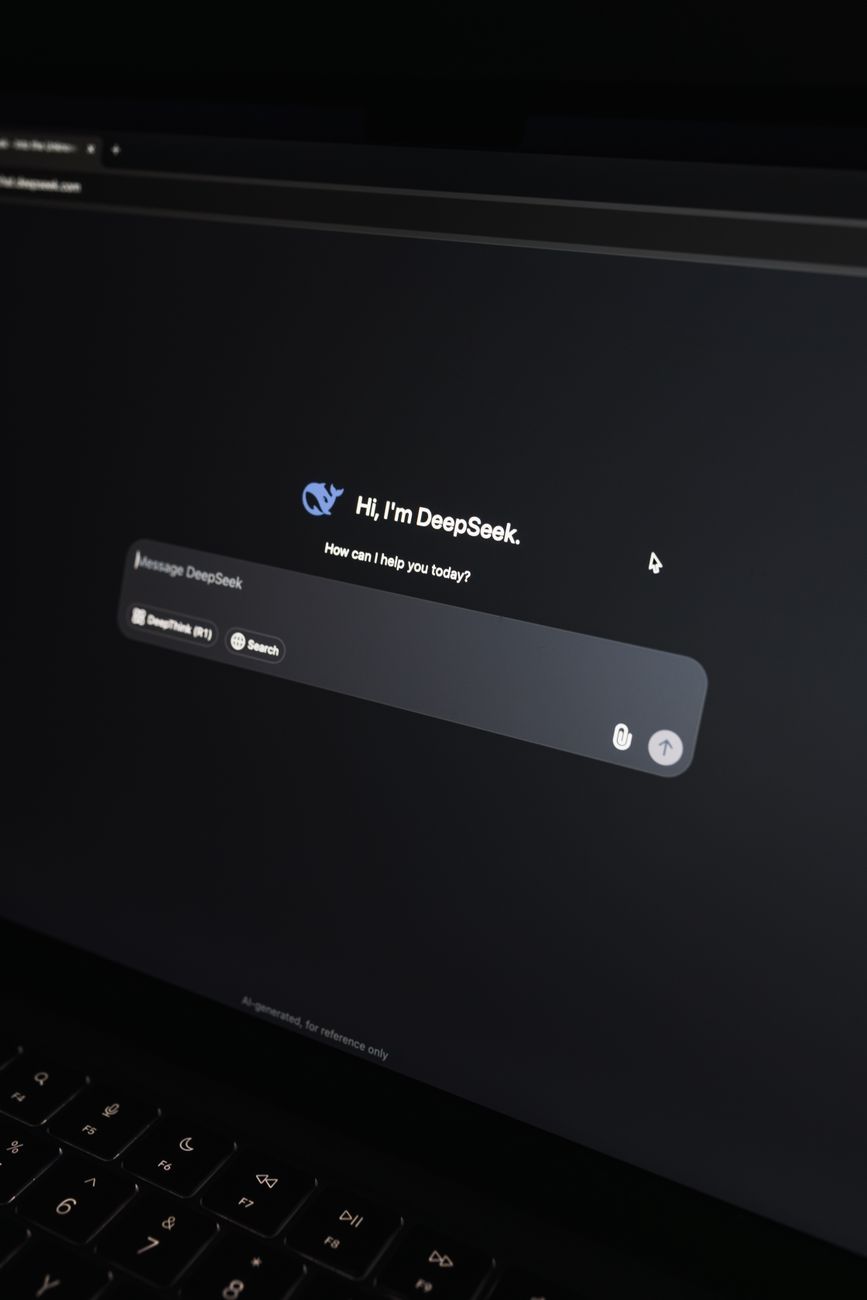
Script and caption generation is the most common entry point. Creators working in Swahili, Yoruba, Amharic and Zulu are using tools like ElevenLabs for voice cloning and Whisper-based transcription tools to auto-generate subtitles in their native languages — dramatically expanding reach without adding hours of manual editing. The productivity gain is real: creators report cutting post-production time by 30–50% on captioned content.
Thumbnail and visual design is the second frontier. Midjourney and Adobe Firefly are being used by creators who previously spent $50–$150 per custom thumbnail on freelancers. Now a single creator can A/B test six thumbnail variants for a video before publishing, a practice previously reserved for channels with dedicated design teams.
Audience analytics and content strategy is where the gap between African creators and their Western counterparts remains largest. Tools like VidIQ and TubeBuddy are widely used globally, but their keyword databases remain thin for African-language search queries. This is a genuine trade-off: a creator optimising for Igbo-language search has far less algorithmic support than one optimising for English. Africa Tech 2026's AI conversations need to address this data desert directly — and some startups are already trying.
Platforms like Topping Africa are doing exactly this kind of connective work — bridging infrastructure developments to creator discovery. Explore how African AI startups are turning the continent into the next global AI hub for a deeper look at the startup layer beneath these creator tools.
Connectivity Is Still the Bottleneck — and the Opportunity
Fibre and mobile broadband expansion is the single most consequential infrastructure story for African creators, and Africa Tech 2026 will feature significant debate around it. Here is the honest picture: Africa's average fixed broadband speed sits at roughly 25 Mbps, compared to a global average closer to 100 Mbps, per Ookla's Global Index. Mobile data costs remain prohibitive in several markets — a 1GB data bundle costs the equivalent of 7–10% of average daily income in some West African countries.
This is not a reason for pessimism. It is a reason to pay attention to which creators are building business models that account for low-bandwidth audiences. Short-form video — TikTok, Instagram Reels, YouTube Shorts — is winning partly because it is engineered for constrained connections. Creators who understand this are structuring their content hierarchies accordingly: short-form as the discovery layer, long-form as the monetisation layer, locked behind Patreon or direct subscription.
The diaspora dimension matters enormously here. African creators with audiences split between the continent and Europe or North America are effectively operating two different bandwidth environments simultaneously. A creator based in Lagos with 40% of their audience in the UK faces a content strategy problem that is fundamentally an infrastructure problem in disguise.
Diaspora-Led Startups Bridging the Gap
Several diaspora-founded startups are building directly at this intersection. Companies like Carry1st (South Africa/US), which combines gaming, payments and digital commerce, and Mono (Nigeria), which provides financial data APIs for African fintech apps, are creating the plumbing that creator monetisation tools will eventually run on. When a creator in Abuja wants to accept a paid subscription from a fan in Atlanta, the payment infrastructure underneath that transaction is being built by exactly these kinds of companies.
This is the connective tissue that Africa Tech 2026 celebrates in its startup tracks — but rarely names in the context of creator economies. Discover which African creator platforms in 2026 actually help you grow, get discovered and earn — a practical guide to the tools sitting on top of this infrastructure.
The Creator Economy by the Numbers: Why This Moment Is Different
The scale of Africa's creator economy is frequently cited but rarely contextualised. Here are numbers that matter specifically for the Africa Tech 2026 conversation:
- Over 5 million active content creators operate across Africa, with Nigeria, Kenya, South Africa, Ghana and Egypt accounting for the largest concentrations — though East and Francophone West Africa are growing fastest proportionally.
- YouTube alone pays out over $100 million annually to African creators through its Partner Programme, a figure that has grown roughly 3x since 2021.
- TikTok's Africa user base crossed 50 million in 2024, with Nigeria and Egypt as the two largest markets — and TikTok Shop's expansion into Nigeria in late 2024 opened a direct commerce layer for creators.
- Podcast consumption in Africa grew 35% year-on-year between 2023 and 2025, driven largely by mobile-first listeners in urban centres.
- African creator-founded brands — from fashion to digital education — are increasingly selling direct-to-consumer, bypassing traditional retail entirely.
These numbers do not exist in isolation from the infrastructure story. Every percentage point of broadband penetration growth translates, with a lag of roughly 18–24 months, into measurable increases in creator output and monetisation. That lag is where smart creators and investors should be placing their attention right now — ahead of the curve, not behind it.

Common Mistakes African Creators Make When Scaling — and How to Avoid Them
The Africa Tech 2026 conversation is heavy on opportunity. But the creator economy has real failure modes that the festival's optimism often glosses over. Here are the three most common mistakes, drawn from patterns visible across the African creator landscape:
- Platform dependency without diversification. Creators who build entirely on a single platform — TikTok, Instagram, YouTube — are one algorithm change away from losing 60–80% of their reach overnight. The fix is not to abandon these platforms but to treat them as acquisition channels, not homes. Email lists, WhatsApp communities and owned websites are the asset; the platform is the funnel.
- Ignoring local monetisation infrastructure. Many African creators chase brand deals from international companies while overlooking the growing pool of African brands — in FMCG, fintech, fashion and food — that are actively seeking creator partnerships. Local deals often convert better with local audiences and are less vulnerable to global economic downturns affecting Western marketing budgets.
- Underpricing expertise. African creators consistently undercharge relative to the value they deliver, particularly in B2B content and consulting. A creator with 300,000 engaged followers in a specific African market is offering something genuinely scarce to a brand trying to reach that audience. The pricing should reflect that scarcity.
What African Creators Should Take From Africa Tech 2026
The festival is not just a spectator sport for creators. It is a map of where the enabling infrastructure is being built — and where the gaps are. Here is a concrete framework for using Africa Tech 2026's themes as a creator strategy tool:
- AI track: Watch which African-built AI tools get announced or funded. These are the tools most likely to have African-language support and African market pricing. Adopt them early — early adopters in any tool ecosystem get disproportionate distribution benefits.
- Data centre track: Note which cities are receiving new hyperscale investment. Creators based in or targeting those cities will see measurably better platform performance within 12–18 months. Johannesburg, Nairobi, Lagos and Cairo are the current leaders; Abidjan and Dar es Salaam are emerging.
- Startup track: Identify which creator-adjacent startups — payments, analytics, distribution — are raising rounds. These companies will be offering creator tools within 12–24 months. Getting on their beta lists now is free and valuable.
- Cybersecurity track: Creators with significant audiences are increasingly targets for account takeovers and phishing. The security frameworks being discussed at the festival level will eventually trickle down to platform-level protections — but in the meantime, two-factor authentication, dedicated creator email accounts and regular security audits are non-negotiable.
For a broader view of the innovation landscape underpinning these opportunities, explore 21 real African innovations changing business, health and daily life — many of which are directly relevant to the creator economy.
The Cultural Layer: Why African Creators Are Not Just Tech Users
There is a risk in framing this entire conversation through a purely technological lens. African creators are not simply adopting tools built elsewhere and applying them to African contexts. Many are building new cultural products that have no direct Western equivalent — and those products are increasingly driving global cultural exports.
Afrobeats as a genre is the most visible example, but it is not the only one. Nollywood's direct-to-streaming model — bypassing theatrical distribution almost entirely in some markets — is being studied by film industries in India and Southeast Asia. African fashion designers are using digital commerce to sell globally without ever opening a physical store. African gaming creators are building communities around mobile-first games that are genuinely different in mechanics and culture from console-first Western gaming.
These are not derivative products. They are originals. And Africa Tech 2026, if it takes its own programming seriously, should be amplifying these creators as loudly as it amplifies the infrastructure companies enabling them.
Topping Africa exists precisely to close this visibility gap. Discover African creators across every category — from tech and business to culture, fashion and entertainment — and see the full breadth of what the continent is building right now.
The Road From Cape Town to a Creator-First Digital Africa
Africa Tech 2026 will generate headlines about billion-dollar data centre investments and AI regulation frameworks. Those headlines will be accurate and important. But the story that will matter most in five years is not which hyperscaler built a server farm in Johannesburg. It is whether the Rwandan educator with 800,000 YouTube subscribers could build a sustainable business on the back of that infrastructure. Whether the Senegalese animator could access affordable cloud rendering to compete with studios in Paris. Whether the Zimbabwean fintech creator could accept payments from fans in ten countries without losing 15% to cross-border fees.
That is the Africa Tech 2026 story worth telling — and worth building toward. The festival is a starting line, not a finish line. The creators, entrepreneurs and diaspora founders who understand that will be the ones defining what Africa's digital future actually looks like when 2030 arrives.
Ready to explore the creators already building that future? Explore the full Topping Africa creator directory and discover the innovators, storytellers and entrepreneurs shaping Africa's digital economy — one platform at a time.
Staff
Contributing writer at Topping Africa.
0 Comments
No comments yet. Be the first to share your thoughts!