
How African Startups Are Powering the Next Wave of Economic Growth in 2026

African startups in 2026 are raising record capital across AI, logistics, e-mobility, and clean energy — and the ripple effects reach deep into the creator economy. This data-led analysis breaks down where the money is going, who is writing the checks, and exactly how African creators and digital entrepreneurs can turn this funding boom into a business advantage.
African Startups in 2026: A Funding Surge That Changes Everything
The numbers are no longer a surprise — they are a statement. African startups in 2026 are raising capital at a pace that would have seemed implausible five years ago, with pan-African venture funding projected to cross the $7 billion mark this year, up from roughly $4.5 billion in 2023. This is not a blip. It is structural. New fund managers based in Lagos, Nairobi, Cairo, and Accra are writing first checks. Global LPs who once treated Africa as a footnote are now running dedicated mandates. And the sectors attracting this capital — AI, logistics, e-mobility, and energy — are precisely the ones where African creators and digital entrepreneurs have the most to gain.
This piece is not a cheerleading exercise. It is a data-led look at where the money is going, which bets are paying off, which are quietly struggling, and what it all means for the creator economy that platforms like Topping Africa exist to amplify.

Where the Capital Is Actually Going — and Why It Matters
Broad headline numbers hide a lot. Strip away the mega-rounds and the picture sharpens fast. Four sectors are absorbing the lion's share of 2026 funding: artificial intelligence, logistics and supply chain, e-mobility, and clean energy. Each of these is not just a technology play — it is an infrastructure play, and infrastructure shapes who gets to participate in the digital economy.
Artificial Intelligence: Africa's Leapfrog Moment
AI startups on the continent raised an estimated $900 million in the first half of 2026 alone, according to tracking by Africa Business Communities. The dominant use cases are not the same as in Silicon Valley. African AI companies are solving for language (multilingual NLP models trained on Swahili, Yoruba, Amharic, and Hausa), agricultural yield prediction, credit scoring for the unbanked, and healthcare diagnostics in low-resource settings.
What does this mean for creators? Quite directly: cheaper, locally relevant AI tools are entering the market. A content creator in Kigali who previously had to use English-language AI tools that misread her audience now has access to models that understand her cultural context. African creators using AI to grow their content in 2026 are already reporting 40–60% reductions in production time when they switch to regionally tuned tools.
The risk? Concentration. Right now, three startups — Lelapa AI (South Africa), Jacaranda AI (Kenya), and InstaDeep (Tunisia/London) — are capturing a disproportionate share of AI investment. Smaller founders building niche AI products in West Africa are still struggling to access seed capital below $500k. That gap needs to close for the ecosystem to be genuinely distributed.
Logistics and Supply Chain: The Unsexy Backbone
Nobody writes breathless Twitter threads about freight aggregators. Yet logistics startups received over $1.2 billion in African funding in 2025, and 2026 is on track to exceed that. The reason is simple: e-commerce cannot scale without reliable last-mile delivery. Startups like Kobo360 (Nigeria), Lori Systems (Kenya), and Sendy (East Africa) have demonstrated that digitising truck capacity and route optimisation is a genuine business, not a development project.
For creators who run product-based businesses — merch, handmade goods, African fashion labels, food brands — this is transformational. The cost of shipping a package from Lagos to Accra has dropped by roughly 30% over the last 18 months as logistics networks compete for volume. That margin improvement is the difference between a creator-led brand being viable or not.
E-Mobility: Boda Bodas, EVs, and the Creator Opportunity
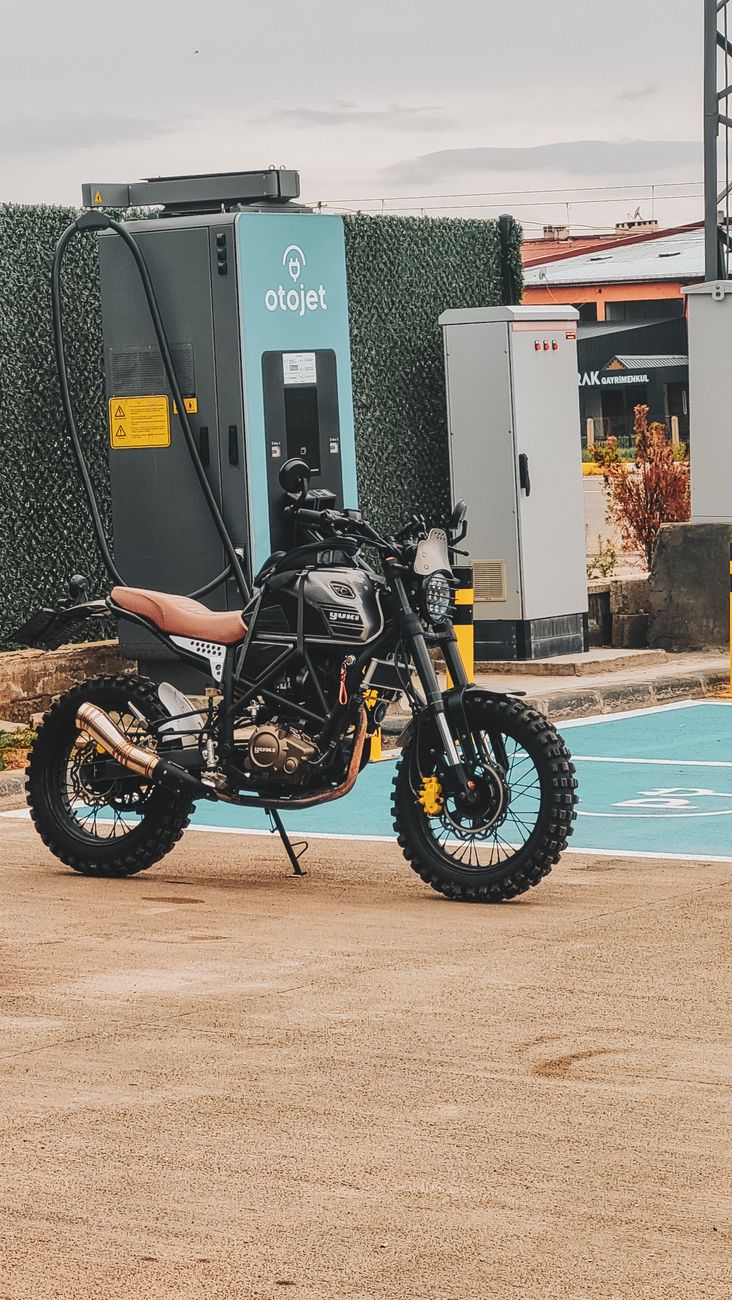
East Africa's motorcycle taxi (boda boda) sector is the unlikely proving ground for African e-mobility. Startups like Ampersand (Rwanda) and Roam Electric (Kenya) have cracked the battery-swap model that makes electric motorcycles economically viable for commercial riders. Total e-mobility funding in Africa hit $650 million in 2025, with 2026 already showing a 35% year-on-year increase in deal volume.
The creator angle here is less obvious but real. Transport costs are one of the biggest operational expenses for creators who do field production, event coverage, or physical product delivery. Cheaper, cleaner mobility lowers the cost of doing business on the ground — and it generates a wave of storytelling opportunities. Documentary creators, sustainability-focused YouTubers, and tech journalists are finding rich material in the e-mobility transition.
Clean Energy: Powering the Creator Economy Literally
You cannot run a studio, edit 4K video, or stream live without reliable power. For hundreds of millions of Africans, grid electricity is intermittent at best. Clean energy startups are solving this at scale. BBOXX (pan-Africa), d.light (East and West Africa), and Yellow (francophone Africa) have collectively connected over 20 million households to solar power. In 2026, the sector is attracting blended finance — a mix of impact capital, development finance, and commercial VC — that is pushing deal sizes into the $50–200 million range.
The direct implication for creators is not metaphorical. A creator in rural Ghana who previously lost 6–8 hours of productive work daily due to power outages can now run a solar-powered studio. This is already happening. The Idris Elba and Google $1M AI initiative highlighted exactly this kind of infrastructure-to-creator pipeline, where solving a base-layer problem unlocks creative output at scale.
The Funding Mechanics: Who Is Writing Checks and How
Understanding where capital comes from matters as much as knowing where it goes. In 2026, the African startup funding stack looks meaningfully different from 2020.
- Pan-African VC funds — TLcom Capital, Partech Africa, Norrsken22, and Algebra Ventures are now on their second or third fund cycles, meaning they have track records, exits, and institutional credibility.
- Corporate venture arms — MTN, Safaricom, and Standard Bank have all launched or expanded CVC programs, writing checks at Series A and B into startups that complement their core businesses.
- Development Finance Institutions (DFIs) — The IFC, British International Investment (BII), and the African Development Bank are co-investing alongside commercial VCs at an unprecedented rate, reducing risk for private capital.
- Diaspora angels — A growing cohort of African professionals in London, New York, Toronto, and Dubai are deploying $25k–$250k checks into early-stage African startups, often through syndicates on platforms like Oui Capital's network or AngelList Africa.
- Crowdfunding and creator-led investment — Several African creators with large audiences are now raising community rounds, letting their followers invest directly in creator-adjacent startups. This is nascent but accelerating.
The common mistake founders make is chasing the wrong tier of capital for their stage. A pre-revenue logistics startup pitching a DFI is wasting everyone's time. A Series B fintech that needs $20M going to angel syndicates will spend 18 months raising what one institutional check could provide. Matching capital source to stage is the single biggest operational error in African fundraising today.
For a deeper look at the business models gaining traction, explore the top business ideas booming in Africa in 2026 — several of them sit directly at the intersection of startup infrastructure and creator opportunity.
What African Creators and Digital Entrepreneurs Should Actually Do With This Information
Funding trends are not just for founders seeking VC. For creators, they are a map of where attention, infrastructure, and opportunity are concentrating. Here is how to read that map practically.
Build in the Sectors That Are Being Built
When $1.2 billion flows into African logistics, that ecosystem needs content, community, and culture around it. Logistics companies need brand storytelling. E-mobility startups need consumer education content in local languages. AI companies need trust-building narratives for audiences who are skeptical of automation. Creators who position themselves as sector specialists — not generalists — will command higher rates and longer partnerships.
The Nigerian tech influencer space is already demonstrating this. Creators who cover fintech specifically, rather than "tech" broadly, have built audiences that fintech startups pay real money to reach. See how top Nigerian tech influencers have carved out this niche — and replicate the model in your own sector and geography.
Use Startup Infrastructure as a Business Lever
The startups raising capital are building tools that creators can use directly. Payment infrastructure from Flutterwave or Paystack means a creator in Cameroon can monetise a global audience without a US bank account. Logistics networks mean a creator-brand can ship products across five African countries without a warehouse. Solar energy means uninterrupted studio time. The startup ecosystem is not separate from the creator economy — it is the plumbing the creator economy runs on.
Watch the Diaspora Capital Flow
African diaspora investors are not just writing checks into startups. They are also funding creator projects, documentary series, and digital media ventures. The culture-driven brands reshaping global fashion and lifestyle are a direct product of diaspora capital meeting African creative talent. If you are a creator building a brand with cultural IP, this is your funding pool — and it is growing.
Track the Data, Not Just the Headlines
The African startup space has a narrative problem: the same five success stories get recycled endlessly while the actual data — deal counts, sector breakdowns, failure rates — stays buried in reports most creators never read. Make it a habit to track sources like Disrupt Africa's annual funding reports, which publish granular country-by-country and sector-by-sector breakdowns. Knowing that Kenya leads in e-mobility deals while Egypt leads in AI funding tells you something specific about where to build and partner.

The Honest Trade-Offs: What the Boom Does Not Fix
Record funding does not mean the ecosystem is without serious friction. Three structural problems persist in 2026 that creators and founders alike need to plan around.
- Talent concentration: The majority of funded startups are still headquartered in four cities — Lagos, Nairobi, Cairo, Johannesburg. Founders and creators outside these hubs face a meaningful disadvantage in accessing both capital and talent. Remote-first culture helps, but it has not eliminated the gap.
- Exit scarcity: Africa's VC ecosystem has produced relatively few exits at scale. Without exits, LPs get cautious, follow-on funds shrink, and the capital cycle stalls. The Flutterwave and Interswitch stories are real, but they are not yet a pattern. Until exit routes — via regional stock exchanges, strategic acquisitions, or cross-border M&A — mature, the funding ecosystem remains fragile at the top.
- Regulatory patchwork: A logistics startup operating in five African countries navigates five different regulatory regimes, five tax systems, and five sets of licensing requirements. This is not an abstraction — it directly increases operating costs and slows growth. Creators building cross-border businesses face the same friction when it comes to payment collection, content licensing, and business registration.
None of these problems are unsolvable. But they are real, and any creator or entrepreneur who ignores them in the excitement of the funding boom will run into them hard.
Why 2026 Is a Pivotal Year — Not Just Another Good Year
The difference between 2026 and previous years of African startup optimism is compounding. Earlier funding cycles were largely driven by external capital chasing a narrative. This cycle has domestic depth: African pension funds in Nigeria and Kenya are beginning to allocate to VC for the first time. African-founded funds are raising from African institutional LPs. Local stock exchanges in Lagos and Nairobi are experimenting with SME and tech listing frameworks.
That compounding effect means the ecosystem is building memory. Failures teach. Exits recycle capital and experience. Second-time founders raise faster and build smarter. For creators, this is the environment in which brand partnerships, equity deals, and creator-led ventures become genuinely viable — not aspirational talking points.
Discover the African creators and innovators already operating at this intersection by exploring the full creator ecosystem on Topping Africa. The bridge between startup capital and creative talent is being built right now — and the creators who understand both sides of it will define the next decade of African digital culture.
The momentum is real. The infrastructure is arriving. The capital is committed. What happens next depends on whether Africa's creators treat this moment as spectators or as participants. Get started — the window is open.
Staff
Contributing writer at Topping Africa.
0 Comments
No comments yet. Be the first to share your thoughts!