
African Culture Clothing: Traditional Styles, Modern Influences, and What They Mean
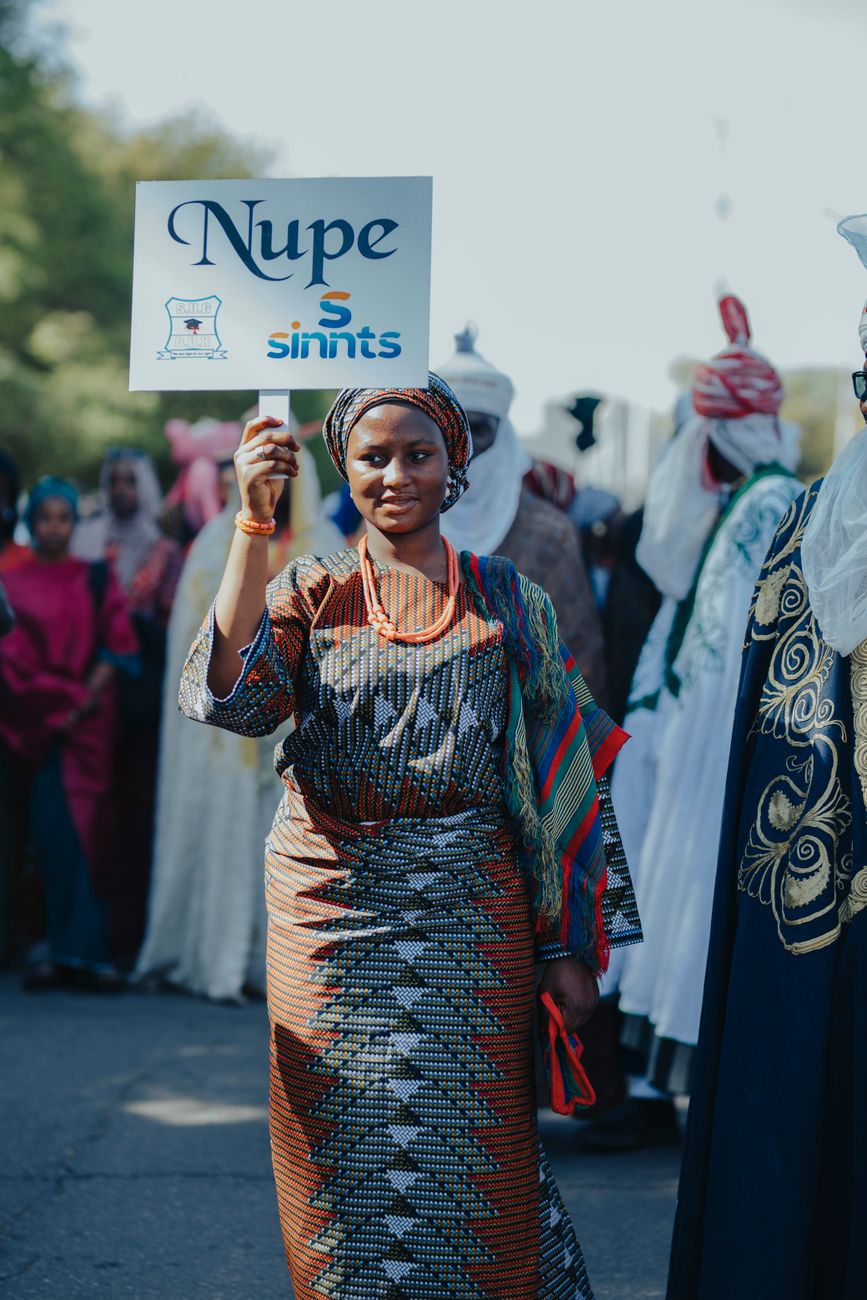
African culture clothing spans 54 countries, thousands of ethnic groups, and millennia of textile tradition — yet it is routinely reduced to a single aesthetic. This guide breaks down the major garments, decodes their symbolism, and tracks how contemporary African creators are taking these traditions to global runways and digital audiences.
African Culture Clothing Is Not a Monolith — And That's the Point
When people talk about African culture clothing, they often picture a single aesthetic — bright Kente cloth, perhaps, or a sweeping boubou. That impulse to flatten 54 countries, thousands of ethnic groups, and centuries of textile history into one image is the first mistake. African clothing is one of the world's most diverse and symbolically loaded fashion systems. It encodes identity, status, spirituality, and resistance — sometimes all at once, in a single garment. This guide breaks down the major traditions, explains what they actually mean, and tracks how contemporary African creators are rewriting the rules.
The Major Garments and Where They Come From
Africa's textile traditions span at least 3,000 years. Each region developed distinct garments shaped by climate, available materials, trade routes, and spiritual practice. Understanding the geography of these styles is essential — because wearing or referencing them without context is one of the most common mistakes outsiders make.
West Africa: Kente, Kaftans, and the Boubou
Kente cloth originates with the Ashanti and Ewe peoples of Ghana and Togo. It is woven in narrow strips — typically 4 inches wide — then stitched together into larger panels. Each color carries a precise meaning: gold signals wealth and royalty, green represents growth and renewal, and black anchors the cloth in spiritual maturity. Specific patterns are named and are sometimes reserved for royalty or ceremonial use. Wearing the wrong Kente pattern at the wrong occasion is not a minor faux pas in Ashanti culture — it is a social transgression.
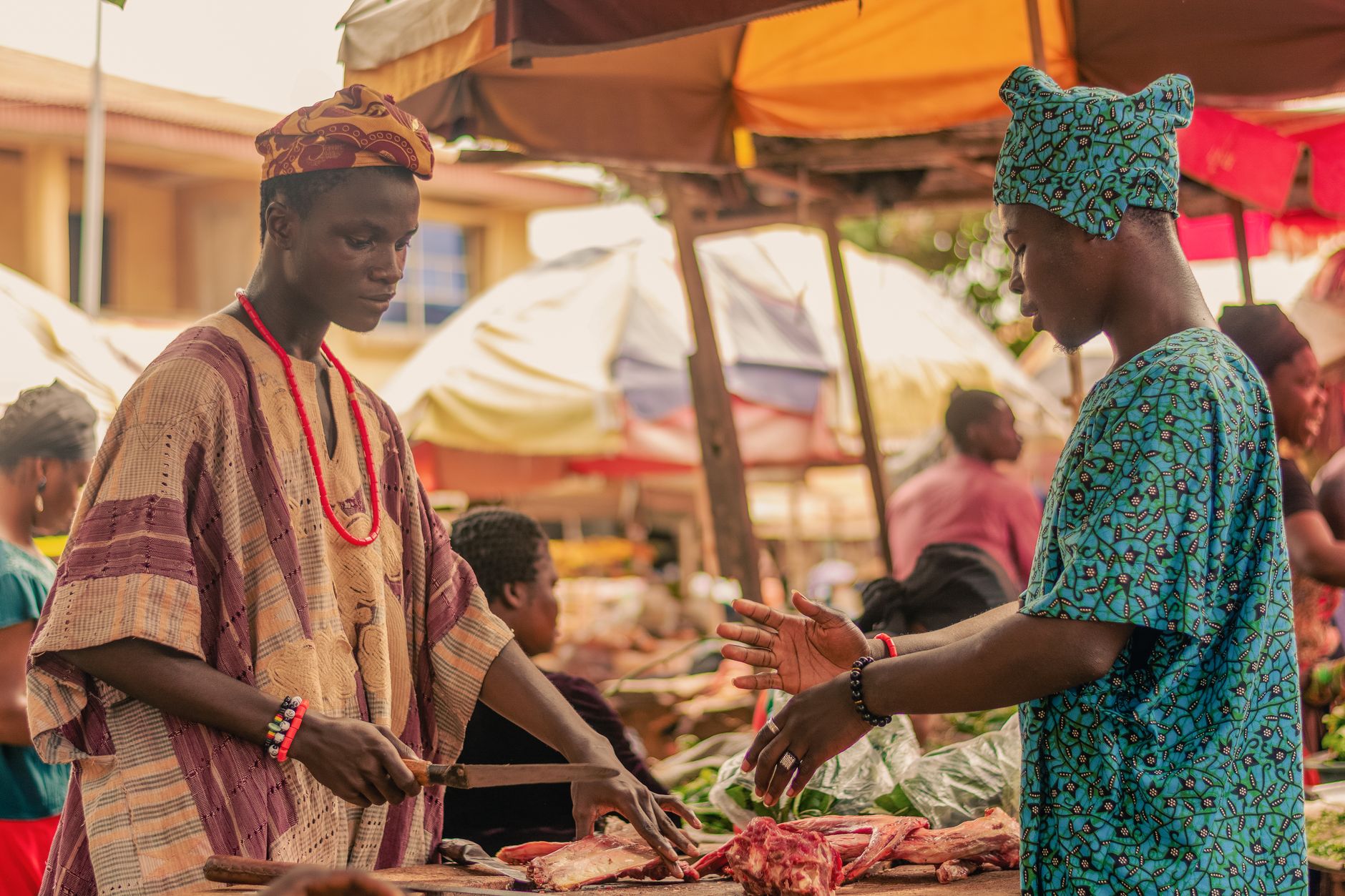
The boubou (also called grand boubou or agbada in Yoruba culture) is a wide, flowing robe worn across Senegal, Mali, Guinea, and Nigeria. In its most elaborate form, it features dense embroidery around the neckline and chest — a style called tambour embroidery — that can take a master tailor weeks to complete. The weight of the embroidery, the quality of the damask fabric, and the precision of the stitching all signal the wearer's social standing. A plain boubou costs roughly $20–$40 in a Dakar market; an embroidered ceremonial piece from a top Senegalese atelier can exceed $500.
East Africa: Kangas, Kikoi, and Maasai Shuka
Along the Swahili Coast — Kenya, Tanzania, and Mozambique — the kanga is a rectangular printed cotton cloth worn by women. What makes it unique is its text. Every kanga carries a Swahili proverb printed along its border. These proverbs are chosen deliberately: a woman might gift a kanga bearing the phrase "Mtu ni watu" ("A person is people") to signal community solidarity, or choose a pointed proverb to send an indirect message to a rival. The garment is simultaneously clothing, communication, and cultural artifact.
The Maasai shuka — a red-checked blanket cloth worn draped over the body — is arguably one of the most globally recognized African textiles. Its distinctive plaid pattern has been widely copied by Western fashion brands, which sparked a significant intellectual property debate in Kenya in the 2010s. The Maasai community has no formal trademark protection over the design, meaning brands like Louis Vuitton have referenced the pattern without compensation or credit. This remains an unresolved tension between African cultural heritage and global fashion commerce.
North Africa: Djellaba, Haik, and Caftan
North African clothing sits at the intersection of Berber, Arab, and sub-Saharan influences. The djellaba — a long, hooded robe worn in Morocco, Algeria, and Libya — comes in wool for winter and cotton for summer. Men's djellabas are typically muted: cream, grey, or brown. Women's versions are elaborately embroidered and worn at celebrations. The Moroccan caftan, distinct from the broader Middle Eastern version, features intricate sfifa (silk braid trim) and is the centerpiece of Moroccan bridal fashion. Top Moroccan designers like Zhor Raïs have brought the caftan to international runways while keeping its artisanal construction intact.
Southern and Central Africa: Ndebele Beadwork and Kanga Wraps
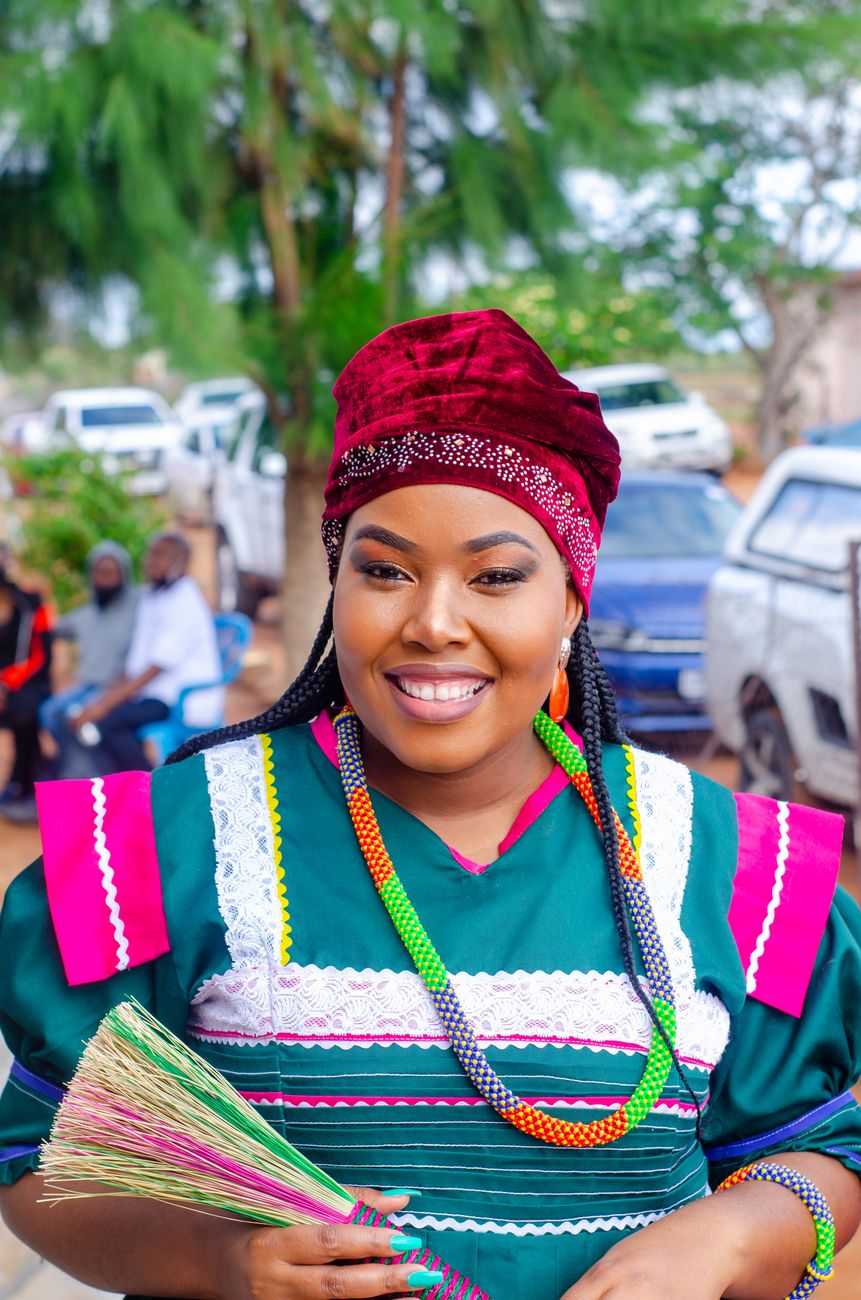
The Ndebele people of Zimbabwe and South Africa are famous for geometric beadwork that covers blankets, aprons, and neck rings. Each color combination and geometric pattern communicates marital status, age, and tribal affiliation with precision. Young girls wear isigolwani (beaded hoops) around their necks; the number of hoops increases as they age. Married women add isiphephetu (beaded aprons). This is not decoration — it is a wearable biography.
Symbolism: What African Clothing Actually Communicates
Western fashion largely treats clothing as personal expression or brand signaling. African clothing traditions operate on a different register — they communicate collective identity, spiritual status, and social role. Misreading these signals is easy; understanding them requires context.
Here are some of the most significant symbolic systems embedded in African garments:
- Color codes: In many West African traditions, white signals mourning or spiritual purity, not celebration. Red in Maasai culture signals bravery and blood. Purple in ancient Egyptian and later Ethiopian court dress signaled imperial authority.
- Embroidery placement: In Hausa culture (northern Nigeria and Niger), the placement of embroidery on a babban riga robe signals the wearer's rank. Embroidery on the left chest pocket area is reserved for senior figures.
- Fabric weight and origin: Handwoven cloth — like Kente or Kuba cloth from the Democratic Republic of Congo — carries more prestige than machine-printed versions of the same pattern. The labor embedded in the textile is part of its value.
- Adornment and occasion: Many African garments have strict ceremonial contexts. Wearing a full Yoruba aso-oke set (headwrap, blouse, and wrapper) to a casual gathering would be as jarring as showing up to a backyard barbecue in a tuxedo.
- Headwear: The gele (Yoruba head tie) and the duku (worn across Central and East Africa) are not accessories — they complete an outfit and often carry spiritual protective meaning.
The takeaway for creators and designers: referencing African clothing without understanding its symbolic grammar risks producing work that looks authentic but reads as hollow or disrespectful to the communities it draws from. The most successful contemporary African fashion brands — those that are genuinely respected, not just aesthetically praised — are led by people who grew up inside these traditions.
How African Creators Are Redefining African Fashion Globally
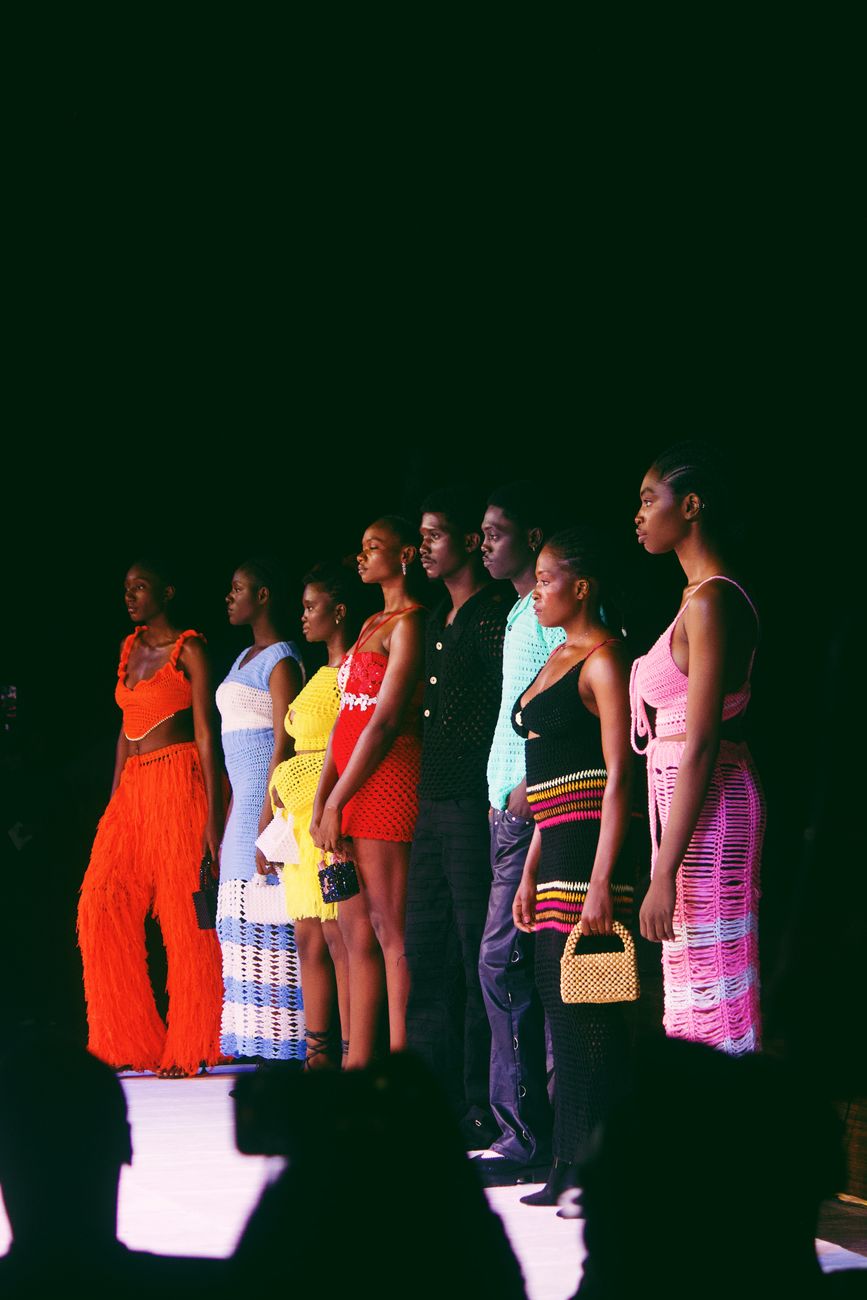
The contemporary African fashion scene is not simply "traditional clothing updated." It is a sophisticated, self-aware industry that is simultaneously preserving heritage, critiquing it, and pushing it into new territory. Several creators and designers are leading this charge in ways that are worth studying closely.
Thebe Magugu from South Africa became the first African designer to win the LVMH Prize in 2019. His collections consistently weave apartheid-era history and South African social politics into garment construction — not as surface print, but as structural concept. His "Counter Intelligence" collection used the silhouettes of apartheid-era women's uniforms as a starting point for a meditation on surveillance and resistance.
Kenneth Ize from Nigeria built his brand around hand-loomed aso-oke fabric — a textile that had been declining in production because younger Nigerian weavers were abandoning it for more lucrative work. By making aso-oke the hero of his runway collections and collaborating with Karl Lagerfeld before the designer's death, Ize created international demand for a fabric that was fading from use. This is a model other African creators can learn from: reviving a craft by making it commercially desirable, not just culturally important.
Imane Ayissi from Cameroon works with endangered Central African textiles — including kuba cloth and raffia — and has been a guest member of the Paris Haute Couture calendar since 2020. His work is a direct argument that African craft traditions belong in the highest tier of global fashion, not in the "ethnic" or "resort" categories where Western fashion has historically confined them.
For those tracking African creators across fashion, music, and digital culture, platforms like Topping Africa's creator directory are an excellent starting point. Discover the designers, stylists, and cultural commentators who are shaping this conversation right now.
The broader trend is documented: according to McKinsey's research on Africa's digital economy, Africa's fashion and creative industries are growing faster than the continent's GDP average, driven partly by a young, digitally connected consumer base that is actively choosing African-made goods over imported alternatives.
The Diaspora Factor
African diaspora communities in the UK, US, France, and Canada have become a critical engine of African fashion's global reach. Designers like Ozwald Boateng (Ghana/UK) and Duro Olowu (Nigeria/UK) built careers that translated West African tailoring traditions into Savile Row and international retail contexts. Their work proved that African aesthetics could command premium pricing in Western markets — a fact that opened doors for the next generation.
Social media accelerated this process dramatically. TikTok and Instagram have made it possible for a Lagos-based designer to reach a buyer in Toronto without a distributor or a PR agency. The African diaspora brands reimagining culture through fashion and digital commerce are a direct product of this shift. These brands are not waiting for Western fashion weeks to validate them — they are building their own audiences and their own commercial ecosystems.
Common Mistakes When Engaging With African Clothing Culture
Whether you are a creator, a brand, or simply someone who wants to engage respectfully, there are predictable errors worth avoiding.
- Treating "African print" as a single category. Ankara (also called African wax print) is not indigenous to Africa — it was industrially produced in the Netherlands and introduced to West Africa via colonial trade. It has been so thoroughly adopted and transformed by West African fashion that it is now culturally African in practice. But calling it "traditional" in the same breath as hand-loomed Kente is inaccurate and flattens a complex history.
- Copying patterns without attribution. The Maasai shuka case is the most publicized, but it is not isolated. Dozens of African textile patterns have been reproduced by global brands without credit or compensation. If you are building a brand that references African textiles, name your sources and, where possible, source your fabric directly from African producers.
- Assuming all African fashion is "traditional." Lagos, Nairobi, Accra, and Johannesburg have thriving streetwear scenes that owe as much to Japanese minimalism and American hip-hop as to any local tradition. African fashion is not frozen in the past — it is in active, dynamic conversation with global style.
- Ignoring the craft economy behind the garments. A hand-embroidered boubou or a woven kanga represents hours of skilled labor. Pricing African garments at "ethnic market" rates — well below what equivalent European craft would command — devalues both the object and the maker.
What This Means for African Creators on Digital Platforms
For creators building audiences around African culture and fashion, clothing is one of the highest-engagement content categories available. Styling videos, garment history explainers, and "what I wore to my traditional wedding" content consistently outperform generic lifestyle content in African and diaspora communities. The reason is simple: this content is specific. It answers questions that mainstream fashion media has never bothered to ask.
The opportunity is significant. Statista's research on African fashion estimates the continent's apparel market will exceed $31 billion by 2030, with e-commerce driving a growing share of that figure. Creators who build authority in African fashion now — through consistent, accurate, culturally grounded content — are positioning themselves at the front of a very large wave.
Explore what African fashion and culture creators are building right now by visiting the trending creators section on Topping Africa. The breadth of work being produced — from textile history deep-dives to contemporary styling content — is genuinely impressive.
And if you want to see how African creators are expanding beyond fashion into tech, innovation, and business, the 21 African innovations changing business and daily life is a compelling companion read. The same creative energy driving African fashion is reshaping every other sector of the continent's economy.
The Future of African Culture Clothing: Heritage Meets Innovation
The next decade of African fashion will be shaped by two forces pulling in opposite directions — and the tension between them is productive. On one side: a growing movement to protect and formalize African textile heritage, including intellectual property frameworks for traditional patterns and geographic indications for specific craft traditions (similar to how Champagne or Harris Tweed are protected in Europe). On the other: an equally strong drive toward radical experimentation, where designers use African craft as raw material for work that looks nothing like its source.
Both impulses are legitimate. The mistake is treating them as mutually exclusive. The designers who will define the next era of African fashion are those who know the rules well enough to break them deliberately — and who can explain exactly what they are breaking and why.
For creators, the practical implication is clear: depth beats breadth. An audience built around genuine expertise in, say, Yoruba textile traditions or contemporary Ghanaian streetwear will be more loyal, more engaged, and more commercially valuable than a generalist "African fashion" account that skims the surface of everything. Pick your lane. Go deep. The audience is there — and it is growing.
Ready to connect with African fashion creators and cultural voices shaping this space? Discover creators across the continent and the diaspora at Topping Africa's explore page — and start building the connections that matter.
Staff
Contributing writer at Topping Africa.
0 Comments
No comments yet. Be the first to share your thoughts!