
AFCON 2025 Breaks Global Digital Records with 6 Billion Views, Senegal Champions
AFCON 2025 shattered digital engagement records with six billion social views and strong commercial growth, while Senegal lifted the trophy in Rabat, marking a new era for African football’s global presence.
RABAT, Morocco — January 28, 2026 — Updated 18:45 GMT
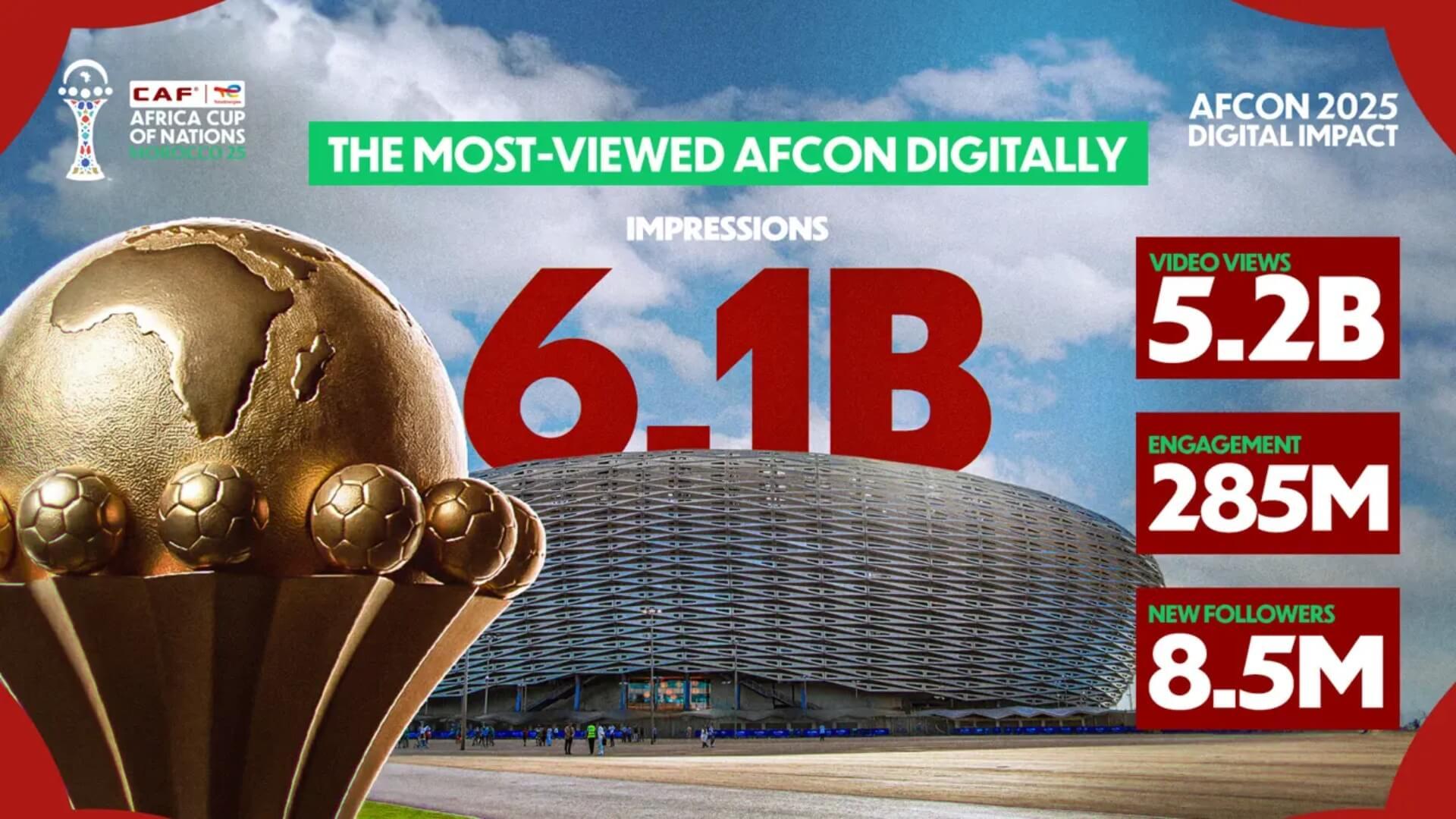
The TotalEnergies CAF Africa Cup of Nations Morocco 2025 has rewritten the digital engagement playbook for continental sport, with the Confederation of African Football (CAF) reporting an unprecedented six billion views across social platforms during the competition. This figure—anchored by 5.2 billion video views—surpasses records set by any other regional football tournament and highlights African football’s surging global relevance.
CAF’s official release attributes this milestone to a combination of fan-driven content and expanded international reach, particularly among the African diaspora. Major spikes in TikTok engagement—where more than one million user-generated videos under the hashtag #TotalEnergiesAFCON2025 captured match excitement and cultural moments—were central to the spike in interaction. The campaign also registered 285 million engagements across likes, shares, and comments, indicating deep emotional participation from supporters.
The digital success complements other indicators of the tournament’s commercial strength. CAF previously confirmed a 90 per cent increase in commercial revenues compared with prior editions, driven by a broader roster of 23 sponsors and expanded media rights deals in markets including Asia, Europe, and the Americas. This expanded commercial footprint reflects the organisation’s strategy to reposition AFCON as a global sports property rather than a regional event.
The 2025 AFCON also delivered on the pitch: Senegal secured its second continental title, beating hosts Morocco 1-0 after extra time in a dramatic final in Rabat. The result — sealed by Pape Gueye’s decisive strike — reaffirmed the Teranga Lions among Africa’s elite.
Reactions
CAF officials described the digital figures as a qualitative shift in how football is experienced. “These numbers are not just statistics,” a CAF communications representative told Topping Africa. “They show how African football culture resonates across generations and continents.” Analysts note that TikTok’s youth-centric format helped AFCON connect with a younger global audience, elevating the tournament beyond traditional broadcast consumption.
Fans on social channels hailed the viewership milestone as validation of African football’s significance on the world stage, with many celebrating the fusion of sport and culture that emerged across creator content. International broadcasters also reported elevated viewership peaks in key markets, including Europe, where free-to-air partnerships expanded access to AFCON matches for the first time in several regions.
Context & Significance
Hosting 24 teams across nine cities from 21 December 2025 to 18 January 2026, AFCON Morocco 2025 was already poised as a landmark event. The competition’s strong on-field narratives—through competitive matches and Senegal’s final triumph—combined with evolving digital and commercial strategies to produce what CAF terms its most successful edition ever.
The digital engagement benchmark arrives amid broader shifts in African football governance, including CAF’s recent decision to move AFCON to a four-year cycle, aligning it with global major tournament calendars and opening room for a new annual African Nations League.
For African sports stakeholders, the six-billion-view figure signals opportunities beyond matchday attendance and traditional broadcasting. Brands, federations and leagues can leverage heightened global interest for sponsorships, youth engagement initiatives and cross-continental partnerships. The digital footprint also lays the groundwork for future innovations in fan interaction, including esports derivatives like CAF’s eAFCON concept.
What’s Next
CAF’s roadmap for the 2027 AFCON—set for Kenya, Uganda and Tanzania—will test whether the digital momentum of 2025 can be sustained and expanded. Stakeholders say targeted content strategies and broader broadcast access will be key to replicating and surpassing the current engagement metrics. Meanwhile, CAF’s transition to a quadrennial AFCON format and the rollout of new continental competitions are expected to shape the commercial and cultural landscape of African football in the years ahead.
Staff
Contributing writer at Topping Africa.
0 Comments
No comments yet. Be the first to share your thoughts!