
Sabastian Sawe Breaks Two-Hour Barrier at London Marathon
A line that once felt untouchable is gone. Sawe’s run was bigger than a medal or a record because it changed what athletes, fans, and a whole continent can now imagine human endurance to be.
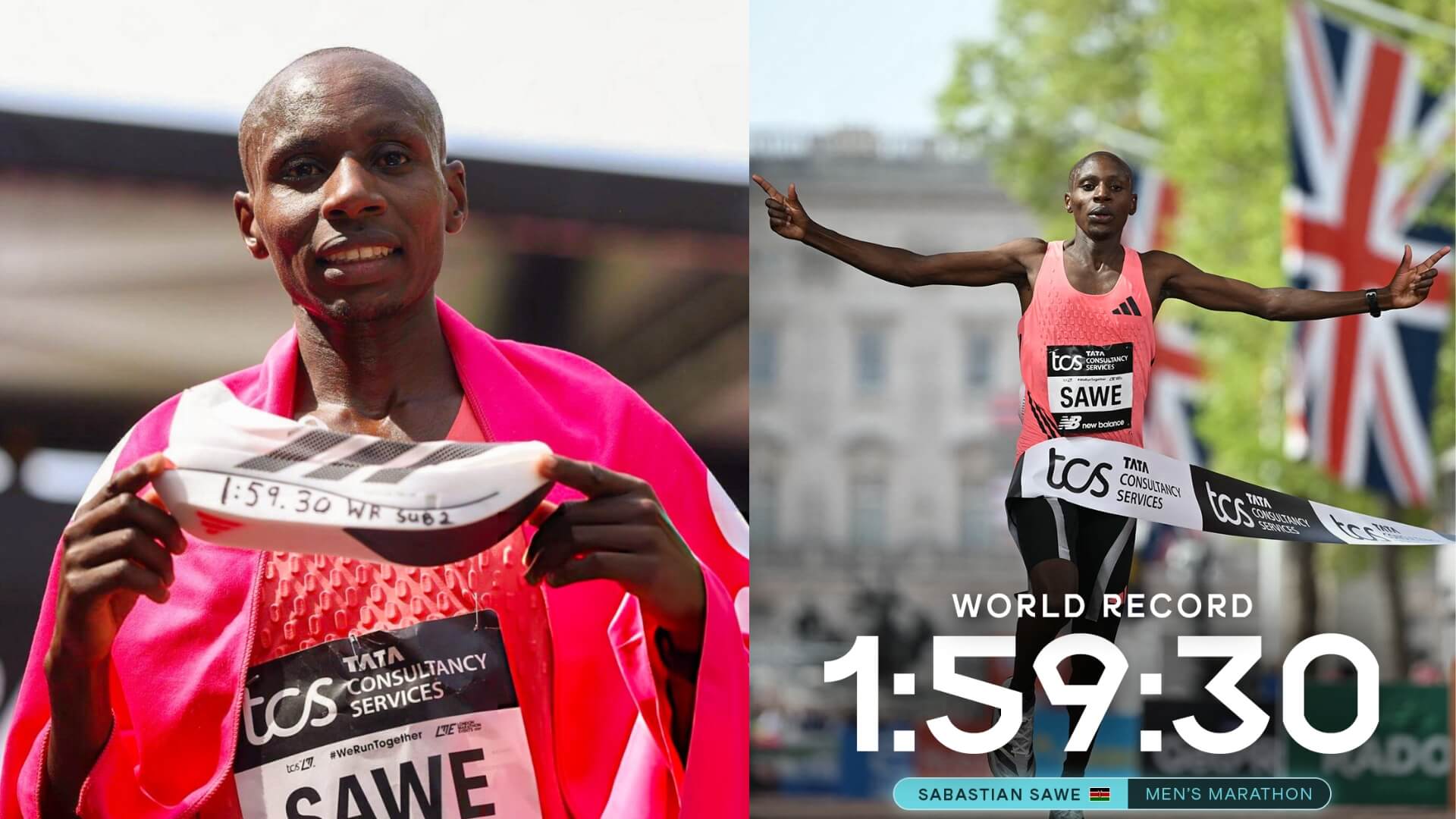
LONDON, United Kingdom (Topping Africa) — April 26, 2026: Kenya’s Sabastian Sawe won the London Marathon in 1:59:30 on Sunday, becoming the first man to run an official marathon under two hours and resetting one of world sport’s most stubborn frontiers. Ethiopia’s Yomif Kejelcha trailed closely, with a time of 1:59:41. This historic win places African distance running in a new light.
Background and Significance
This was not a staged laboratory attempt. It occurred in record-eligible race conditions, inside one of the world’s biggest marathons, with pressure, competition, and history pressing on every mile. Therefore, that distinction matters greatly. Eliud Kipchoge’s 1:59:40 in Vienna in 2019 proved the barrier could be breached, but it did not count as an official record. Sawe’s run did.
The Impact on Marathon Records
The numbers alone speak volumes. Sawe shattered the previous men’s world record of 2:00:35, set by the late Kelvin Kiptum in 2023. He did it by enough margin to make the barrier look newly vulnerable rather than untouchable. Meanwhile, Kejelcha ran under two hours on his marathon debut, turning a single achievement into a wide-scale change in marathon history.
Technological Advancements
Sawe’s victory also sharpens the argument that the modern marathon has entered a new era impacted by technology as much as by human physiology. Reuters reported that he wore Adidas’s 97-gram Adizero Adios Pro Evo 3, a leading example of the "super shoes" central to distance running’s fiercest fairness debate. Sawe dismissed any criticism, asserting that the shoes were approved and beyond doubt.

Super Shoes and Their Impact
That debate will persist. World Athletics has already tried to regulate the shoe revolution by limiting sole thickness and plate design instead of banning the technology outright. However, London suggested the compromise might have changed the event more significantly than many expected. The two-hour line, once considered a physiological wall, was broken twice in the same race.
Africa's Endurance Running Legacy
The breakthrough holds immense significance for Africa. Kenya and Ethiopia reaffirmed themselves as key engines of elite marathon performance. Additionally, it raises harder questions about access. If the future of distance running hinges on marginal gains in footwear science, then the competitive edge will rely not only on talent and training camps but also on access to premium equipment, sponsorship structures, and sports science systems.
- Access to Technology: The future of marathon success will hinge on who can access the best technology.
- Continued Excellence: Africa remains at the forefront of marathon achievements.
- Gender Inclusivity: Tigst Assefa also broke barriers, underscoring Africa’s dominance in women's races.
The London race also showcased Ethiopia’s Tigst Assefa, maintaining her title and breaking her own women-only world record in 2:15:41, running in the same Adidas model spotlighted by Reuters.
A Generational and Psychological Shift
There’s a generational shadow over Sawe’s victory, as he broke a record set by fellow Kenyan star Kelvin Kiptum. Kiptum’s untimely death in 2024 paused one of athletics’ most extraordinary rises. However, Sawe’s performance does not erase that loss; it extends the lineage. The world record continues to reside in African hands, as the next evolution of marathon racing runs through East Africa.
What London altered most was the psychology of the marathon. Once a barrier falls in official conditions, it transitions from myth to target. BBC’s coverage captured this shift: the gates have been opened, meaning Sawe’s run will be remembered not just as a feat of excellence but as the day the men’s marathon entered a new age.
For a Pan-African audience, the deeper significance lies beyond timing. It rests in authorship. One of global sport’s most iconic thresholds has now been officially crossed by a Kenyan, with an Ethiopian immediately following. The message is clear: when endurance sport changes, Africa is not merely an observer. Africa leads the change. Explore more on how Africa continues to shape the world of sports.
Staff
Contributing writer at Topping Africa.
0 Comments
No comments yet. Be the first to share your thoughts!