
Record 10 African Nations Qualify For 2026 FIFA World Cup
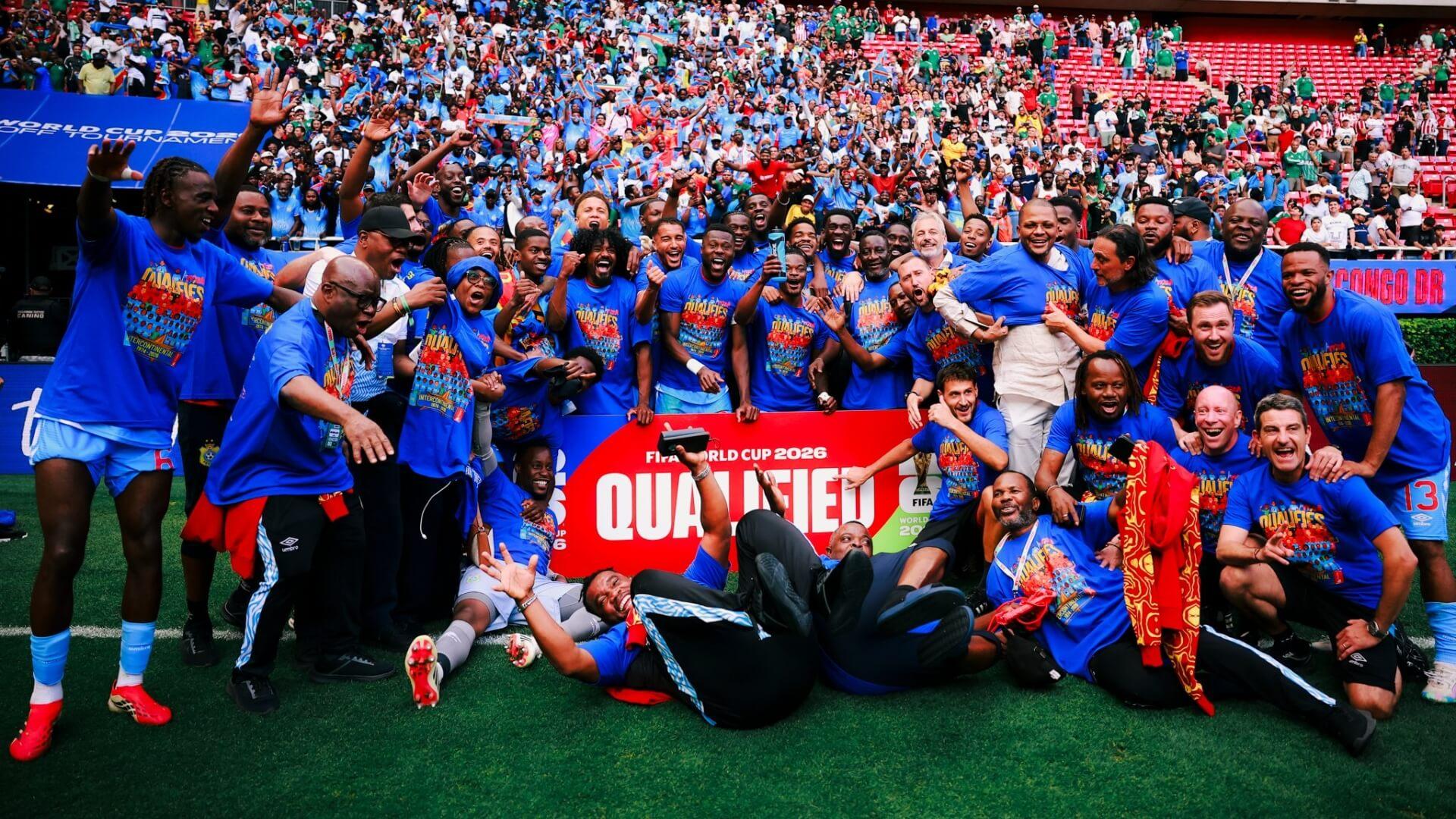
This is more than qualification—it’s validation. For decades, African talent shaped global football without equal representation. Now, the continent steps onto the world stage in numbers that finally reflect its influence.
CAIRO, Egypt — April 1, 2026
A record ten African nations have secured places at the 2026 FIFA World Cup, marking the continent’s largest-ever representation at global football’s biggest stage.
The milestone follows FIFA’s expansion of the tournament to 48 teams, which increased Africa’s allocation to nine automatic qualification spots plus one additional place through intercontinental playoffs—ultimately taken by the Democratic Republic of Congo.
The confirmed African contingent includes established powers such as Morocco, Senegal, Egypt, Ghana, Tunisia, Algeria, Ivory Coast, South Africa, and Cape Verde, alongside DR Congo, which clinched the final slot through the playoff pathway.
48/48 ✅@aramco | #FIFAWorldCup pic.twitter.com/kdEZttzduH
— FIFA World Cup (@FIFAWorldCup) April 1, 2026
This expanded presence represents a structural shift in global football, giving Africa a significantly larger voice in a competition historically dominated by Europe and South America.
For the first time, the continent enters the World Cup with double-digit representation—an outcome that reflects both FIFA’s strategic expansion and Africa’s growing competitiveness on the international stage.
The qualification journey itself delivered historic breakthroughs. Cape Verde, one of the smallest nations to qualify, secured its first-ever World Cup appearance, signaling the rise of emerging football nations alongside traditional giants.
Meanwhile, DR Congo’s return to the World Cup after decades underscores the increasing depth of African football, driven by diaspora talent and stronger domestic development systems.
Football authorities and analysts across the continent have described the development as a turning point—one that could redefine how African teams are perceived and valued globally.
The Confederation of African Football (CAF) has long argued for greater representation at the World Cup, citing the continent’s population, talent pool, and competitive progress. The 2026 allocation is widely seen as a partial correction to decades of underrepresentation.
On the pitch, expectations are rising. Africa’s historic semi-final run by Morocco in 2022 already shifted global narratives. With ten teams now qualified, the continent enters the 2026 tournament with both scale and momentum.
However, increased representation also raises pressure. More teams mean higher expectations—not just participation, but performance. The challenge now is converting numbers into deep tournament runs and, ultimately, a first World Cup title for Africa.
As the tournament approaches, Africa’s expanded presence is no longer symbolic. It is competitive—and potentially transformative.
Staff
Contributing writer at Topping Africa.
0 Comments
No comments yet. Be the first to share your thoughts!