Morocco Joins Trump-Led Board of Peace to Support Gaza Governance
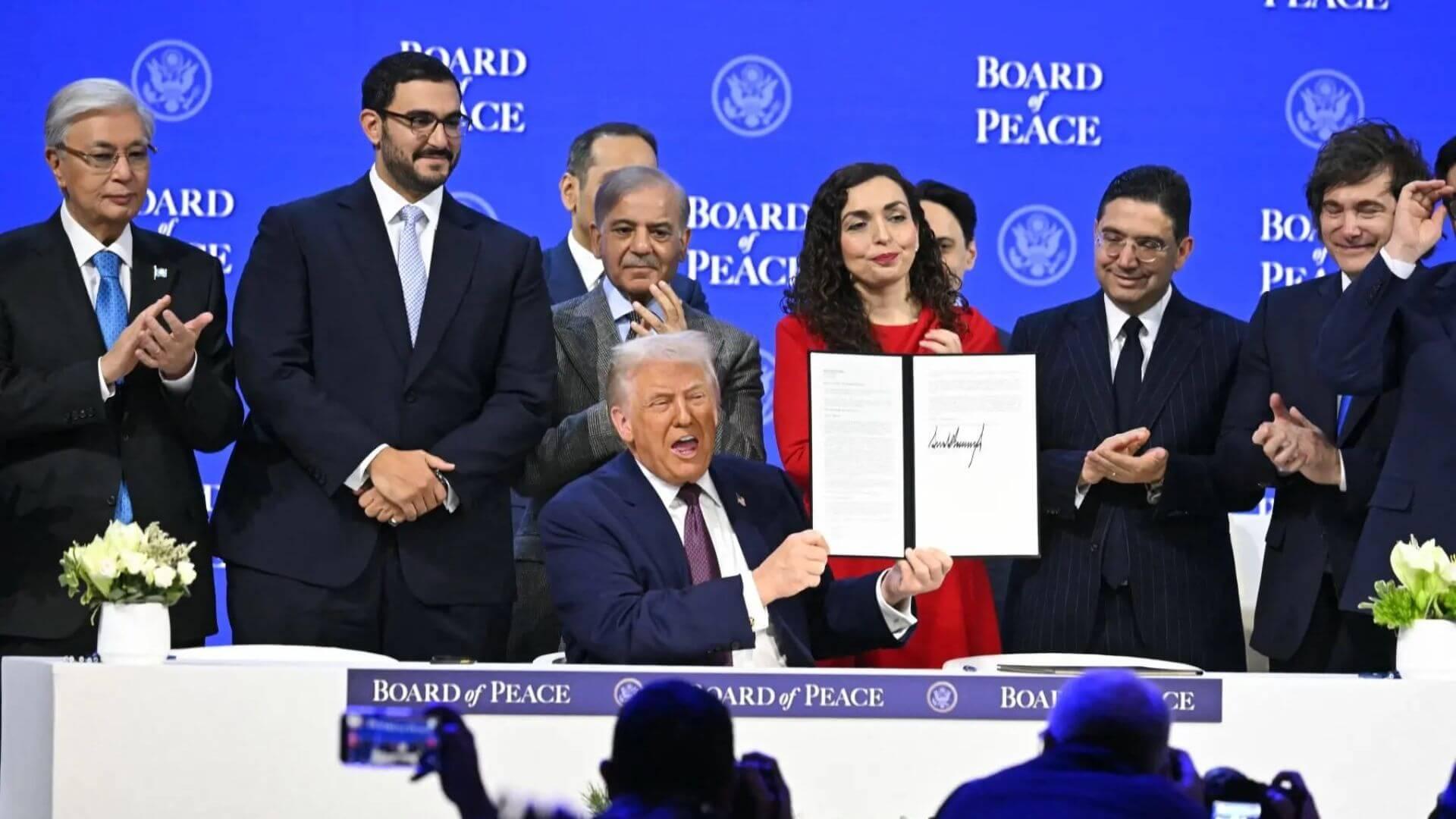
Morocco’s acceptance to join the U.S.-initiated Board of Peace positions Rabat at the center of emerging international governance efforts for Gaza amid ongoing reconstruction and ceasefire consolidation.
RABAT / DAVOS — January 22, 2026 — Morocco has formally accepted an invitation from United States President Donald Trump to become a founding member of the U.S.-backed “Board of Peace” initiative, a new international body aimed primarily at overseeing governance, ceasefire consolidation, and reconstruction efforts in the Gaza Strip, according to official statements and reporting from multiple international outlets.
President Donald J. Trump signs and ratifies the Board of Peace charter, officially making the Board of Peace an international organization.
— The White House (@WhiteHouse) January 22, 2026
THE PEACE PRESIDENT ?️?? pic.twitter.com/J7v8d0S8m7
Morocco’s foreign ministry confirmed that King Mohammed VI has graciously accepted the invitation and that Rabat will ratify the founding charter of the Board of Peace, a group of select states that Trump is positioning as a central mechanism in his phased plan for Gaza peace and governance.
The Board was launched publicly during the World Economic Forum in Davos, where Trump described it as a body intended to support ceasefire implementation in Gaza and broaden its mandate to peacebuilding beyond the Palestinian enclave. Moroccan representation at the signing ceremony was led by Foreign Affairs Minister Nasser Bourita.
What Morocco’s Participation Means
Morocco’s engagement places it among a small group of founding members alongside states such as Bahrain and others that have agreed to participate in the board’s charter signing. The Board’s core purpose, as described by U.S. officials, is to contribute to stability, restore governance structures, and ensure durable peace in conflict-affected areas, with an initial focus on Gaza under a transitional governance framework.
The Moroccan government statement reiterated Rabat’s commitment to a just and lasting peace in the Middle East, emphasizing support for a two-state solution with East Jerusalem as the capital of a future Palestinian state.
Reactions and Regional Implications
- International Response: The Board of Peace initiative has drawn mixed reactions. Several Western states, including France and Spain, have publicly declined to join, citing concerns that the body may undermine existing multilateral frameworks like the United Nations.
- Diplomacy and Security Dynamics: Morocco’s participation underscores its evolving geopolitical role, particularly in Middle Eastern diplomacy and post-conflict governance discussions. It also reflects Rabat’s longstanding engagement with both Arab and international partners on peace efforts.
- Domestic Perspective: Public sentiment in Morocco remains strongly supportive of Palestinian rights and a comprehensive political solution, even as official policy balances diplomatic participation in international initiatives like the Board of Peace with principled positions on Palestinian self-determination.
Context
The Board of Peace was first articulated by Trump in late 2025 as part of a 20-point comprehensive peace plan. Its mandate, subject to ongoing debate among international actors, envisages strategic oversight of transitional governance structures in Gaza and potential expansion into broader conflict resolution roles. Critics worry that the Board’s structure and U.S. leadership may duplicate or undercut traditional UN-led mechanisms.
What’s Next
Morocco is expected to play a diplomatic role within the Board, promoting agreed peace objectives and governance frameworks while engaging other member states. Follow-on discussions at this year’s diplomatic forums could shape how the Board’s Gaza governance mandate evolves and how Moroccan participation influences Arab and African engagement on Middle East peace initiatives.
Staff
Contributing writer at Topping Africa.
0 Comments
No comments yet. Be the first to share your thoughts!