
African Tech Futures Lab and the Solar Boom: How 17 GW Is Powering a New Generation of African Creators
The African Tech Futures Lab is connecting Africa's record-breaking 17 GW solar forecast for 2026 to a once-in-a-generation opportunity for creators, entrepreneurs, and digital platforms. Reliable, distributed solar power is the infrastructure layer the African creator economy has been missing — and the businesses that understand this first will define the next decade of African digital culture.
The African Tech Futures Lab Is Betting on Solar — and Winning
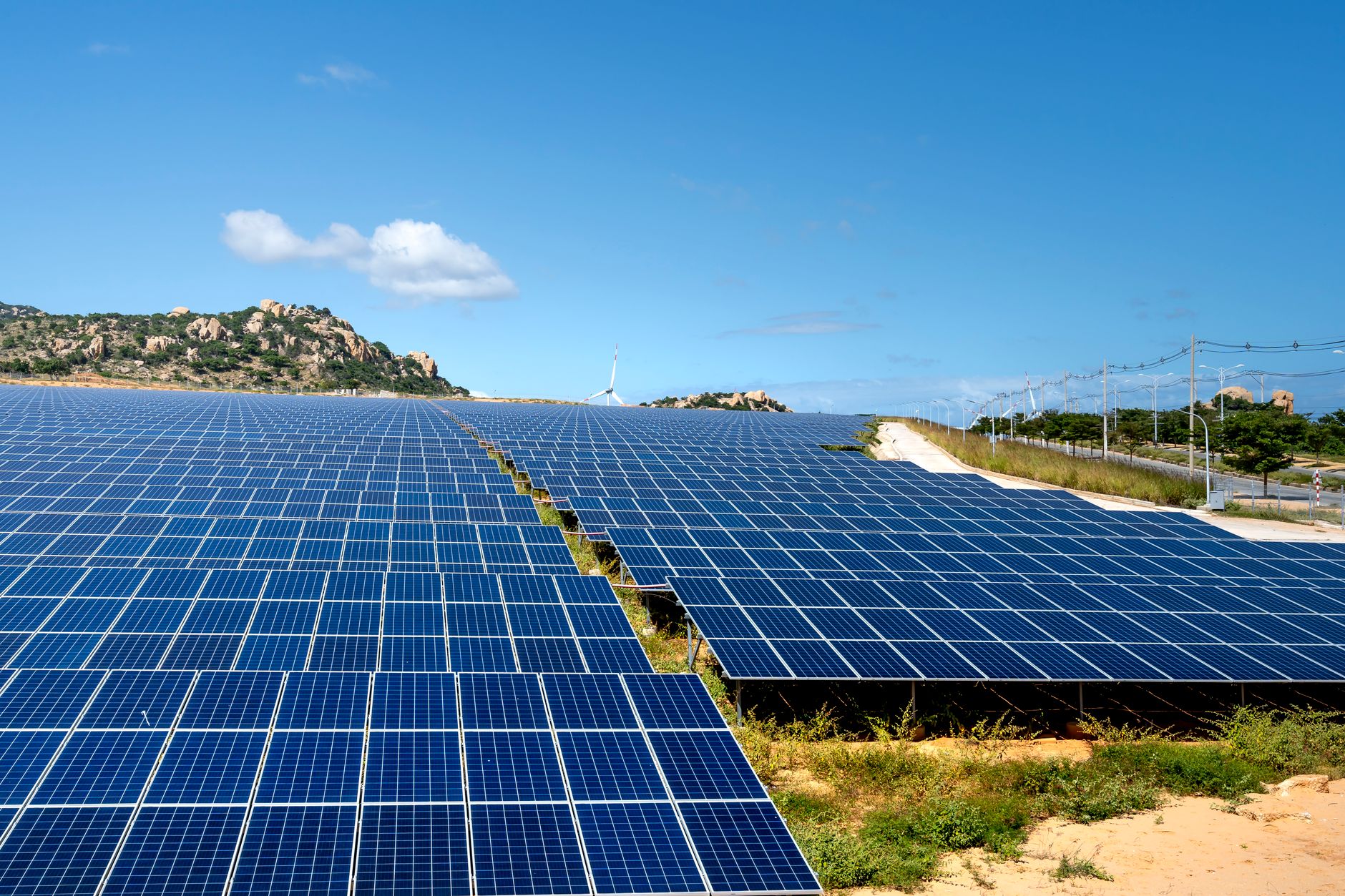
The African Tech Futures Lab has spent years arguing that Africa's next economic leap won't come from copying Silicon Valley — it will come from solving Africa's own infrastructure gaps first. Nothing proves that argument faster than the continent's solar revolution. By 2026, Africa is forecast to install a record-breaking 17 gigawatts of new solar capacity, according to the International Energy Agency's Renewables 2024 report. That number isn't just a climate statistic. It is the single biggest unlock for African creators, tech entrepreneurs, and digital platforms who have long been held back by unreliable power grids.
Think about what consistent electricity actually means for a content creator in Lagos, a software developer in Nairobi, or a small e-commerce founder in Accra. It means fewer dropped livestreams. Fewer dead batteries mid-edit. Fewer hours lost to generator fuel costs that eat into already thin margins. The solar surge is not an abstract energy story — it is a creator economy story, and the African Tech Futures Lab is one of the clearest voices connecting those two dots.
This article makes a specific argument: distributed solar is the infrastructure layer that the African creator economy has been missing, and the institutions and entrepreneurs who understand that connection first will define the next decade of African digital culture and business.
Why Power Cuts Have Always Been a Creator Tax
Before unpacking the opportunity, it's worth being honest about the cost. Across sub-Saharan Africa, businesses lose an estimated $US 82 billion per year in productivity due to power outages, according to the World Bank's Energy Overview. For large manufacturers, that is a supply-chain problem. For a solo creator with a YouTube channel or a Shopify store, it is existential.
A video editor in Douala running Adobe Premiere on a laptop needs roughly 4-6 hours of stable power per project. A podcaster in Johannesburg streaming live to Spotify needs uninterrupted connectivity. A fashion entrepreneur in Abidjan shooting product photos under natural light still needs power for her ring light, laptop, and mobile hotspot. Every blackout is a missed deadline, a broken upload, or a lost client.
The cruel irony is that Africa receives more solar irradiance than almost any other region on earth. The Sahara alone gets roughly 2,500 kWh per square metre per year — more than double what Germany receives, yet Germany has historically installed more solar capacity than the entire African continent combined. That gap is closing fast, and the African Tech Futures Lab has been instrumental in framing this as a tech and creator opportunity, not just an energy policy debate.
- Nigeria: Load-shedding averages 18+ hours per day in many states, forcing creators to spend $200–$400/month on generator fuel alone.
- Kenya: Despite relatively better grid access, rural creators face 6–10 hour outages that make consistent content scheduling nearly impossible.
- South Africa: Eskom's rolling blackouts (Stage 2–6 load-shedding) have pushed thousands of small businesses toward solar-plus-battery solutions since 2022.
- Ghana: Erratic power in the Ashanti and Northern regions limits the growth of creator communities outside Accra.
The 17 GW Surge: What the Numbers Actually Mean on the Ground
The forecast 17 GW installation for 2026 is dominated by utility-scale projects — large solar farms feeding national grids. But the more transformative trend for creators and small businesses is the parallel explosion in distributed solar: rooftop panels, solar home systems, and solar-powered mini-grids serving communities that the national grid never reliably reached.
Companies like M-KOPA (Kenya), Daystar Power (Nigeria), and Bboxx (Rwanda, DRC) are deploying pay-as-you-go solar systems that cost as little as $10–$15 per month. A creator or small business owner can now power a laptop, a router, two LED lights, and a smartphone charger for roughly the same monthly cost as two tanks of generator fuel. The economics have flipped.
For the African Tech Futures Lab's ecosystem of startups and innovation hubs, this creates a concrete new design constraint: build for solar-powered, always-on connectivity. Apps that assume intermittent power should cache aggressively. Platforms that serve rural creators should compress media files by default. E-commerce tools should sync offline orders when the connection returns. These are not edge-case features — they are table-stakes for the next 500 million African internet users coming online via solar-powered devices.
Here is where the opportunity becomes very specific. The African Tech Futures Lab has highlighted three sectors where solar-powered infrastructure directly expands the creator economy:
- Solar-powered co-working and creator hubs: Mini-grids are enabling shared studio spaces in towns like Tamale (Ghana), Mwanza (Tanzania), and Kano (Nigeria) that were previously off-limits for serious content production.
- Solar-charged device lending programmes: NGOs and social enterprises are running laptop and camera lending schemes powered by community solar, giving first-time creators access to professional-grade equipment.
- Solar-enabled rural e-commerce: Artisans, farmers, and craft producers in off-grid areas can now run WhatsApp Business accounts, take mobile payments, and ship via logistics apps — all powered by a $12/month solar home system.
How African Tech Hubs Are Integrating Solar Into Their Infrastructure
The African Tech Futures Lab is not alone in making this connection. Across the continent, leading innovation hubs are quietly becoming energy-independent — and that independence is directly expanding who can participate in the digital economy.
iHub Nairobi installed a 50 kW rooftop solar system in 2023, cutting its electricity costs by 60% and eliminating downtime during grid outages. That reliability matters enormously when you are hosting hackathons, podcast recordings, or investor pitch sessions. CcHUB Lagos has similarly invested in backup solar-plus-battery systems, ensuring that the startups it incubates can demo products and run servers without interruption.
The pattern is clear: hubs that invest in energy independence attract more serious founders and creators, because the infrastructure risk is removed. A creator who drives two hours to a hub needs to know the power will be on when they arrive. Solar makes that promise credible in a way that the national grid simply cannot.
For African creators who want to discover which hubs and platforms are leading this shift, explore how African AI startups are transforming the continent's tech landscape — many of the same players are at the forefront of solar-integrated infrastructure.
The African Tech Futures Lab specifically tracks what it calls "infrastructure-first innovation" — the principle that Africa's most durable tech companies will be those that solve for power, connectivity, and logistics before they solve for growth hacking. The solar boom is validating that thesis at scale.
Common Mistakes African Creators Make When Going Solar
Here is where experience matters. The solar transition is not frictionless, and creators who rush in without planning make predictable, expensive mistakes.
Mistake 1: Undersizing the battery bank. A common error is buying a solar panel without a battery large enough to carry through the night or a cloudy day. A 200W panel paired with a 100Ah battery will power a laptop and router for roughly 4–5 hours after dark. Add a second camera, an external hard drive, and a ring light, and you are out of power by 9 PM. Size your battery for 1.5x your daily consumption as a starting rule.
Mistake 2: Ignoring inverter quality. Cheap modified sine wave inverters damage sensitive electronics — laptops, cameras, and audio interfaces can all suffer shortened lifespans. Always use a pure sine wave inverter for creative equipment. Budget an extra $50–$80 for this; it will save you far more in equipment replacement costs.
Mistake 3: Not accounting for seasonal variation. Solar output in West Africa drops by 20–30% during the harmattan season (November–February) due to dust and haze. Creators who size their systems for peak-season output will find themselves underpowered for three months of the year.
- Audit your daily power consumption in watts before buying any equipment.
- Add a 20% buffer for inefficiency losses in cables and the inverter.
- Factor in your local dust and cloud season when sizing panels.
- Consider a hybrid system (solar + small generator backup) for critical production days.
- Join local solar user communities on WhatsApp or Telegram — peer knowledge is invaluable and free.
From Energy Access to Economic Access: The Creator Opportunity
Reliable power does more than keep the lights on. It changes who gets to participate in the creator economy at all. Right now, the most successful African creators are disproportionately concentrated in a handful of electrified urban centres — Lagos, Nairobi, Johannesburg, Accra, Cairo. That concentration is partly cultural, partly about audience density. But a significant part of it is simply about infrastructure access.
As distributed solar reaches smaller cities and rural areas, the geographic diversity of African content will expand. A fashion designer in Kigali's outskirts, a spoken-word poet in rural Senegal, a gaming streamer in a mid-sized Ethiopian town — all of these creators become viable when they have four to six hours of reliable power per day.
The African Tech Futures Lab's research suggests that every 10% increase in rural electrification correlates with a 6–8% increase in mobile internet usage in that region. More internet usage means more content consumption, more platform growth, and more monetisation opportunities for local creators. The solar boom is, in effect, a creator economy expansion engine.
If you are an African creator looking to understand where the next wave of opportunity is coming from, read our deep-dive on the new wave of creator discovery platforms reshaping Africa in 2026. The platforms that will win are the ones building for the newly solar-powered, newly connected creator in tier-2 and tier-3 African cities.
Brands and advertisers are also waking up to this shift. As solar-powered connectivity expands the addressable creator pool, influencer marketing in Africa is moving beyond the usual Lagos and Nairobi suspects. Discover how African brands are doing smarter influencer discovery to reach these emerging creator communities before their competitors do.
What the African Tech Futures Lab Wants Founders and Creators to Do Next
The African Tech Futures Lab's practical guidance for creators and entrepreneurs is refreshingly direct: treat energy as a product decision, not a background condition. Every startup pitch, every content strategy, every platform roadmap should have an explicit answer to the question: "How does our product perform when the power goes out or the connection drops?"
For creators, this means investing in a solar setup as a business expense — not a luxury. A $300–$500 solar home system pays back in generator fuel savings within 12–18 months in most Nigerian or Ghanaian contexts. After that, it is pure margin improvement.
For platform builders, it means designing for low-power, low-bandwidth environments from day one. The Google Web Performance guidelines are a good technical starting point, but the real insight is cultural: African users are not waiting for a fast connection. They are optimising around an intermittent one. Build for that reality and you will have a product that works everywhere, not just in well-lit offices with fibre broadband.
For entrepreneurs looking to build in the climate-tech and creator-economy intersection, the African Tech Futures Lab points to three underserved niches:
- Solar-as-a-service for creator hubs: Subscription models that bundle solar installation, maintenance, and battery replacement for co-working spaces focused on content production.
- Offline-first creator tools: Video editing apps, podcast platforms, and e-commerce dashboards that sync when connected and work fully offline when not.
- Solar data monetisation: Platforms that help solar home system owners understand and sell their surplus energy data to grid operators — a nascent but growing market across East Africa.
The Africa Entrepreneurship Conference 2026 is already featuring sessions on exactly these intersections. Find out what creators and founders need to know before attending — the solar-creator economy nexus will be one of the defining conversations of the year.
Africa's solar boom is not a story about panels and megawatts. It is a story about who gets to create, who gets to build, and who gets to be discovered. The African Tech Futures Lab is right to put it at the centre of the continent's innovation agenda. The 17 GW forecast for 2026 is a headline number — but the real story is the millions of creators, entrepreneurs, and communities who will come online because of it. Get started now: audit your power setup, explore solar financing options in your country, and build your creative infrastructure for the Africa that is arriving — not the one that has always been.
Staff
Contributing writer at Topping Africa.
0 Comments
No comments yet. Be the first to share your thoughts!