
African Business Heroes: Spotlight on the Continent's Most Innovative Creators and Founders

A new generation of African business heroes is building at the intersection of tech, culture, and content — and they are doing it on their own terms. This article profiles the most compelling African founders and creators, extracts the concrete strategies behind their success, and offers a practical roadmap for aspiring entrepreneurs ready to join them.
The Rise of African Business Heroes in the Global Economy
Something significant is happening across the continent. A new generation of African business heroes is rewriting the rules of entrepreneurship — not by copying Silicon Valley playbooks, but by building solutions rooted in African realities, African culture, and African ambition. These founders and creators are not waiting for permission. They are raising capital, launching platforms, and commanding global audiences from Lagos, Nairobi, Accra, Cairo, and beyond.
The numbers back this up. According to TechCabal, African startups raised over $3.2 billion in 2023 despite a global funding downturn — a sign that investor confidence in African innovation remains strong. Meanwhile, the creator economy on the continent is exploding, with millions of young Africans building audiences, monetising content, and launching businesses simultaneously. This is not a trend. It is a structural shift.
This article profiles a cross-section of the most compelling African entrepreneurs and creators operating at the intersection of tech, culture, and content. More importantly, it draws out the specific lessons any aspiring African creator or founder can apply right now — not vague inspiration, but concrete strategy.

Who Counts as an African Business Hero? A Working Definition
The term "hero" gets thrown around loosely. For this article, an African business hero is someone who has built something real — a product, a platform, an audience, or a company — that creates measurable value for African communities or the global African diaspora. They don't have to be billionaires. Many of the most impactful figures profiled here are still in their 30s, operating lean teams, and growing fast.
Three qualities consistently separate the standouts from the noise:
- Deep market insight: They understand African consumers better than any outsider could — the infrastructure gaps, the cultural nuances, the mobile-first behaviour.
- Hybrid identity: Many straddle creator and founder roles simultaneously. They build an audience and a business at the same time, using content as distribution.
- Resilience without romanticism: They talk openly about failure, funding rejections, and wrong pivots. That honesty is part of what builds trust with their communities.
Crucially, this is not a list of the richest Africans. Wealth alone doesn't define heroism. Impact, originality, and the ability to pull others forward do.
Five African Creators and Founders Shaping the Future Right Now
1. Flutterwave's Olugbenga Agboola — Infrastructure as a Superpower

Olugbenga "GB" Agboola co-founded Flutterwave with a simple but radical premise: African businesses deserved the same seamless payment rails that American companies took for granted. Today, Flutterwave processes billions of dollars annually across 34 African countries. The company reached unicorn status — a $1 billion+ valuation — in 2021, making it one of Africa's most celebrated fintech success stories.
What makes Agboola's story instructive is his approach to infrastructure. He didn't build a consumer app first. He built the pipes. Every creator, e-commerce seller, or SaaS startup in Africa that uses Flutterwave to collect payments is, in effect, standing on his foundation. That B2B-first instinct — solve the plumbing before building the house — is a lesson many African founders overlook in their rush to go consumer.
The trade-off? Building infrastructure is slow, capital-intensive, and unglamorous. Agboola spent years in near-obscurity before the company broke through. Patience is not optional in this lane.
2. Kemi Adetiba — Turning Nigerian Stories Into Global IP
Kemi Adetiba is a filmmaker, director, and creative entrepreneur whose work has done something most African creators only dream of: it has made Nigerian storytelling unmissable on the global stage. Her film King of Boys and its Netflix sequel became cultural events, not just movies. Adetiba didn't just direct — she produced, controlled the IP, and negotiated her own distribution deals.
Her model is a masterclass in vertical integration for creators. She writes, directs, produces, and owns. That ownership stack is what separates a creator who earns a fee from one who builds generational wealth. African creators who license their work away for flat fees are leaving enormous value on the table. Adetiba's career is a standing argument for holding the rights.
You can see this same creative-entrepreneur energy profiled across Topping Africa — Funke Akindele's box office dominance is another vivid example of what happens when African storytellers control their own distribution.
3. Chioma Nnadi — African Aesthetics at the World's Biggest Fashion Table
When Vogue appointed Chioma Nnadi as Head of Editorial Content for British Vogue in 2023, it wasn't just a career milestone. It was a signal. African aesthetic sensibility — the colour, the texture, the cultural layering — now has a seat at the most influential fashion table in the world. Nnadi grew up between Lagos and London, and that dual identity shapes every editorial decision she makes.
Her rise demonstrates a pattern worth noting: diaspora creators are uniquely positioned to translate African culture for global audiences without diluting it. They carry both contexts simultaneously. For African creators building international careers, this is a competitive advantage — not a compromise of identity.
4. Andile Khumalo — Business Media as a Movement
South Africa's Andile Khumalo built Power FM into one of the continent's most respected business media brands. More than a broadcaster, Khumalo used the platform to centre African entrepreneurs in mainstream business conversation — at a time when most South African business media still defaulted to a narrow, legacy corporate voice.
His lesson is about audience ownership. Radio, podcast, newsletter — the format matters less than the relationship with the audience. Khumalo understood that African business professionals were underserved by existing media, and he filled that gap deliberately. Any creator looking to build authority in a niche should ask: who is being ignored by the current dominant voices in my space?
5. Iyinoluwa Aboyeji — The Ecosystem Builder
Few figures in African tech have had more outsized impact than Iyinoluwa "E/" Aboyeji. Co-founder of both Andela (which trained and placed thousands of African software engineers globally) and Flutterwave, Aboyeji has since launched Future Africa, a community fund that backs African founders at the earliest, riskiest stage — often before they have a product.
What sets Aboyeji apart is his explicit focus on ecosystem, not just company-building. He invests in people and ideas that will create more African business heroes after him. That multiplier mindset — asking "how does this create ten more founders?" rather than "how does this make me richer?" — is rare and worth studying.
According to Future Africa's own data, the fund has backed over 60 African startups, with a portfolio spanning health, education, fintech, and creator tools. The returns are financial and cultural simultaneously.
The Common Playbook: What African Business Heroes Actually Do Differently
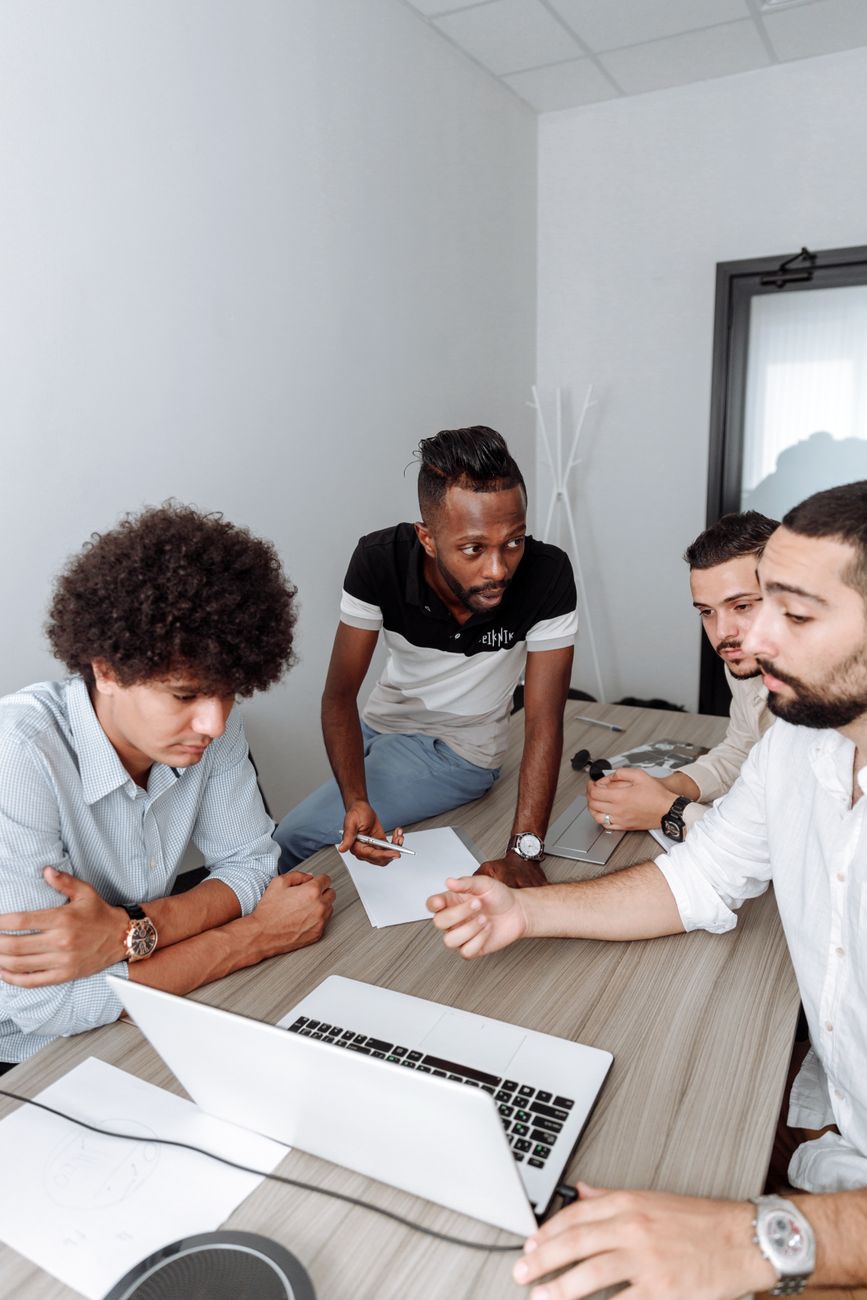
Across these profiles, several concrete patterns repeat. These are not platitudes — they are specific strategic choices that separate the builders from the dreamers.
- They solve for the African context first, then scale globally. Flutterwave didn't try to compete with Stripe in the US. It solved African payment fragmentation first. Global relevance followed naturally.
- They build in public. Many of Africa's top creators and founders share their journey — the wins and the failures — on social media and in podcasts. This builds trust, attracts talent, and creates an audience that becomes a customer base.
- They treat content as a distribution channel, not a side hustle. Founders who post consistently on LinkedIn, X (formerly Twitter), or YouTube are not wasting time. They are building distribution that reduces their customer acquisition cost to near zero.
- They invest in community before they need it. The founders who raise rounds fastest in Africa are almost always those who have been generous with their knowledge, introductions, and time inside African tech and creator communities long before they needed a favour in return.
- They are ruthless about ownership. IP rights, equity, domain names, social handles — the best African entrepreneurs treat these as strategic assets from day one, not afterthoughts.
These patterns are visible across the broader African creator economy too. The Meta Creator Discovery Program has been one recent catalyst, giving African creators formal infrastructure to monetise their audiences — and the smartest participants are treating it as a business development tool, not just a revenue stream.
The Funding Reality: Opportunity and Honest Trade-offs
African startup funding is real, but it is not evenly distributed. Briter Intelligence's Africa Funding Report consistently shows that Nigeria, Kenya, South Africa, and Egypt capture the lion's share of venture capital on the continent. Founders in francophone West Africa, Central Africa, or East African markets outside Kenya face a harder fundraising environment — not because their ideas are weaker, but because investor networks are thinner there.
This matters for creators too. Brand deals, platform monetisation, and sponsorship budgets follow audience size and geography. A creator in Lagos with 200,000 followers will typically command higher brand fees than an equally talented creator in Lusaka with the same audience, simply because of advertiser familiarity with the Nigerian market. That gap is closing — but slowly.
The honest advice for founders and creators in underserved markets: build your audience globally from the start. A diaspora-facing English-language newsletter or YouTube channel reaches a broader advertiser market than a hyper-local one. You can serve your local community while speaking to a global audience. These are not mutually exclusive.
Discover more profiles of African creators navigating these exact trade-offs on Topping Africa's creator directory — a growing database of the continent's most compelling voices.
Practical Steps for Aspiring African Creators and Founders
Inspiration without action is just entertainment. Here is a concrete starting framework for anyone who wants to join the next wave of African business heroes:
- Pick one platform and go deep for 90 days. Trying to be everywhere at once is the fastest route to mediocrity. Choose LinkedIn for B2B, TikTok or Instagram Reels for consumer audiences, or YouTube for long-form authority — then commit fully for a quarter before evaluating.
- Document your process, not just your results. The most magnetic African creators share the messy middle — the failed pitch, the product bug, the pivot. Audiences connect with honesty far more than with highlight reels.
- Join one high-quality community immediately. Future Africa, Ingressive for Good, She Leads Africa, and Google for Startups Africa all offer access to networks, mentors, and sometimes capital. The application process is the first test of your seriousness.
- Register your business and your IP early. In Nigeria, CAC registration costs under ₦10,000. In Kenya, a business name registration at the Business Registration Service costs under KES 1,000. There is no excuse to operate informally when the cost of formality is this low.
- Treat your email list as your most valuable asset. Social platforms change algorithms. Email does not. A list of 5,000 genuinely engaged subscribers is worth more than 50,000 passive followers on any platform.
For a broader view of who is already doing this well, explore this curated list of African content creators to watch in 2026 — it covers voices from Kenya, Nigeria, and South Africa who are already executing on several of these principles.
Why the World Is Paying Attention — and Why That Creates Urgency
Global interest in African innovation is not charity or novelty. It is strategic. Western tech companies — Meta, Google, Microsoft — are all making significant bets on African creators and developers because Africa's demographic trajectory is undeniable. By 2050, one in four people on Earth will be African. The continent's median age is under 20. The consumer market being built right now will be one of the largest on the planet within a generation.
That creates both opportunity and urgency. The African creators and founders who establish themselves in the next five years will have structural advantages — audience trust, brand recognition, platform seniority — that latecomers will struggle to overcome. The window for first-mover advantage in many African niches is still open, but it will not stay open indefinitely.
The African business heroes profiled here did not wait for perfect conditions. They built in environments with unreliable power, expensive data, shallow capital markets, and limited local role models. That context is not an excuse — for them or for you. It is the very reason their stories carry weight.
Ready to discover more creators and founders shaping Africa's future? Explore the full Topping Africa platform and get started finding the voices that matter most to you.
The Legacy Being Built, One Founder at a Time
The most important thing about this generation of African business heroes is not the unicorns or the Netflix deals or the TED talks. It is the permission structure they are creating for the generation behind them. Every African founder who raises a round, every creator who signs a global brand deal, every filmmaker who controls her own IP — each one makes the next person's journey slightly less improbable.
That compounding effect is how ecosystems are built. Not through one landmark success, but through hundreds of smaller ones that collectively shift what seems possible. The African creator economy is in that compounding phase right now. The founders and creators who act with urgency, build with intention, and share their knowledge generously will define what Africa's innovation story looks like for decades.
The heroes are already here. The question is whether you will join them.
Staff
Contributing writer at Topping Africa.
0 Comments
No comments yet. Be the first to share your thoughts!