
WTO Chief Says Global Trade Order Has Irrevocably Changed
The rules that once shaped opportunity are shifting—and for millions across Africa, the consequences will be felt in jobs, prices, and access to global markets. This is no longer about trade policy; it’s about who gets left behind or moves ahead.
YAOUNDÉ, Cameroon — March 26, 2026
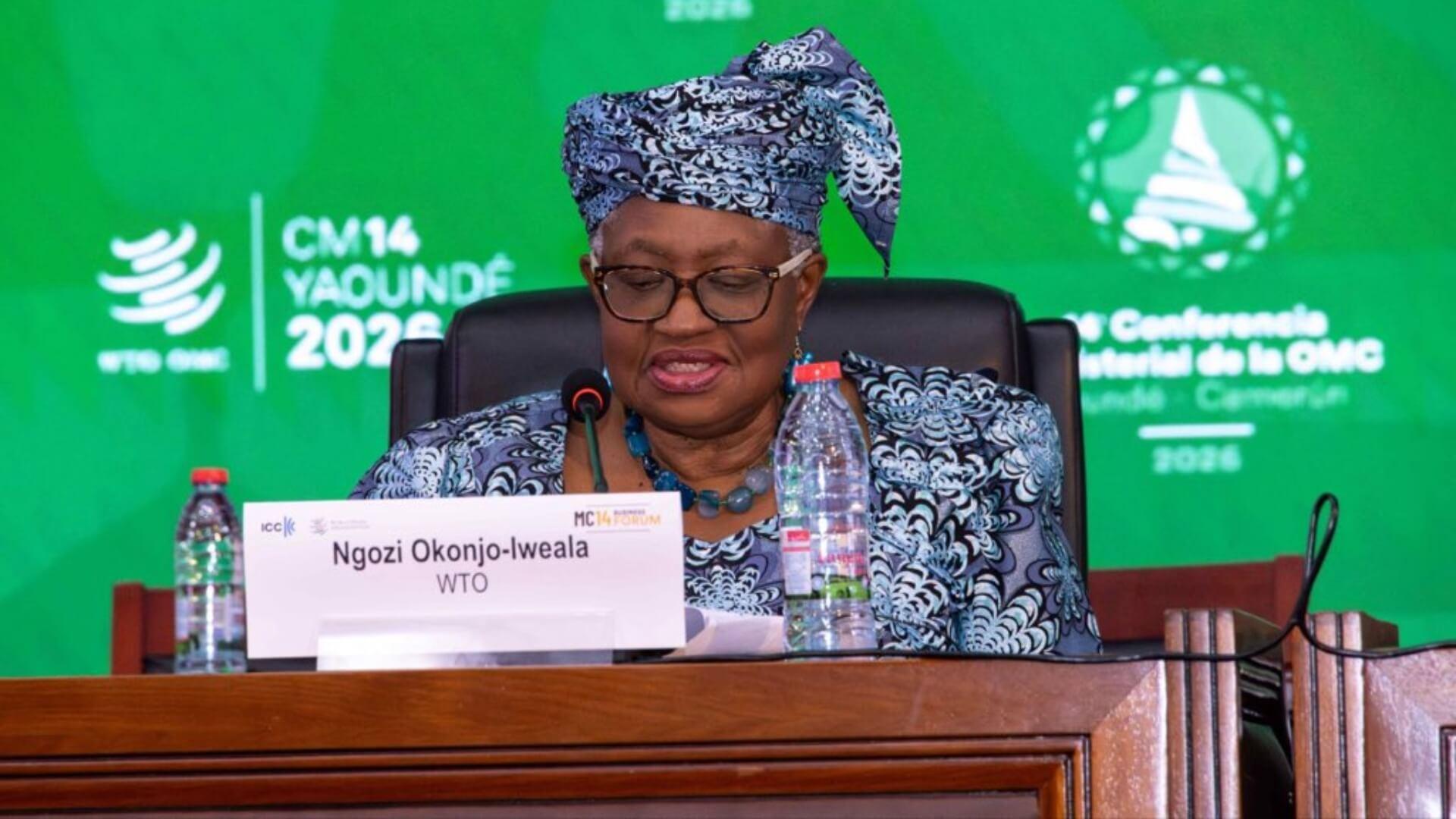
Ngozi Okonjo-Iweala has declared that the global economic and political order has “irrevocably changed,” warning that countries—especially developing economies—must urgently reposition for a new era of fragmented trade and shifting power.
Speaking at the opening of the World Trade Organization’s 14th Ministerial Conference in Yaoundé, the WTO chief told delegates that the multilateral system that once governed global trade can no longer be restored.
“The world order and multilateral system we used to know has irrevocably changed… We must look to the future,” she said, setting the tone for high-stakes negotiations on the future of global commerce.
At the opening of the @WTO–@iccwbo Business Forum in Yaoundé. Great to hear from @ICCSecGen John Denton, H.E. Luc Magloire Mbarga Atangana — Minister of Trade of Cameroon & MC14 Chair, and Mr Aigboje Aig-Imoukhuede — Chair, Coronation Group & Access Holding. Ably moderated by… pic.twitter.com/oHwguZG6Bu
— Ngozi Okonjo-Iweala (@NOIweala) March 26, 2026
The warning comes amid mounting geopolitical tensions, including conflicts in the Middle East and the ripple effects of unilateral trade measures such as tariffs imposed by major economies. These disruptions, Okonjo-Iweala noted, are destabilizing global supply chains and increasing uncertainty across markets.
Despite the turbulence, approximately 72% of global trade still operates under WTO frameworks. However, the institution itself is under strain. Its dispute settlement system remains largely paralyzed, and transparency gaps—particularly around subsidies—are eroding trust among member states.
Only a fraction of WTO members have fully disclosed their subsidy practices, a situation Okonjo-Iweala warned is fueling suspicion and undermining cooperation.
At the heart of the Yaoundé talks is a fundamental question: how to redesign global trade rules for a world no longer anchored in stable multilateral consensus. Delegates are expected to debate reforms ranging from digital trade governance to new frameworks for investment and supply chain resilience.
For Africa, the stakes are immediate and structural.
As the first African to lead the WTO, Okonjo-Iweala’s message carries particular weight for the continent. The breakdown of the old order presents both risk and opportunity—risk of marginalization in a fragmented system, but also opportunity to renegotiate Africa’s position in global trade flows.
African economies, many of which rely heavily on exports of raw commodities, now face increasing pressure to diversify, industrialize, and integrate regionally to remain competitive in a more protectionist global environment.
The shift also amplifies the importance of the African Continental Free Trade Area (AfCFTA), which is increasingly seen as a strategic buffer against external shocks and a platform for intra-African trade growth.
Global reactions to Okonjo-Iweala’s remarks reflect growing consensus that reform is unavoidable—but agreement on how to proceed remains deeply divided. Major economies continue to clash over trade rules, subsidy transparency, and the future of dispute resolution mechanisms.
As negotiations continue in Yaoundé, one conclusion is already clear: the era of predictable globalization is over.
What replaces it—and where Africa positions itself—will define the continent’s economic trajectory for decades.
Staff
Contributing writer at Topping Africa.
0 Comments
No comments yet. Be the first to share your thoughts!