
Inside Africa's Tech Futures Lab: How Creators Are Shaping the Continent's Digital Leap
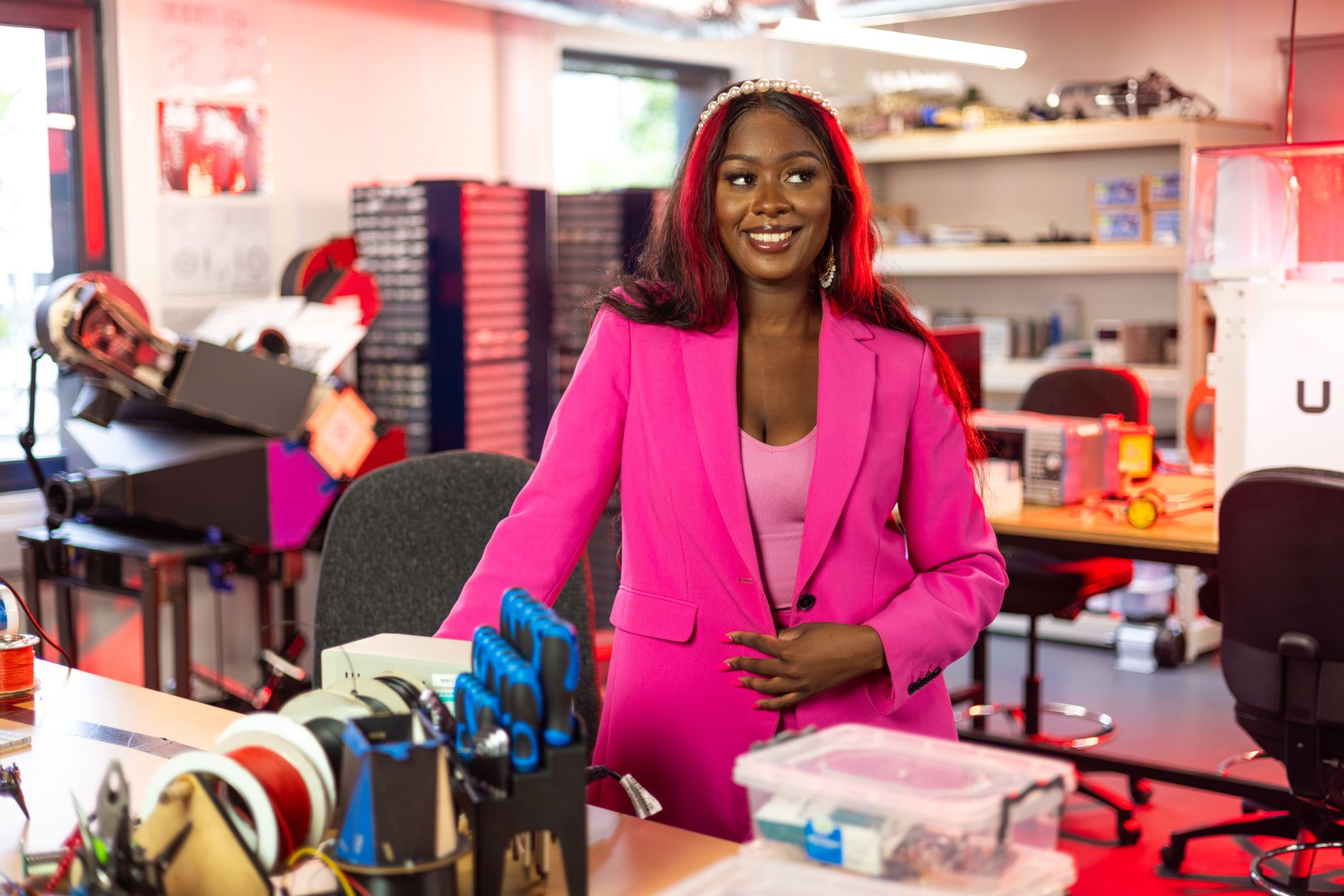
Inside Africa's tech futures lab movement, a new generation of creators, digital artists, and startups is building the continent's digital economy from the ground up — not waiting for Silicon Valley to show the way. This deep-dive examines the real programs, real people, and real trade-offs shaping Africa's most consequential innovation shift. Discover what is working, what is failing, and where the next five years are headed.
Africa's Tech Futures Lab Movement Is Rewriting the Creator Playbook
The phrase African tech futures lab once belonged almost exclusively to policy documents and donor reports. That era is over. Across Nairobi, Lagos, Accra, Kigali, and Cape Town, a new class of innovation labs, creator residencies, and digital accelerators is turning African creators — not just Silicon Valley investors — into the primary architects of the continent's digital economy. This is not a story about potential. It is a story about what is already being built, by whom, and why the rest of the world is paying attention.
What makes this moment different from earlier waves of "Africa rising" hype? The infrastructure is real this time. Undersea cables now carry over 1.5 terabits per second of bandwidth to the continent. Mobile money processes over $1 trillion in transactions annually across sub-Saharan Africa. And a generation of creators who grew up on smartphones — not desktop computers — is now building tools, media, and platforms for audiences that legacy tech never served.
What an African Tech Futures Lab Actually Does (And What It Does Not)
The term "lab" gets stretched thin. Some are genuine R&D environments. Others are co-working spaces with a branding upgrade. The ones producing real creator breakthroughs share three traits: they provide structured mentorship from practitioners, they connect creators to funding pipelines within 90 days, and they give participants ownership of what they build. The last point is non-negotiable — labs that take equity stakes above 10% in exchange for access consistently lose their best talent to rival programs.
Take the iHub in Nairobi, one of the continent's oldest and most studied innovation spaces. Since its founding in 2010, it has supported over 170 companies. But its more recent evolution — hosting creator-focused sprints where Kenyan digital artists, game developers, and podcast producers work alongside fintech engineers — reflects a deliberate shift. The lab recognised that "tech" and "content" are no longer separate verticals. A music producer who understands smart contracts is a creator-entrepreneur. A visual artist who can train a basic image model is a product developer.
Similarly, the Co-Creation Hub (CcHUB) in Lagos runs a Design Lab that has supported over 120 creative technologists since 2019. Participants leave with working prototypes, not just pitch decks. That distinction matters enormously. A pitch deck is a promise. A prototype is leverage — it changes how a creator negotiates with platforms, distributors, and investors.
The Three Models Driving Real Results
- Residency model: Creators spend 8–12 weeks embedded in a lab, with daily access to engineers, designers, and business mentors. Output is a launched product or published work, not a concept.
- Cohort accelerator model: Groups of 10–20 creator-startups run through structured sprints, often culminating in a demo day with regional investors. Equity taken is typically 2–6%.
- Open lab model: Drop-in access to equipment (3D printers, recording studios, VR rigs, server infrastructure) with no equity requirement. Revenue comes from membership fees or corporate sponsorship.
Each model has trade-offs. Residencies produce the deepest work but serve fewer creators. Open labs scale access but often lack the mentorship density that turns a good idea into a fundable business. The most effective programs — like Moringa School's creator tracks in Nairobi — blend all three, letting creators self-select based on their stage.
Creator Stories: The Humans Behind the Innovation Headlines
Numbers tell part of the story. The humans tell the rest. Consider Adaeze Okonkwo, a Lagos-based motion graphics designer who joined a CcHUB Design Lab cohort in 2022. Before the program, she freelanced for international agencies at rates that rarely reflected her skill level — a common experience for African creatives priced out by geography, not talent. During her residency, she built a micro-agency model using Figma, After Effects, and a custom client-onboarding workflow. Within 18 months of graduating, her studio employed four other Lagos designers and had signed three retainer contracts with pan-African fintech brands.
Her story is not exceptional — it is representative. Across the continent, labs are producing creator-entrepreneurs who combine craft with commercial infrastructure. A Ghanaian podcast network that came out of the Accra Digital Centre now distributes to 14 African countries and sells advertising at CPM rates competitive with mid-tier US podcasts. A Rwandan game studio, incubated through kLab in Kigali, shipped a mobile strategy game set in pre-colonial East Africa that hit 200,000 downloads in its first quarter — without a single dollar of Western marketing spend.
These are not outliers. They are the early signals of a system that is starting to compound. Discover more African creators building at this level on Topping Africa's creator directory.
Why AI Is the Multiplier — Not the Threat — for African Creators
The conversation about AI and African creators is too often framed as a threat narrative: automation will displace artists, algorithms will favour Western content, training data will erase African voices. That framing is real but incomplete. Inside the best African tech futures labs, AI is being treated as a force multiplier for under-resourced creators, not a replacement for them.
Specifically, labs are training creators on tools like Runway ML for video generation, ElevenLabs for multilingual audio, and open-source large language models fine-tuned on Swahili, Yoruba, Igbo, and Amharic datasets. The practical impact is significant: a solo documentary filmmaker in Addis Ababa can now produce subtitle tracks in five languages without a translation budget. A Senegalese fashion brand can generate product imagery at a fraction of traditional photography costs, reinvesting that saving into fabric sourcing or artisan wages.
The risk is real too. Labs that teach creators to use AI tools without teaching them to own their data — their voice recordings, their visual styles, their audience relationships — are setting those creators up for extraction rather than empowerment. The best programs build data literacy alongside tool literacy. For a deeper look at how African creators are already leveraging AI, read 10 African creators using AI to grow their content in 2026.
The Funding Gap: Where Labs Succeed and Where They Fall Short
Here is the uncomfortable truth that most coverage of African innovation labs skips: most labs are underfunded relative to their ambitions. A well-run creator residency costs between $3,000 and $8,000 per participant when you account for mentorship, equipment access, stipends, and operational overhead. Most labs in West and East Africa charge participants $200–$500, subsidising the rest through grants, corporate partnerships, or government contracts. That model works until the grant cycle ends or the corporate sponsor pivots its CSR budget.
The labs that have achieved financial sustainability share a common strategy: they treat alumni as a revenue engine. Graduates who go on to raise funding or generate significant revenue are encouraged — sometimes contractually obligated — to return as mentors, pay reduced-fee access back into the lab, or refer corporate clients. The African Development Bank's Jobs for Youth initiative has begun structuring grants around this alumni-return model, recognising that one-time cohort funding rarely produces lasting institutional change.
Government partnership is the other lever. Rwanda's government has been the most aggressive, integrating kLab's outputs directly into national digital economy targets. Nigeria's Lagos State has invested in the Yaba tech cluster, creating a physical and regulatory environment where labs can operate with reduced friction. These are not perfect arrangements — bureaucratic timelines often clash with the speed at which creator markets move — but they provide the baseline stability that purely private labs struggle to achieve.

What Investors Are (Finally) Getting Right
For years, African creator-startups faced a brutal catch-22: investors wanted proof of scale, but without investment, scale was impossible. That dynamic is shifting. Funds like Ingressive Capital, Kepple Africa Ventures, and Flat6Labs have built explicit creator-economy theses, writing cheques into content platforms, creator tools, and digital media businesses that older, generalist funds would have dismissed as "lifestyle businesses."
The signal investors now track is monetisation velocity — how quickly a creator or creator-platform moves from audience to revenue. African creators who come out of structured lab programs typically show faster monetisation velocity than those who self-taught, because labs compress the business-model education that would otherwise take years of trial and error. A creator who exits a residency already knowing their unit economics, their IP ownership structure, and their first three revenue streams is a fundamentally different investment proposition.
This is also why Google's $1 million AI initiative for African creators — covered in detail in our analysis of how Idris Elba and Google's initiative is transforming Africa's creator economy — is significant beyond its dollar amount. It signals to the broader investment community that African creators are a credible, scalable asset class. Institutional validation changes deal flow.
Common Mistakes Labs and Creators Make — And How to Avoid Them
No honest account of this space ignores the failures. Labs make predictable mistakes. Creators make different but equally predictable ones. Naming them is more useful than celebrating only the wins.
Labs most often fail by:
- Prioritising headline metrics (number of startups "supported") over depth of support per creator.
- Building curriculum around tools that are already obsolete by the time the cohort graduates — a genuine risk in a field where the AI tooling landscape shifts every six months.
- Neglecting community infrastructure after the cohort ends, leaving graduates without peer networks precisely when they need them most.
Creators most often fail by:
- Treating the lab as a credential rather than a launchpad — completing the program without shipping anything.
- Underpricing their work immediately after graduation, reverting to pre-lab rates out of habit or lack of confidence.
- Building audiences on platforms they do not own — a TikTok following is not an asset you control. An email list is.
The solution to the third creator mistake is the most concrete: every lab worth its name now teaches creators to build owned channels — newsletters, WhatsApp communities, or direct-subscription platforms — alongside their social presence. Wired's coverage of Africa's tech ecosystem has noted this shift toward owned-audience strategies as one of the defining features of the continent's most resilient creator businesses.
What the Next Five Years Look Like for African Creator Labs
The trajectory is clear, even if the destination is not fixed. Three forces will define the next phase: the maturation of African-built creator platforms (reducing dependence on YouTube, TikTok, and Spotify), the growth of intra-African creator collaboration (Nairobi designers working with Lagos musicians, Accra filmmakers partnering with Johannesburg studios), and the formalisation of African creator IP law — still a patchwork of colonial-era frameworks that labs are actively lobbying to reform.
The creators who will lead this next phase are already inside labs today. They are building tools in Swahili and Zulu. They are producing games, films, and music that do not need Western validation to find audiences of millions. They are training the next cohort of mentors who will, in turn, compress the learning curve for the generation after them.
Explore the full range of African innovators and digital creators already making this happen — discover creators on Topping Africa and see what the continent's digital future looks like right now. And if you want to track which creators are gaining momentum fastest, check out the trending African creators shaping culture and tech in real time.
The African tech futures lab is not a building. It is a philosophy — that the people closest to Africa's problems are best positioned to build Africa's solutions. Every creator who ships a product, builds an audience, or trains a peer is extending that lab's walls a little further. The continent's digital leap is not coming. It is already underway, and the creators are leading it.
Staff
Contributing writer at Topping Africa.
0 Comments
No comments yet. Be the first to share your thoughts!