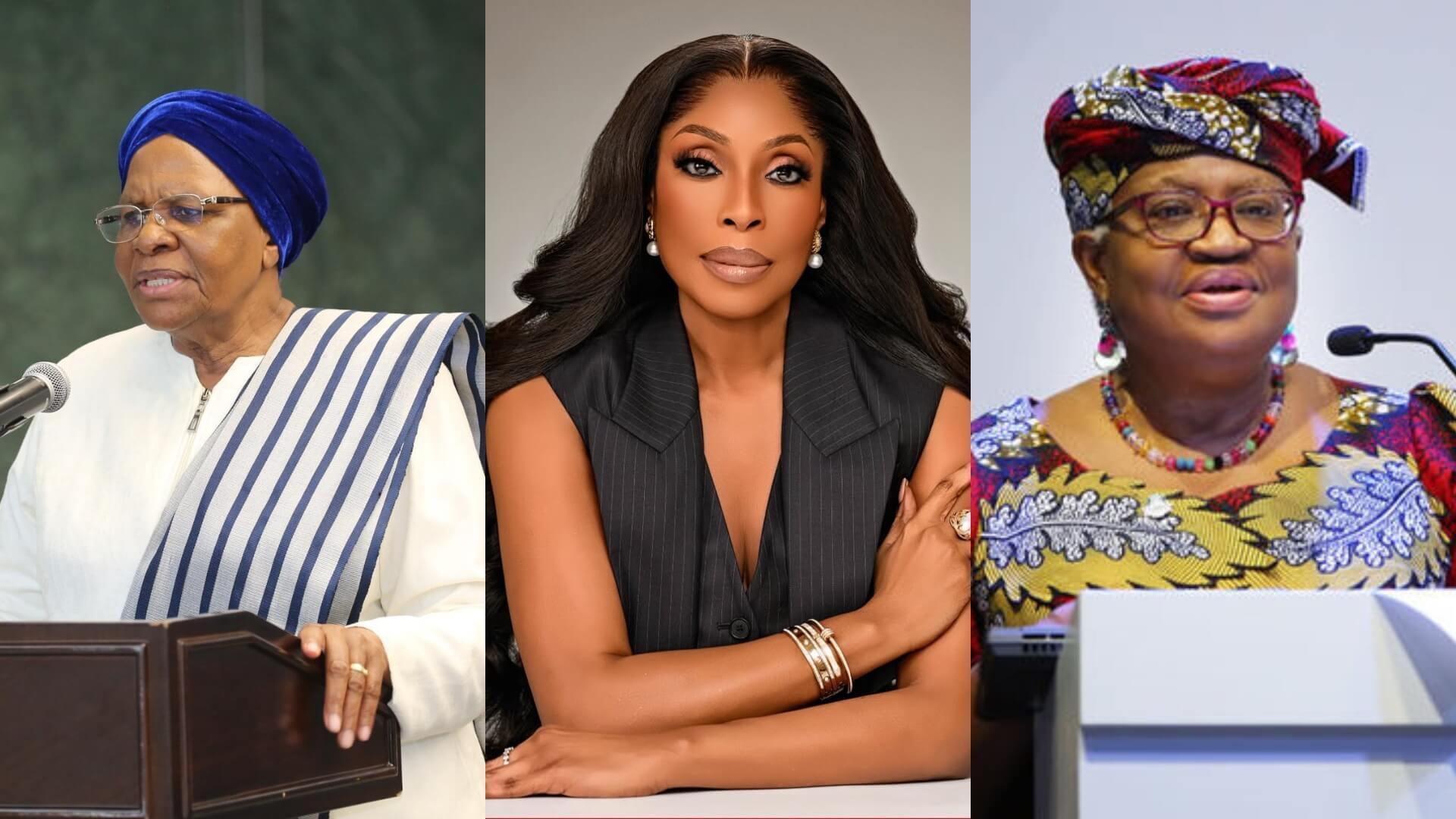
Forbes’ 2025 ranking highlights three African trailblazers shaping global governance, media, and politics: Dr. Ngozi Okonjo-Iweala, Mo Abudu, and President Netumbo Nandi-Ndaitwah. Their recognition reflects Africa’s rising leadership across industries and the continent’s growing impact on global systems.
Three African women holding major positions in global trade, media, and political leadership were named among the World’s 100 Most Powerful Women in Forbes’ 2025 ranking, released on December 10. The annual list spotlights figures shaping significant economic, institutional, and cultural change across continents.
Updated 15:15 UTC
Nigerian media mogul Mo Abudu is one of the most powerful women in global media. See where she landed on the 2025 World's 100 Most Powerful Women list. #PowerWomenhttps://t.co/90Seih1ZRM
— Forbes (@Forbes) December 11, 2025
📸: Savion Washington via Getty Images pic.twitter.com/FPfUzAOm53
Forbes confirmed that World Trade Organization Director-General Dr. Ngozi Okonjo-Iweala, EbonyLife Media founder Mo Abudu, and Namibian President Netumbo Nandi-Ndaitwah all secured positions on this year’s index. The publication said the ranking reflects a combination of financial influence, public visibility, and measurable global impact.
Okonjo-Iweala, placed at No. 92, continues to be recognized for directing the WTO at a time when trade rules and multilateral cooperation face unprecedented strain. Her long career in public finance and global development, including senior roles in Nigeria and global health governance, was highlighted as part of her sustained relevance on the list.
Abudu entered at No. 98, with Forbes noting her company’s partnerships with major international studios and streaming platforms. Her media network, which distributes content across dozens of African and international markets, has become one of the continent’s strongest vehicles for exporting African storytelling to global audiences.
Nandi-Ndaitwah debuted at No. 79 following her historic election earlier this year as Namibia’s first female head of state. Her decades-long public service career and new executive mandate were cited as markers of both national and regional importance.
European Commission President Ursula von der Leyen and European Central Bank President Christine Lagarde topped the 2025 ranking.
The recognition for Okonjo-Iweala, Abudu, and Nandi-Ndaitwah comes at a moment when African women leaders are increasingly shaping conversations on governance, economic reform, digital content ecosystems, and democratic participation.
Dr. Okonjo-Iweala reacted in a social media statement, thanking Forbes and describing leadership as a responsibility that requires defending a fairer trading system. She also applauded fellow African honorees for their contributions across sectors.
Forbes executive Moira Forbes said the 2025 cohort reflects individuals “driving the next generation of policy, enterprise, and public influence.” Maggie McGrath, editor of ForbesWomen, added that the landscape of global authority “now cuts across fields that did not traditionally define power.”
Regional observers say the combined recognition strengthens Africa’s visibility in institutions where global rules and narratives are shaped. Media analysts note that Abudu’s consistent push into international production pipelines has expanded the commercial viability of African creative industries. Political scholars highlight that Nandi-Ndaitwah’s presidency marks a significant milestone for gender equity in Southern Africa.
Their continued impact is expected to shape multiple arenas. Okonjo-Iweala will advance WTO reform negotiations during her second term. Abudu’s studio plans a wider rollout of digital streaming and co-production ventures. Nandi-Ndaitwah’s administration has outlined priorities that include fiscal stabilization and governance renewal.

Leave a comment
Your email address will not be published. Required fields are marked *